Yin-Yang
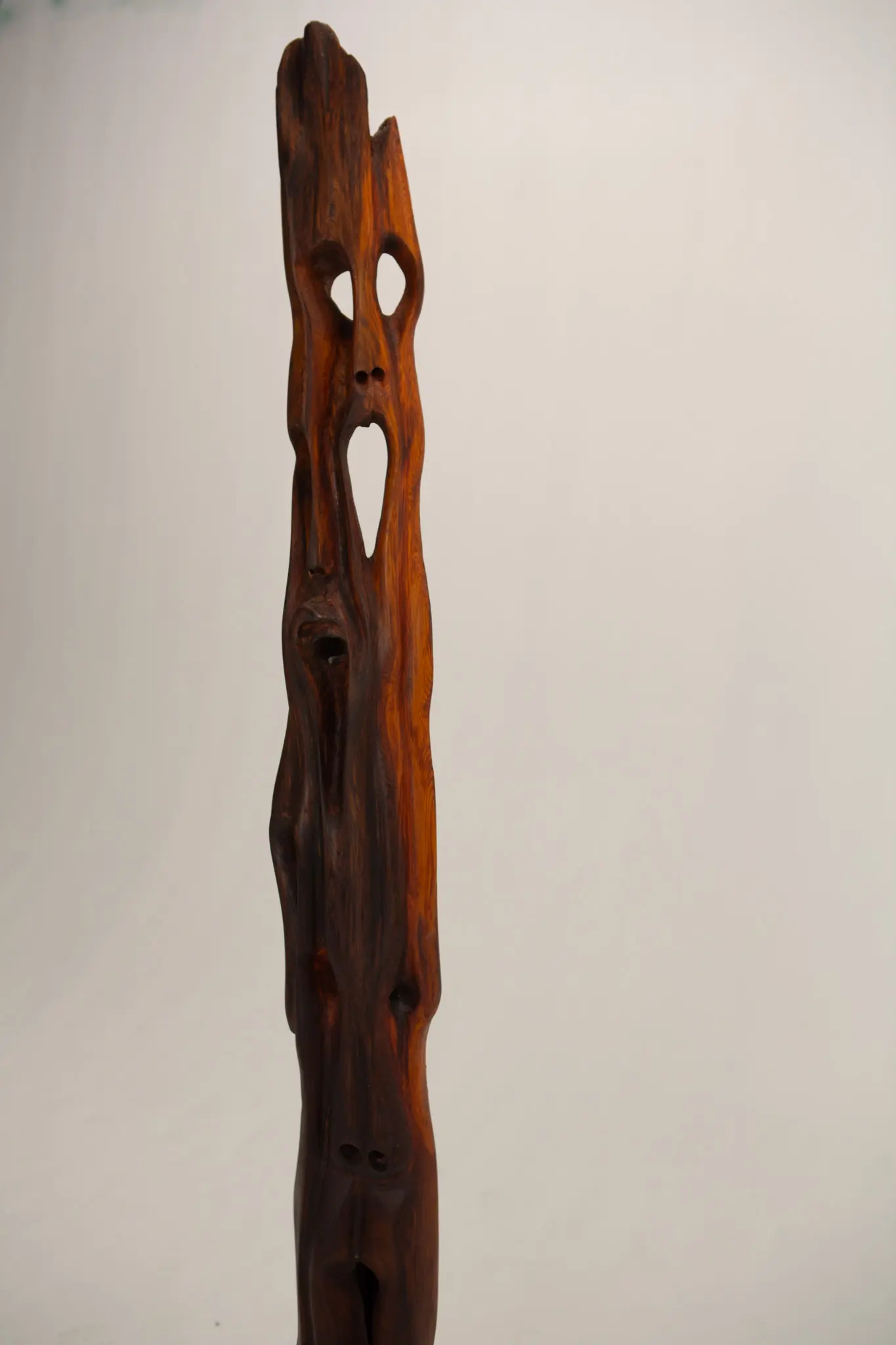
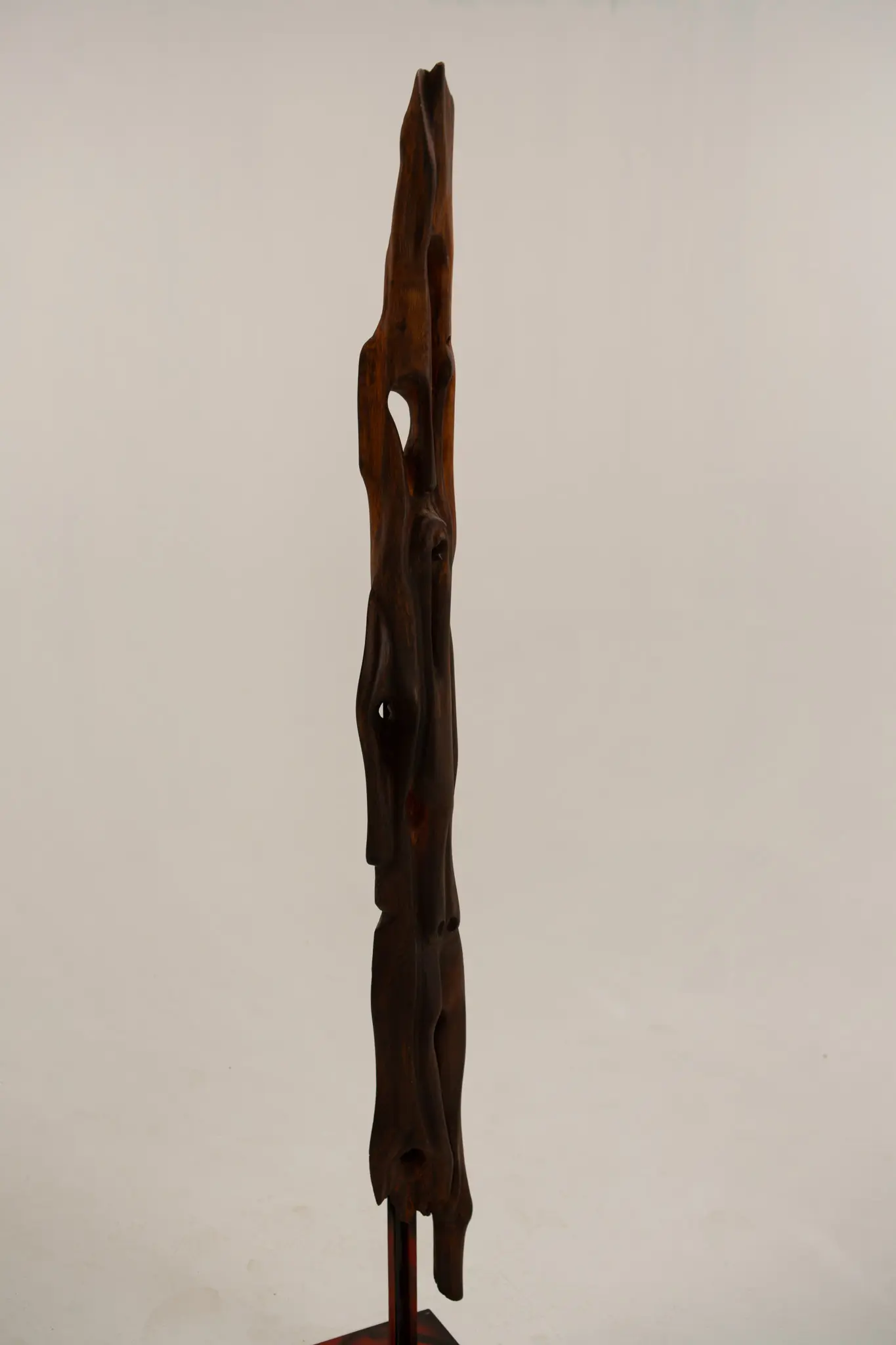
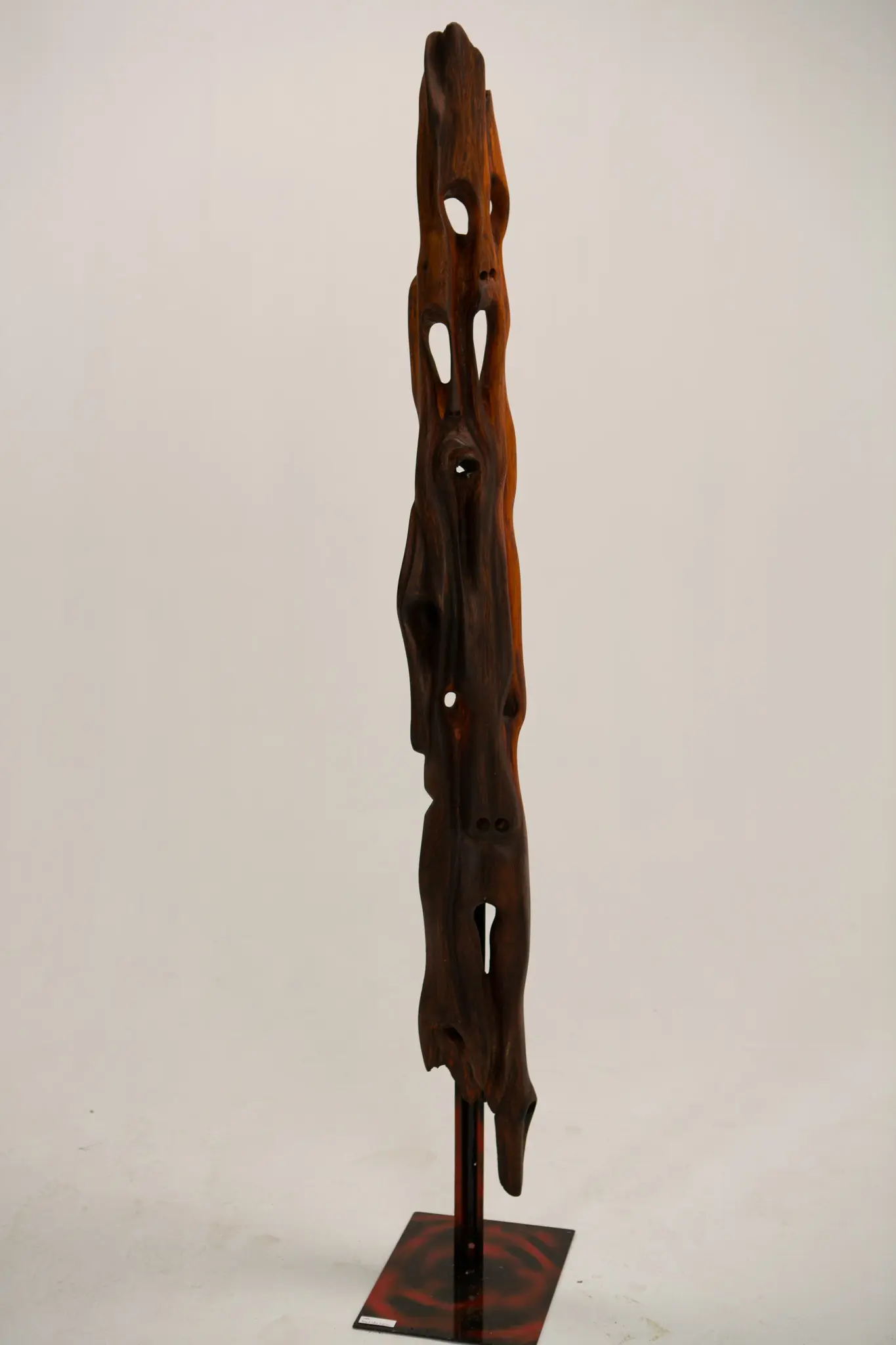
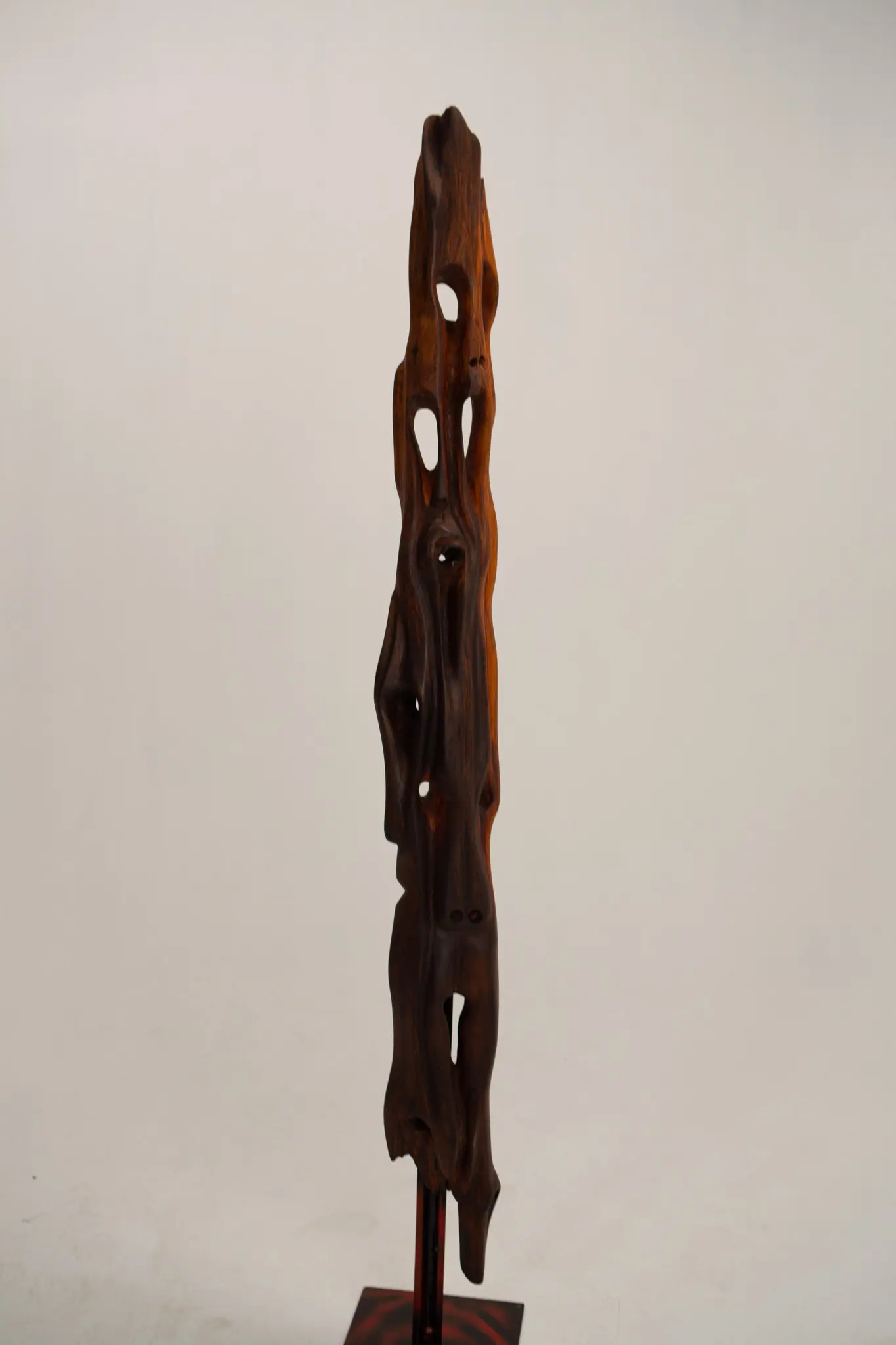
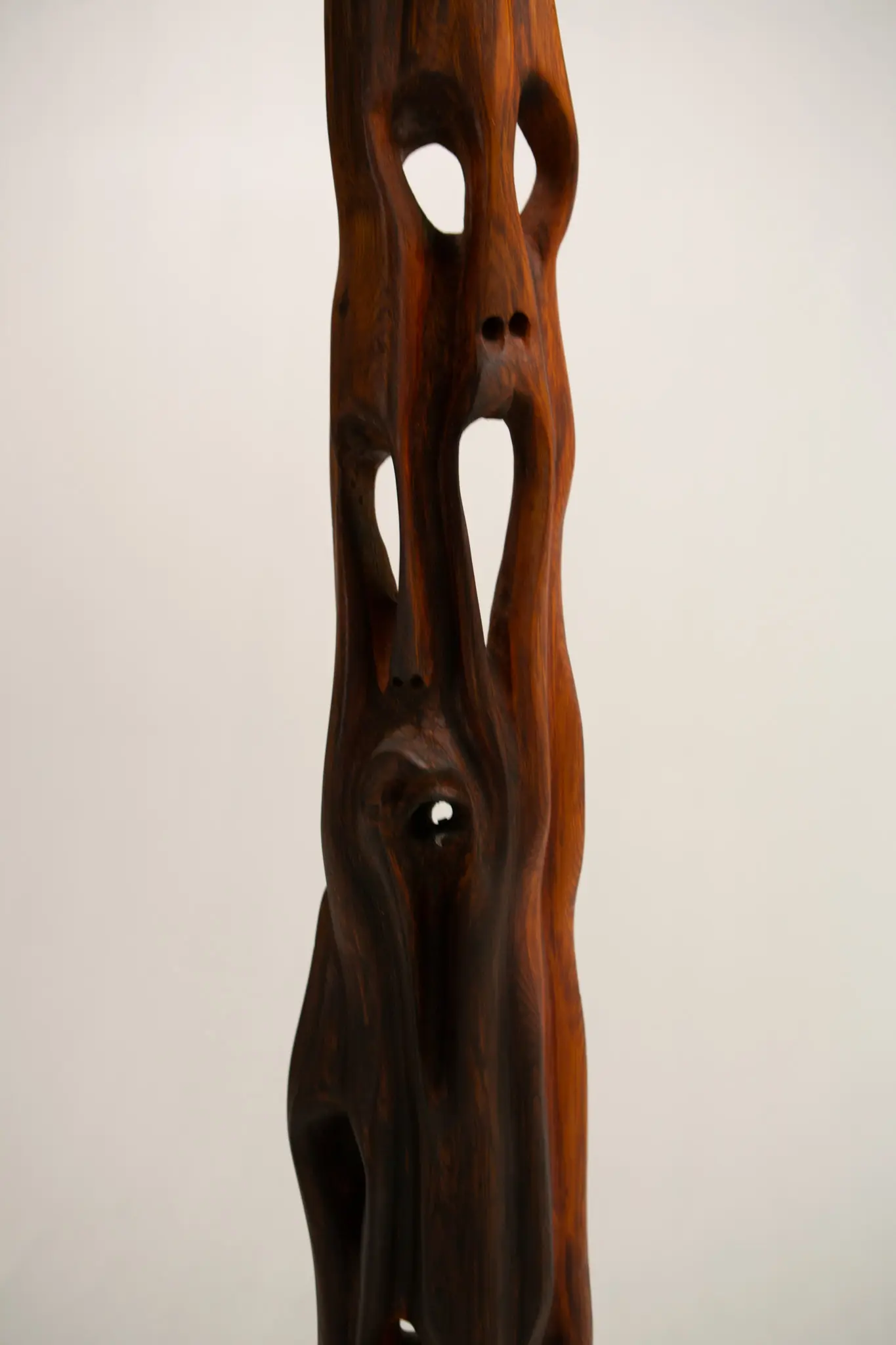
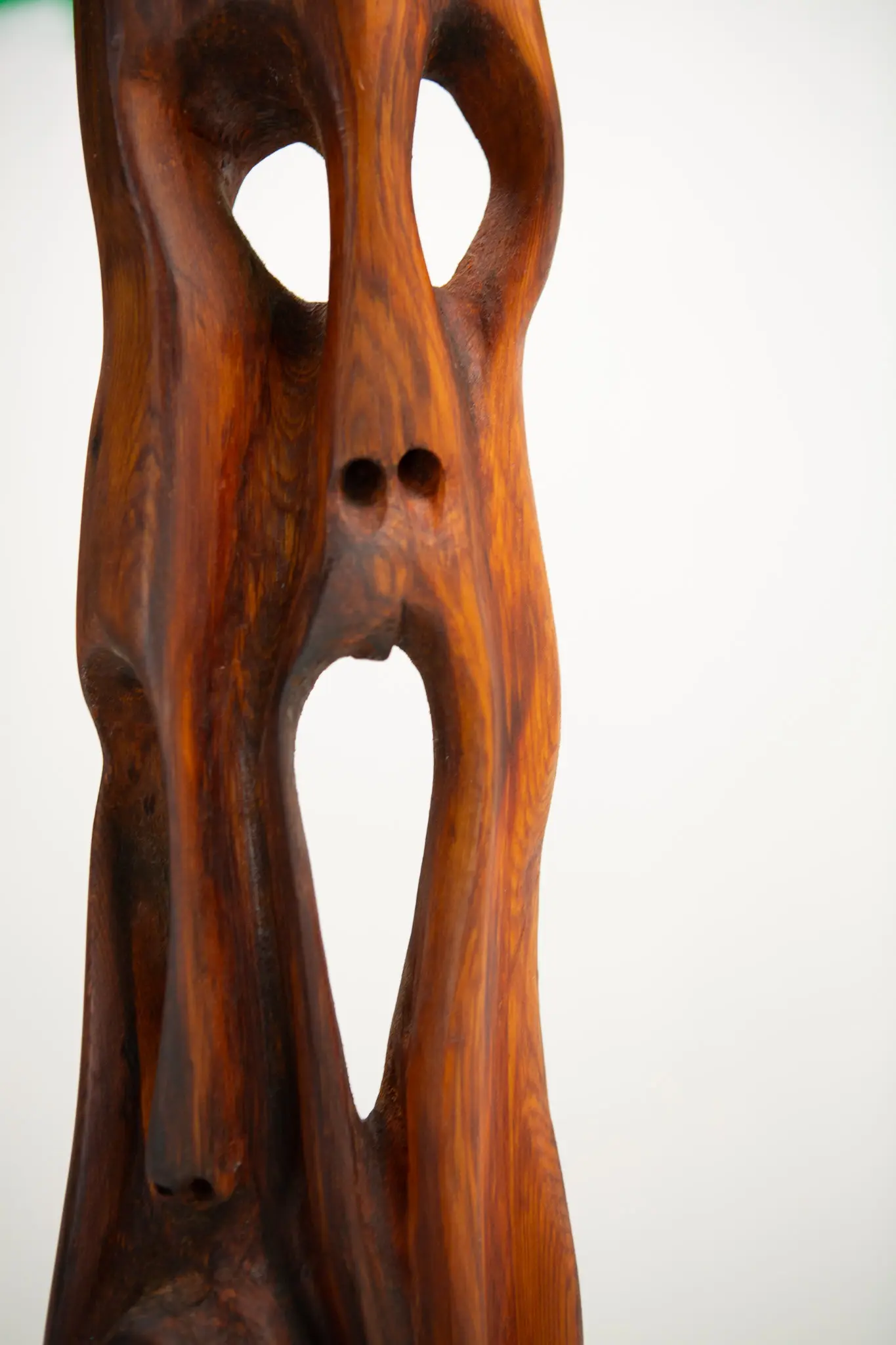
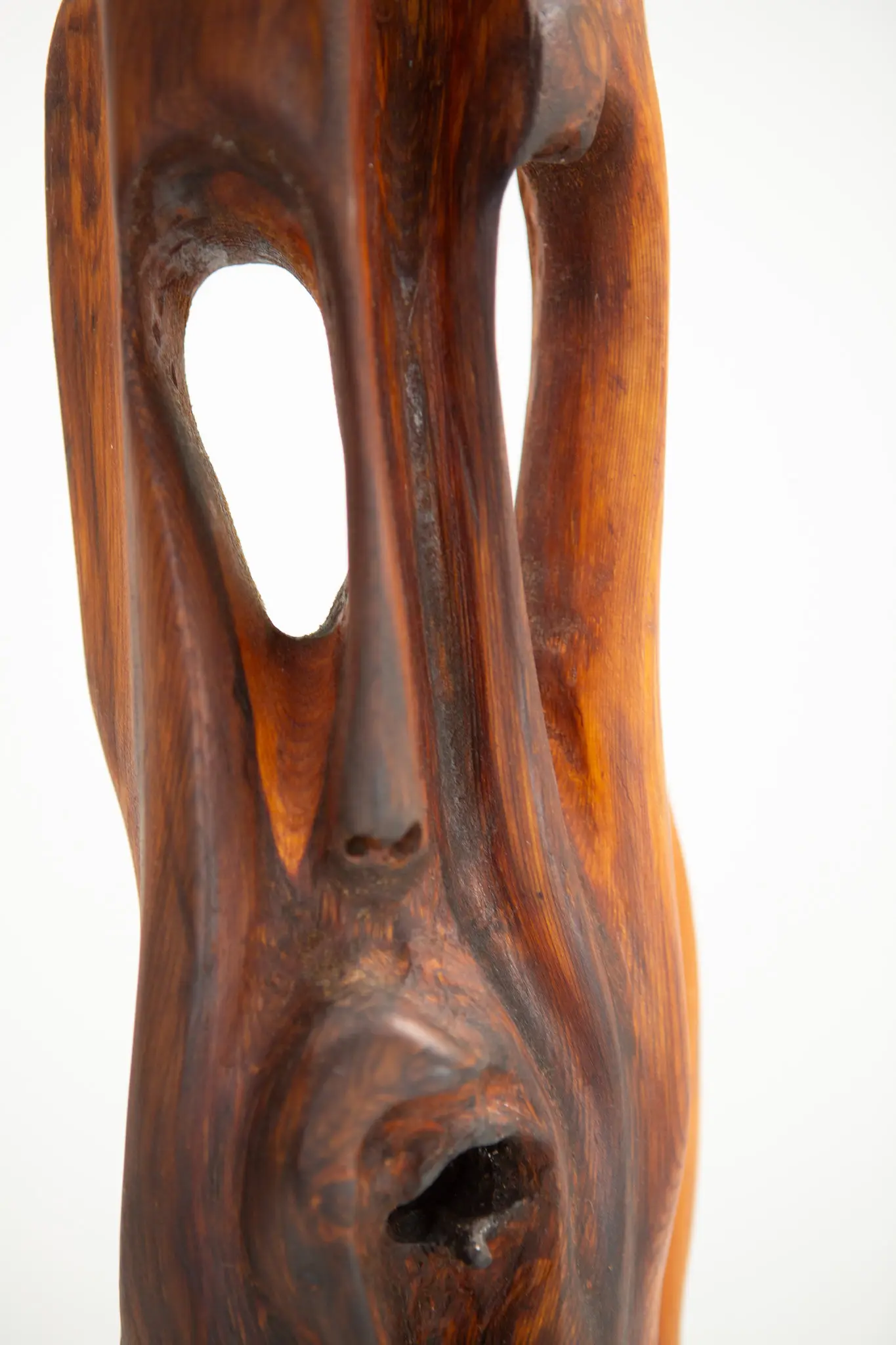
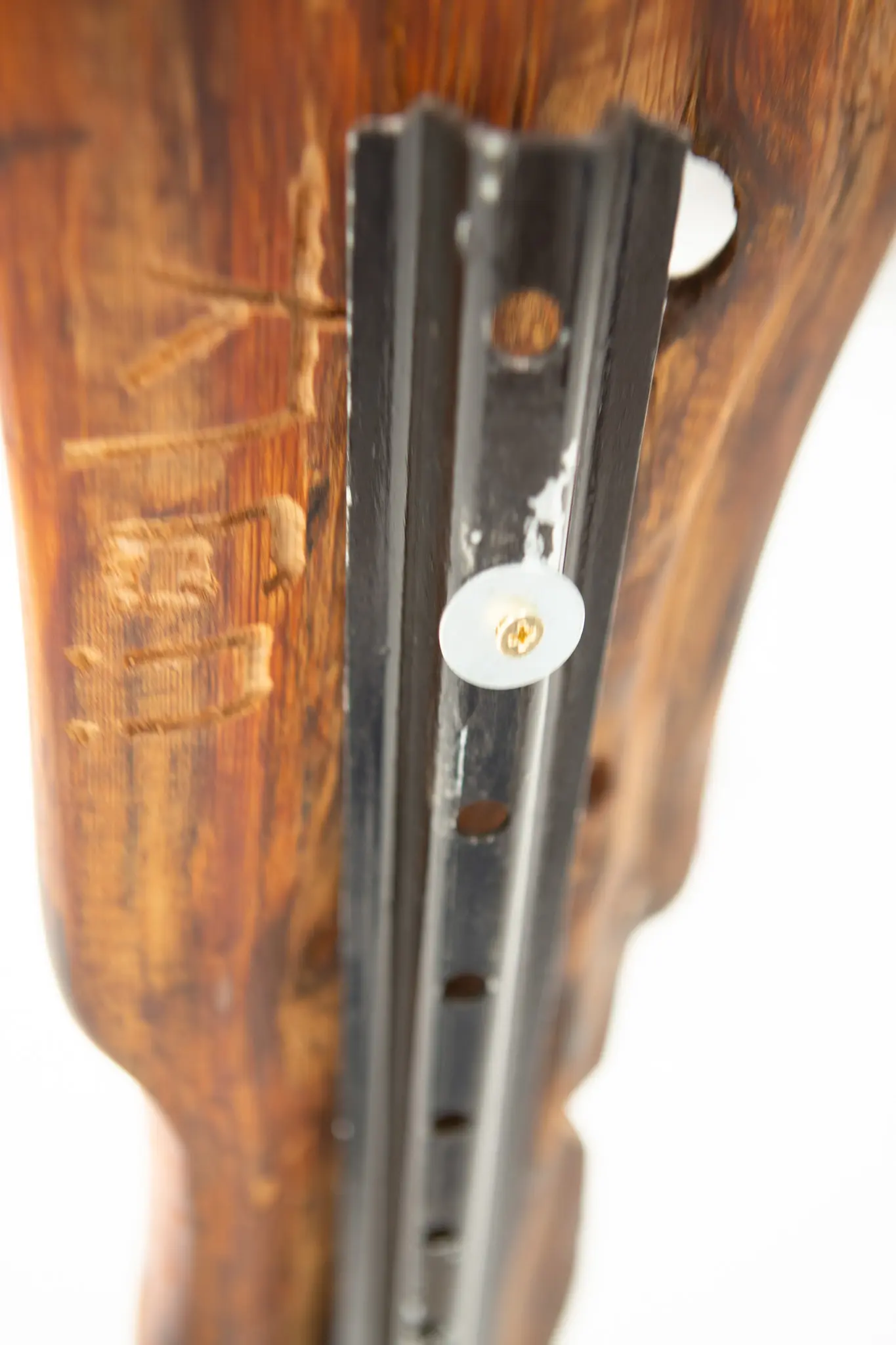
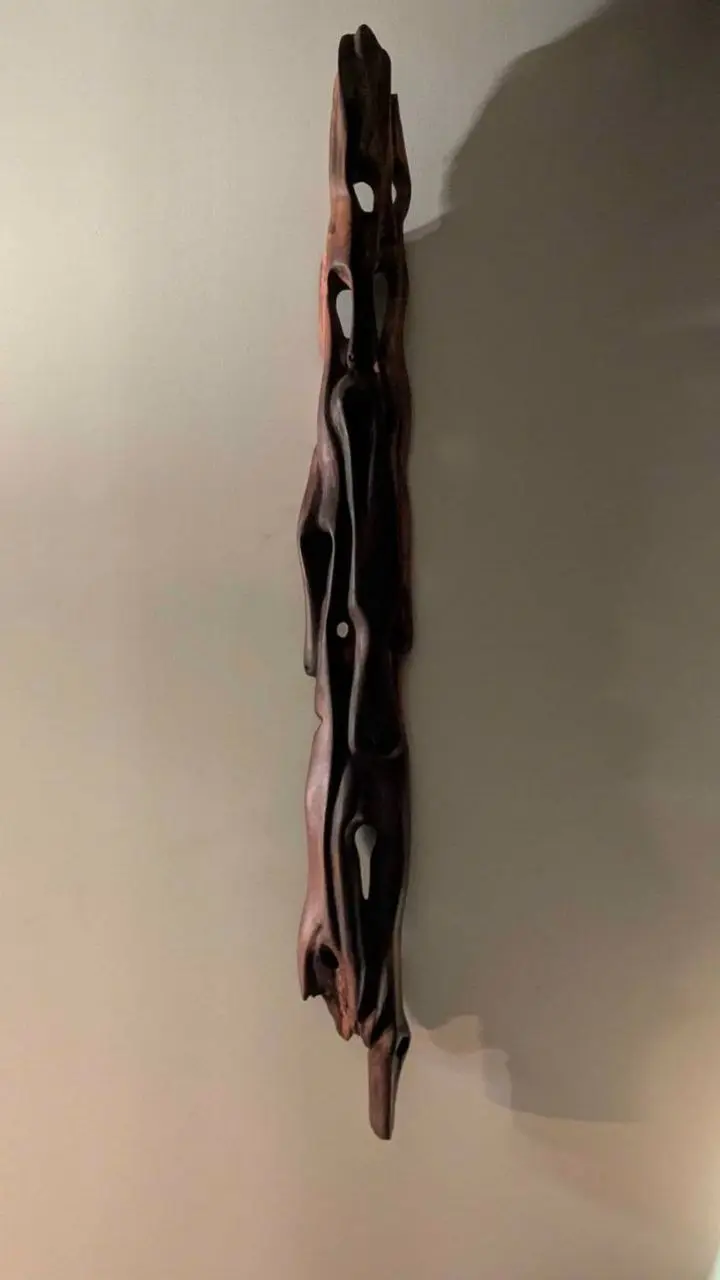
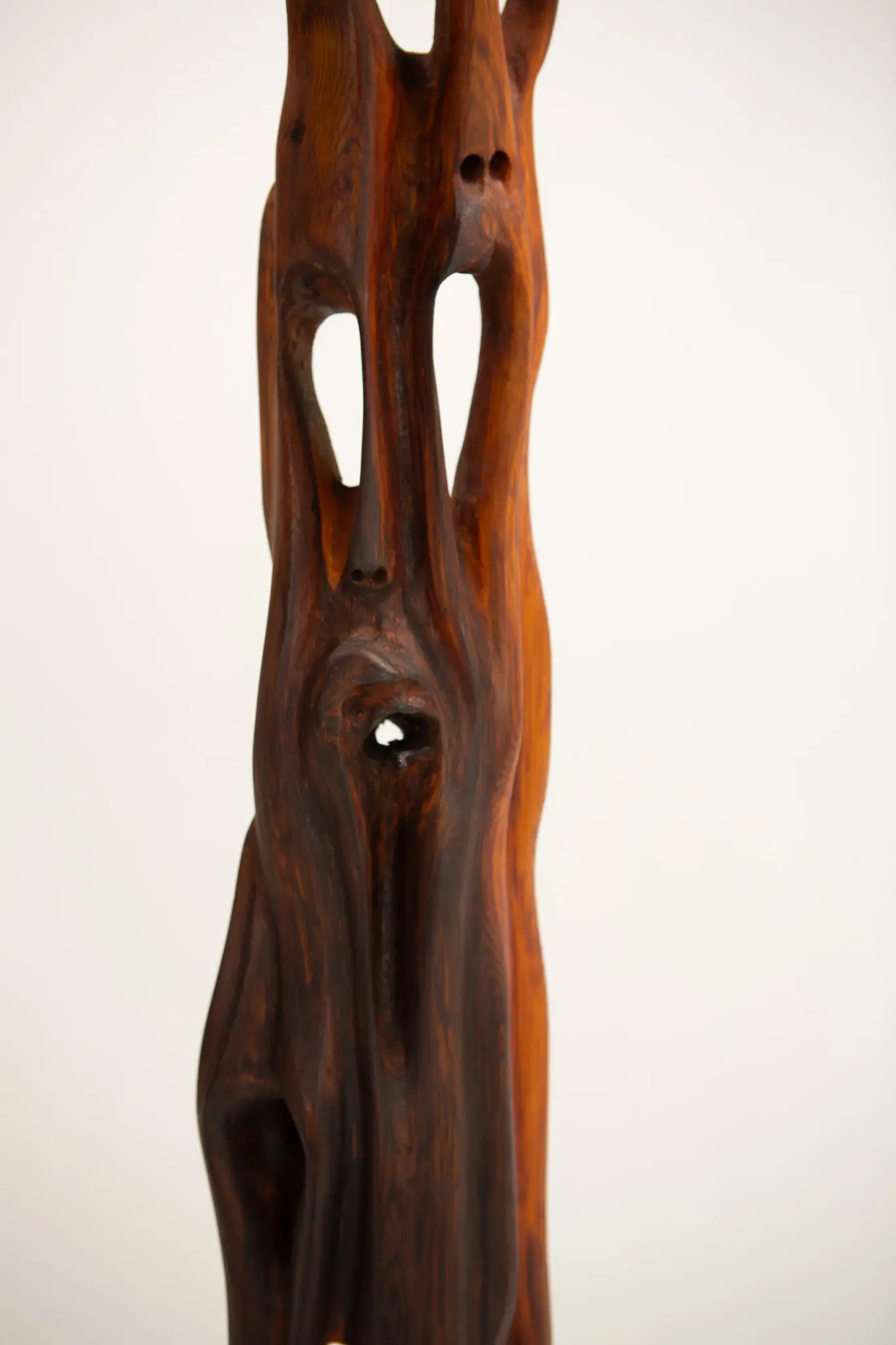
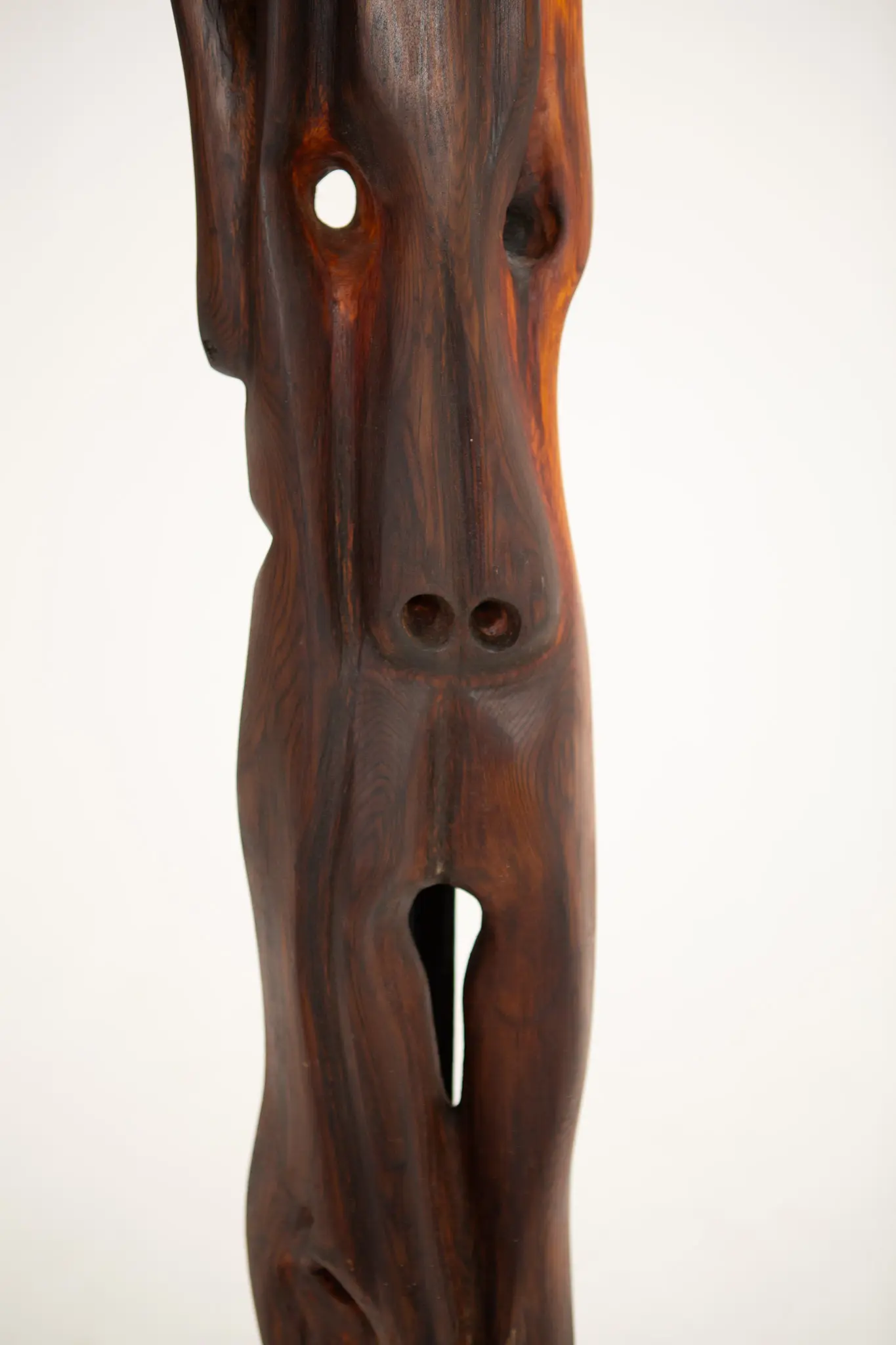
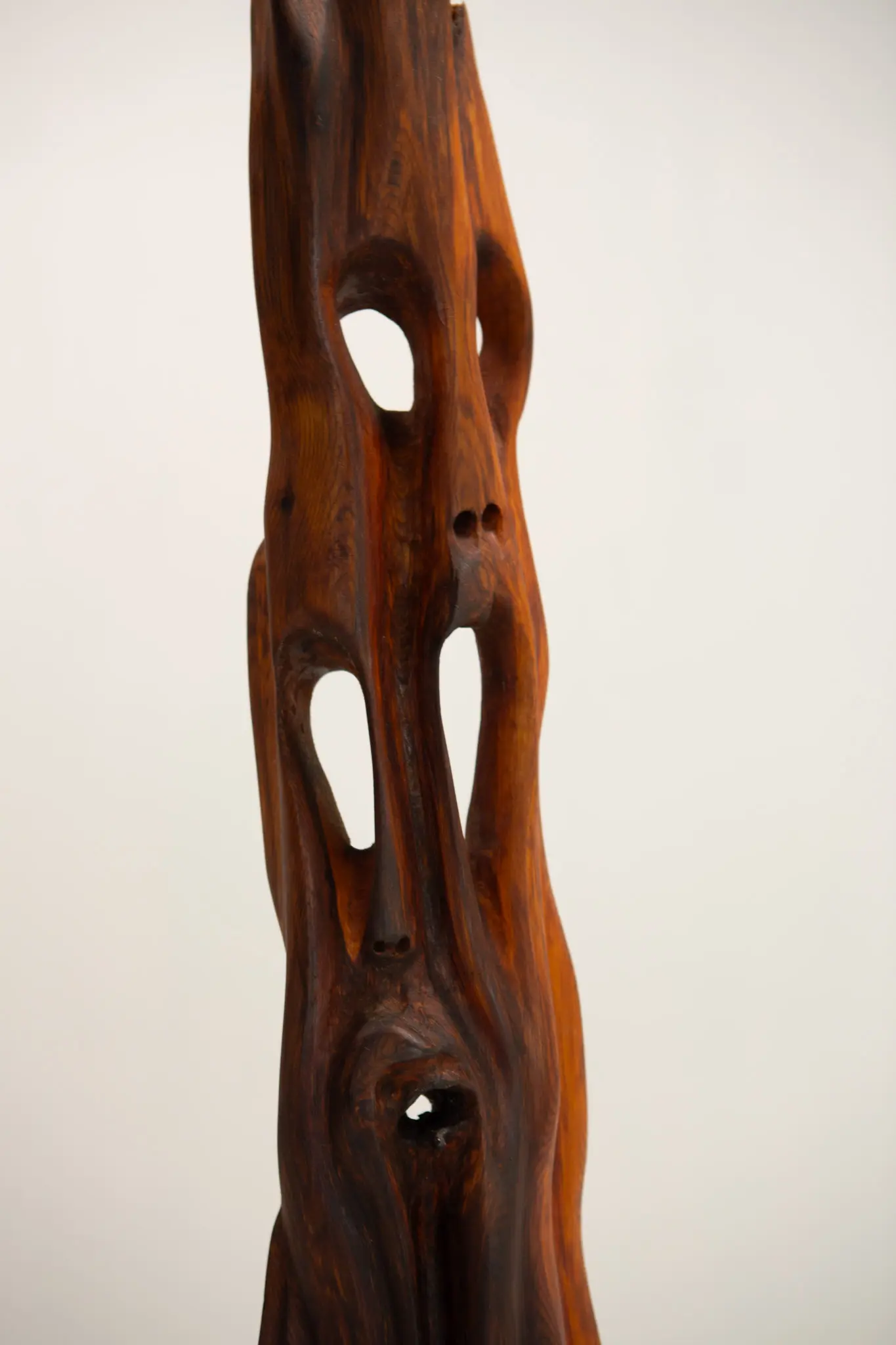
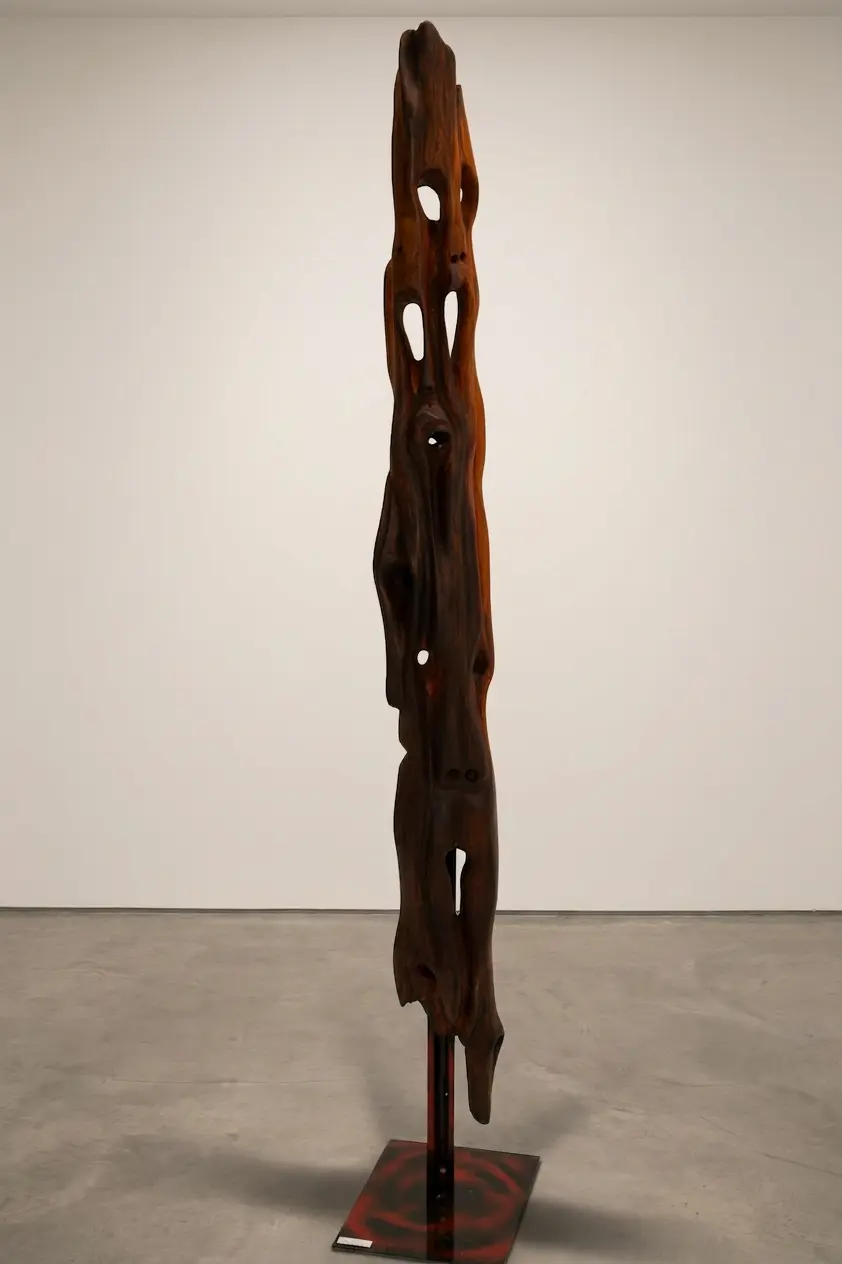
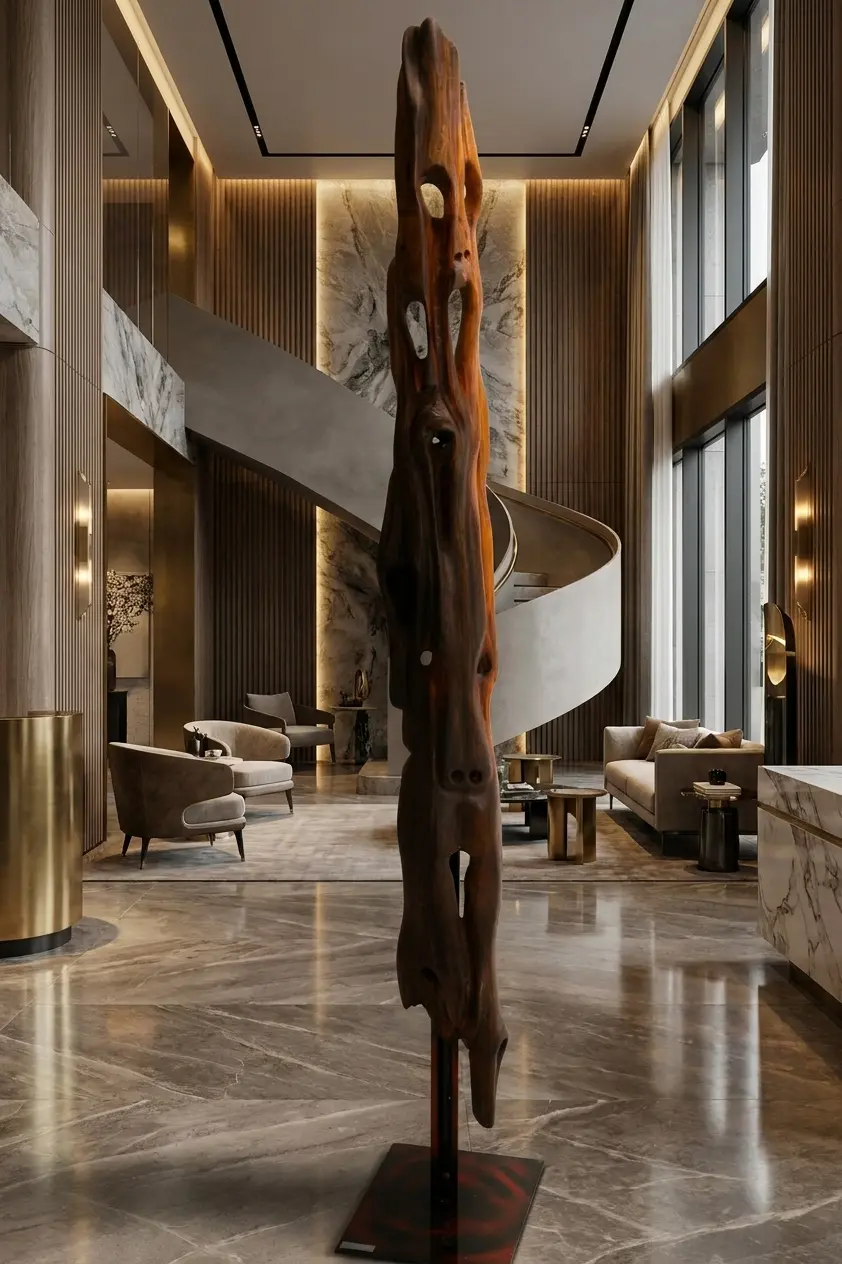
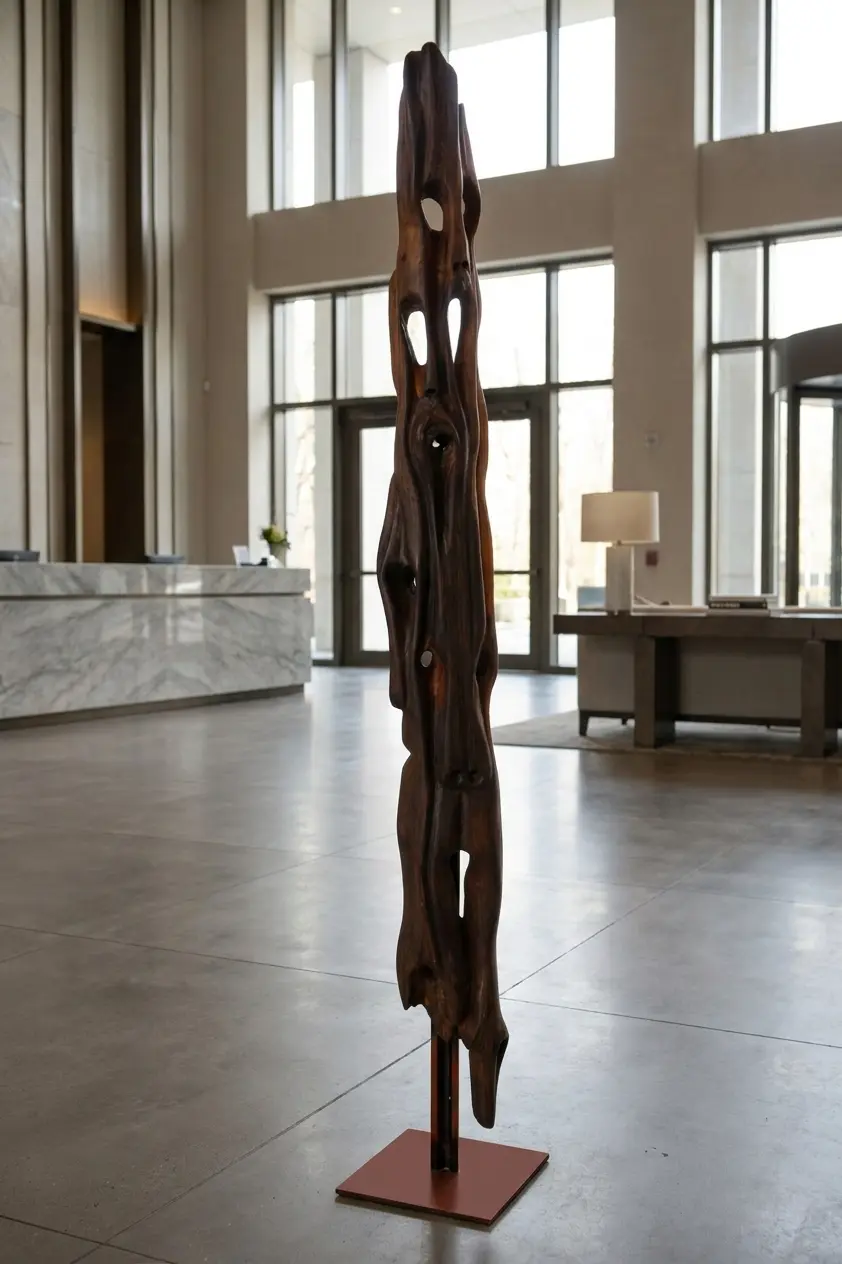
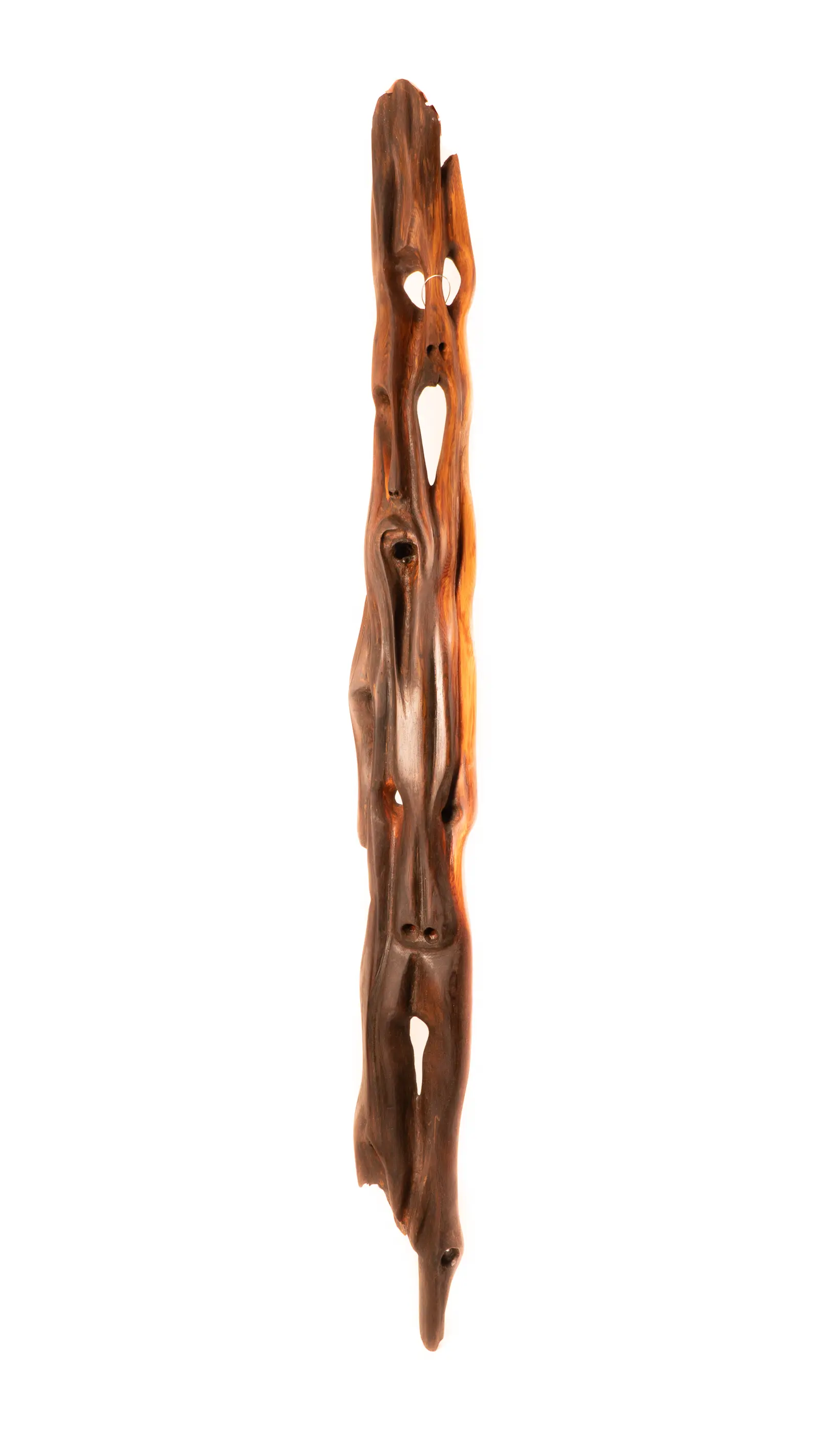
A slender vertical column of dense found wood, dark reddish-brown, carved by direct subtraction and finished with a varnish that catches the light down the shaft. The piece stands on a thin black metal rod set into a square metal base, its painted surface swirling red and black. The work proceeds by removal: matter was hollowed away until the branch gave up a succession of presences.
As the eye climbs, grain stops being grain. Faces surface, mouths open into cavities, bodies stretch and stack along the full height. The piercings run clean through the wood, each one a distinct shape: an ovale near the top, a long central slit, two paired rounds lower down that read as eyes or nostrils. These voids do nothing decorative. They open passages, and the light moving through them gives the column a spectral presence, a negative space owned as volume.
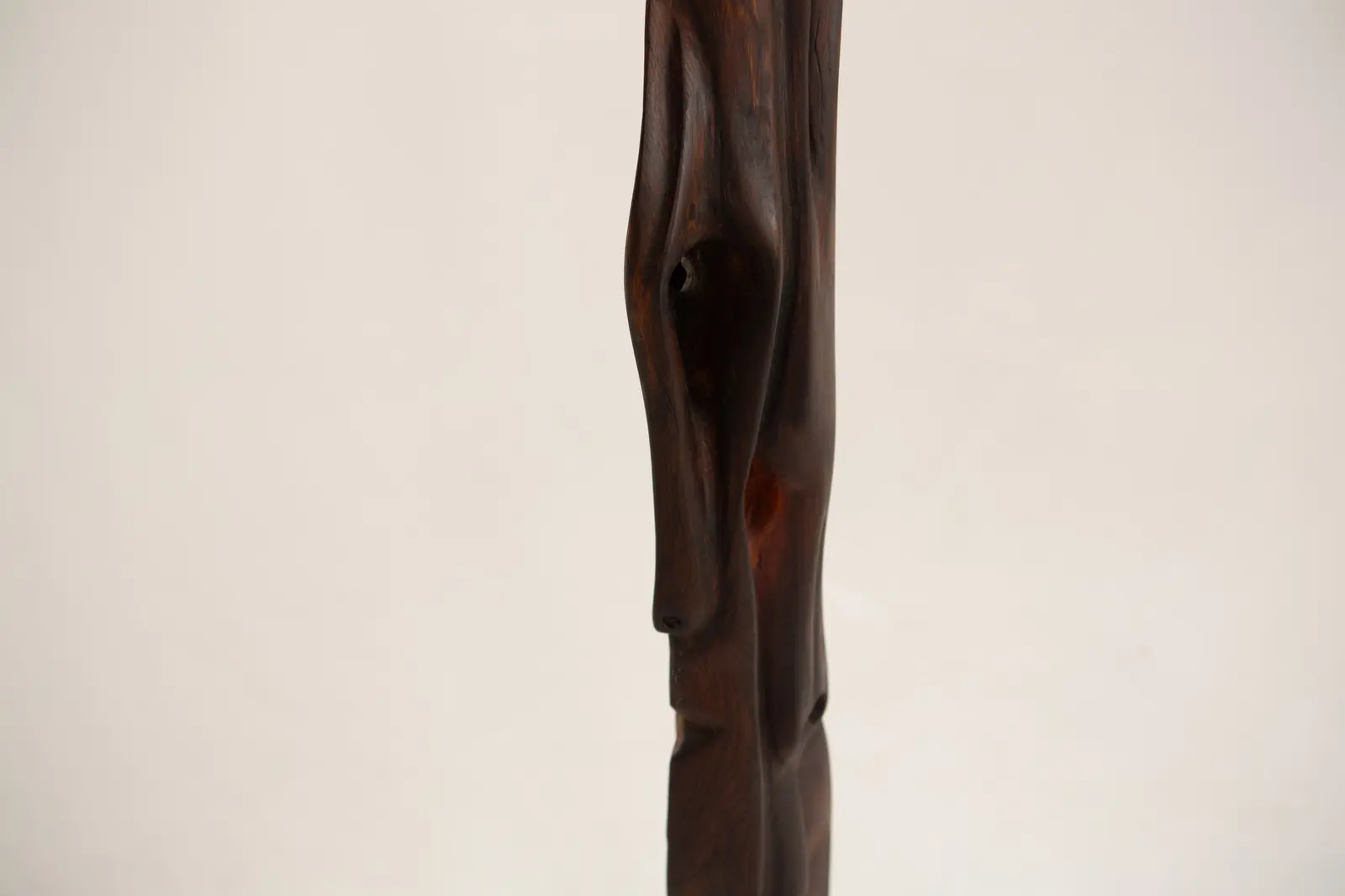
The verticality is held by the rod and the base, which set the work at eye level and let the wood breathe in the room. The contrast between the tight polish of the shaft and the swirling red of the base stays abrupt, almost dissonant. The column seems less to represent figures than to free them from matter that already held them, as though the hand had only opened what the wood was keeping.


One can read it as a memory that rises. The verticality is not architectural, it has something ceremonial, as in Tim Whiten. The cavity is a volume: what the wood no longer contains, the gaze holds. Where Bourgeois made the psyche rise in metal, here the wood lifts what never ceases to mean. A piece that gives itself slowly.