Untitled
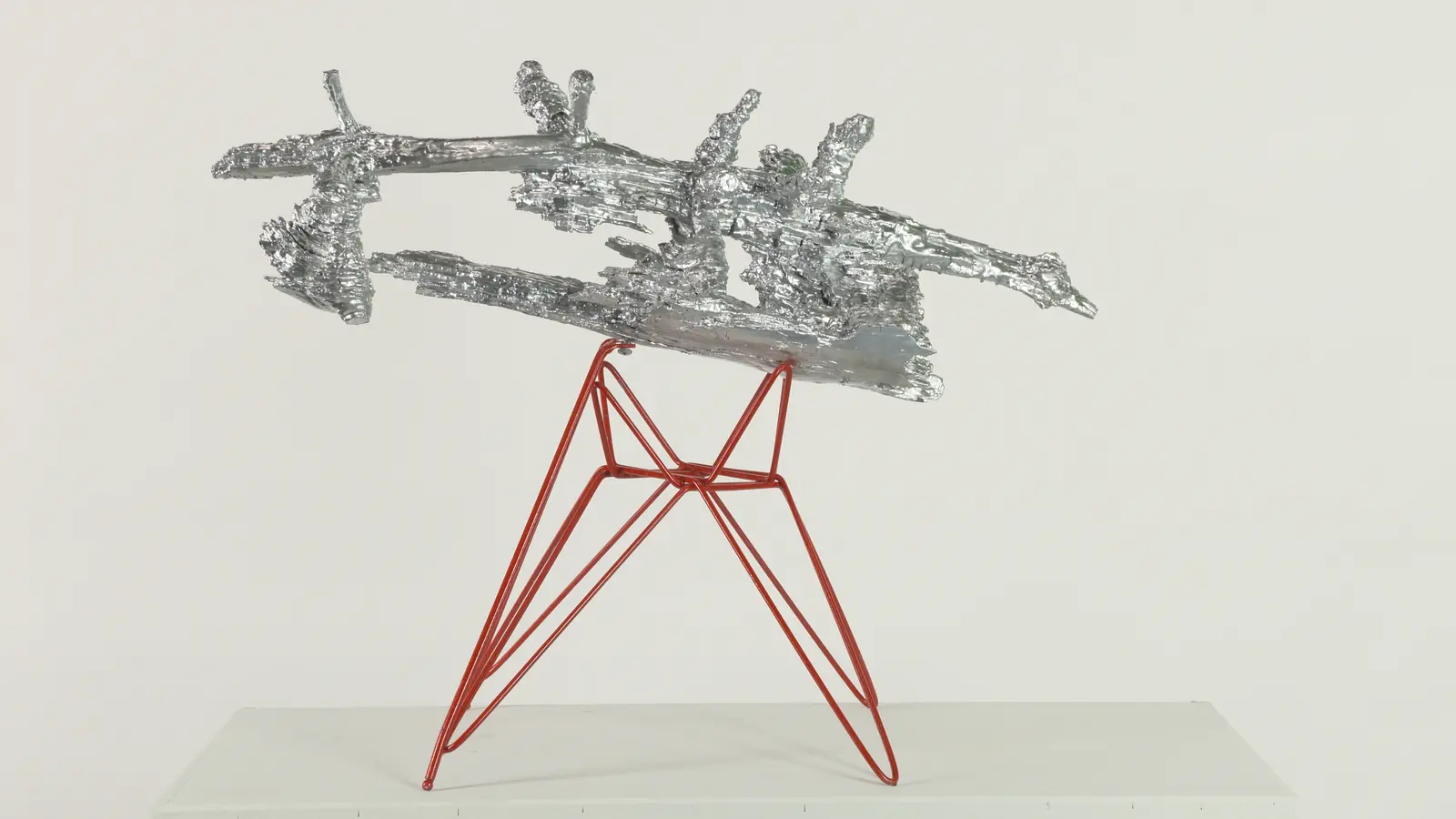
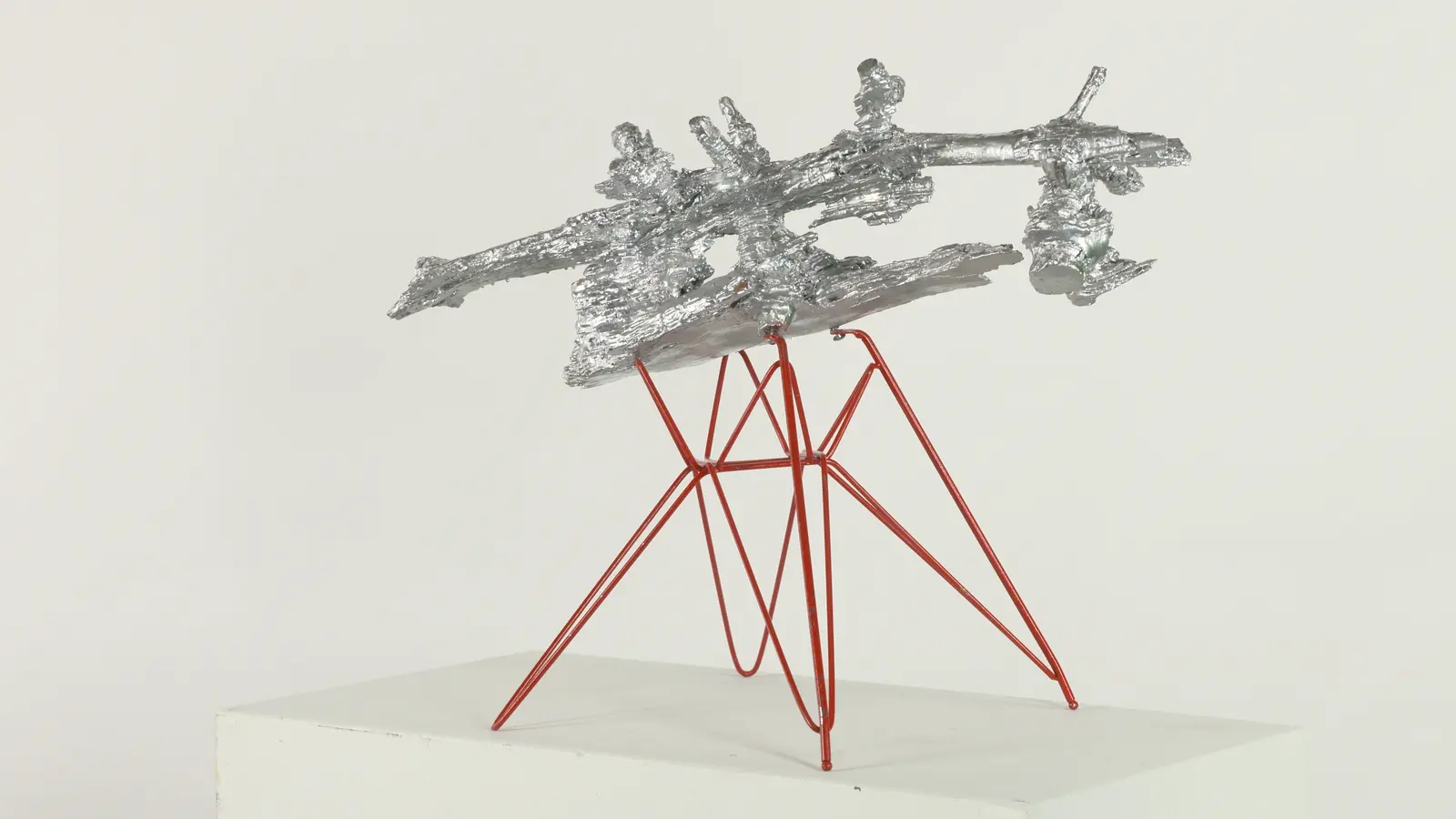
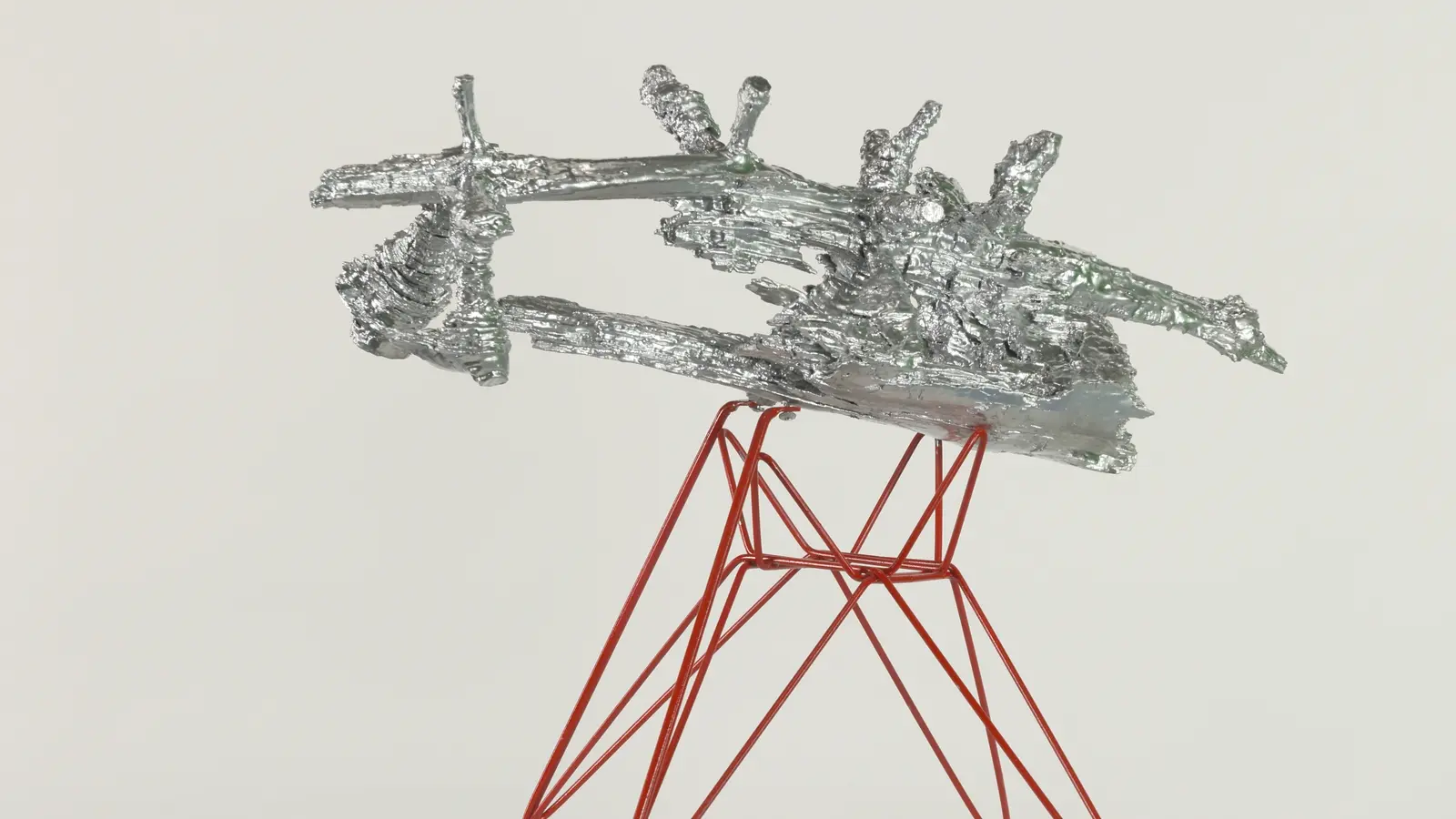
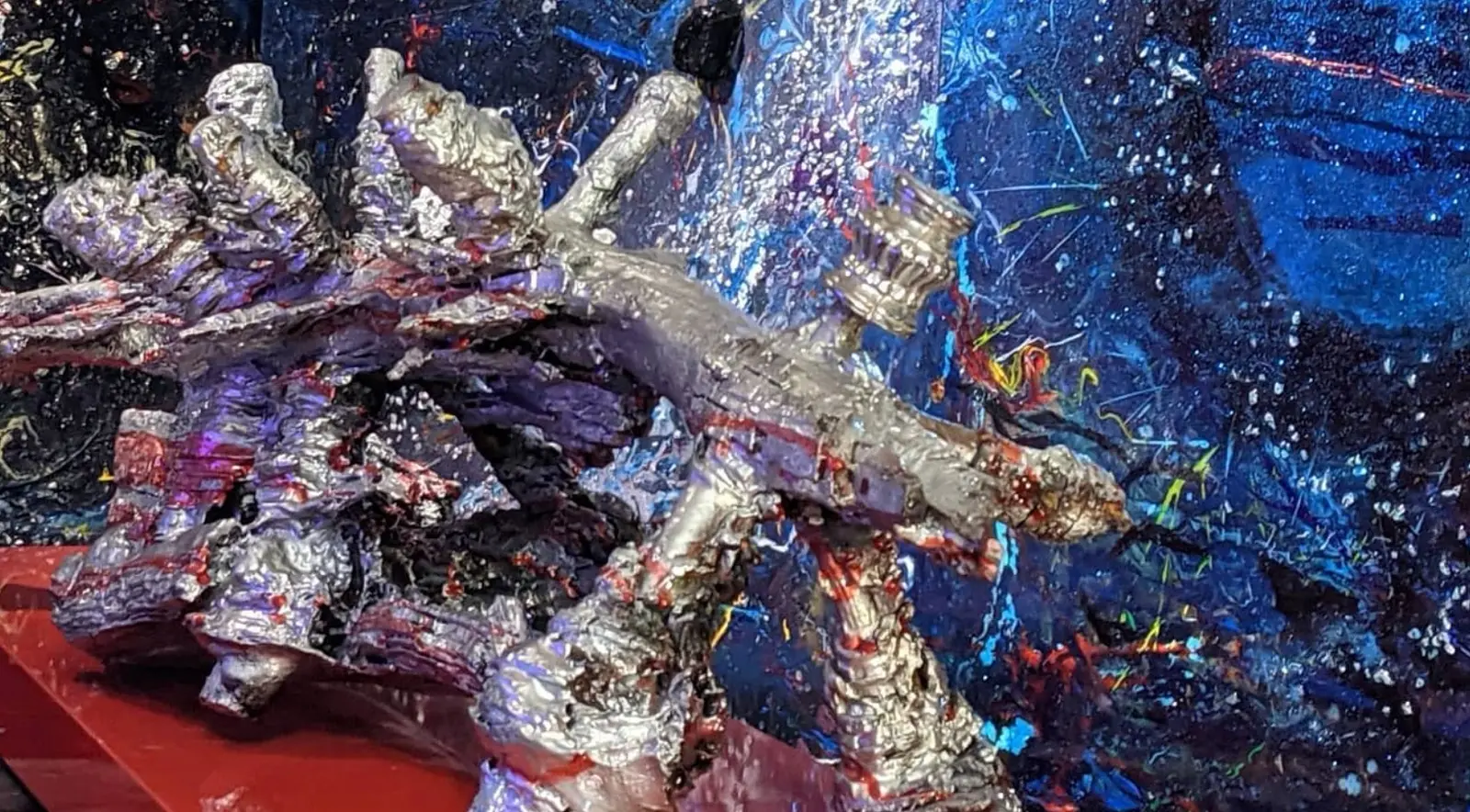
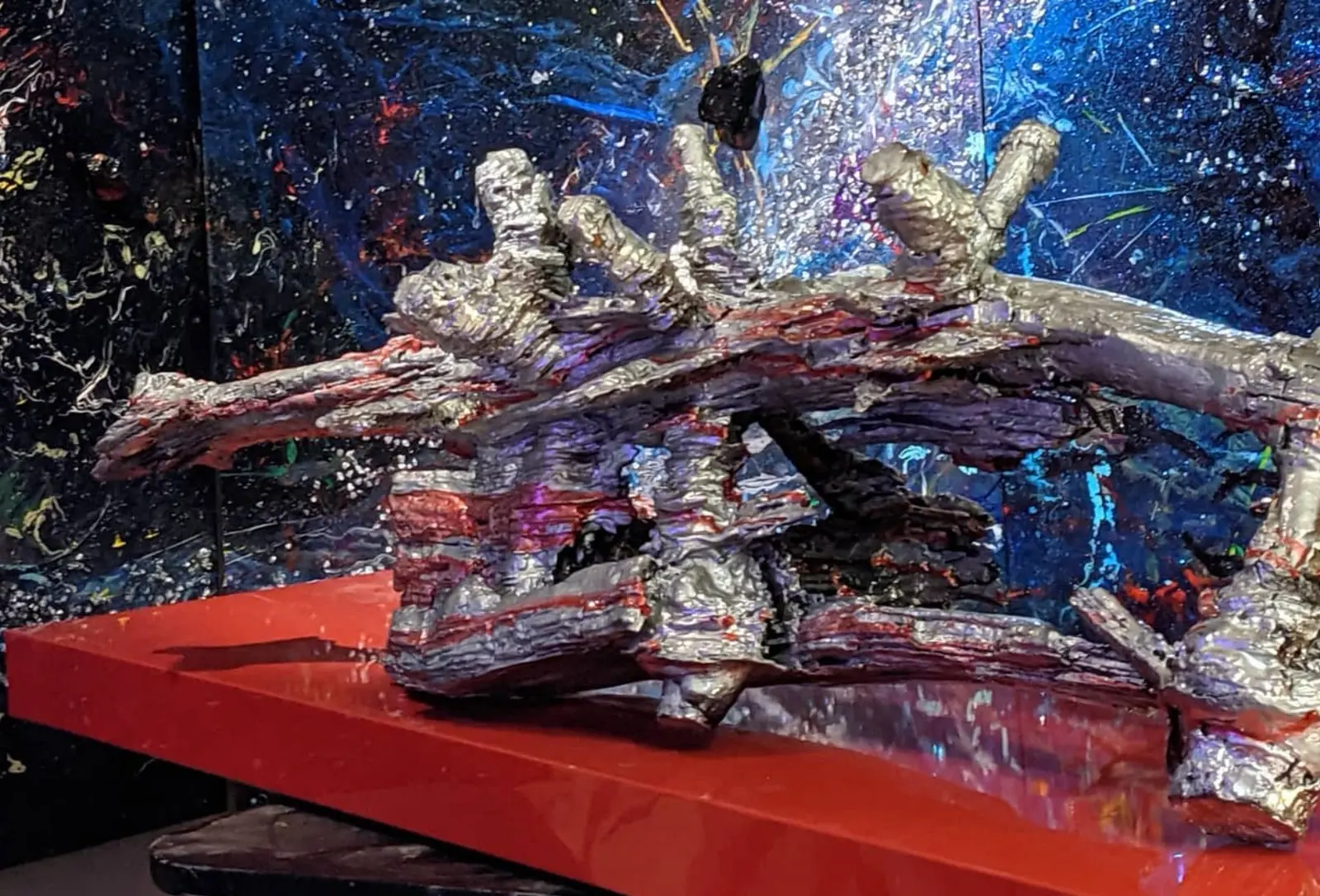
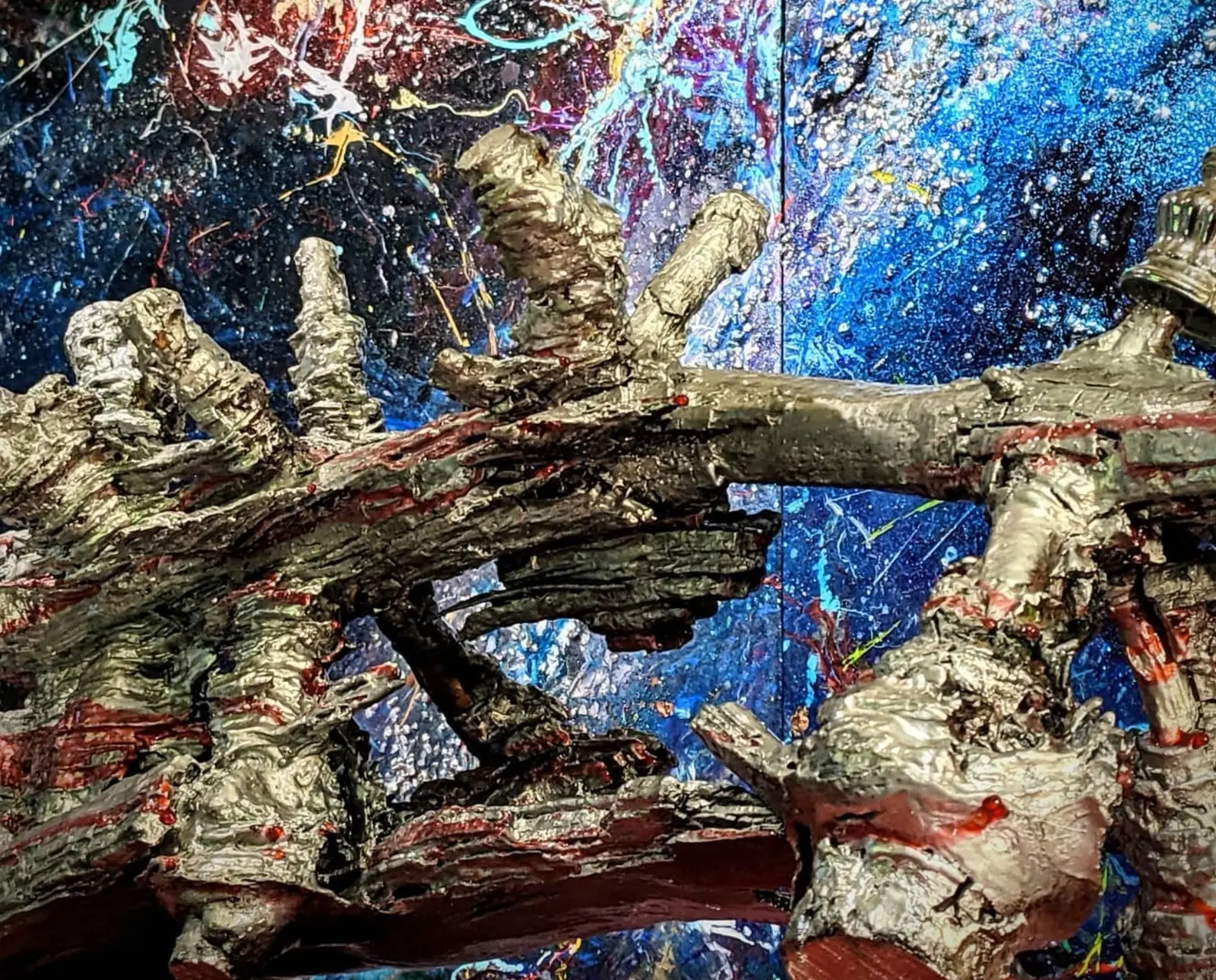
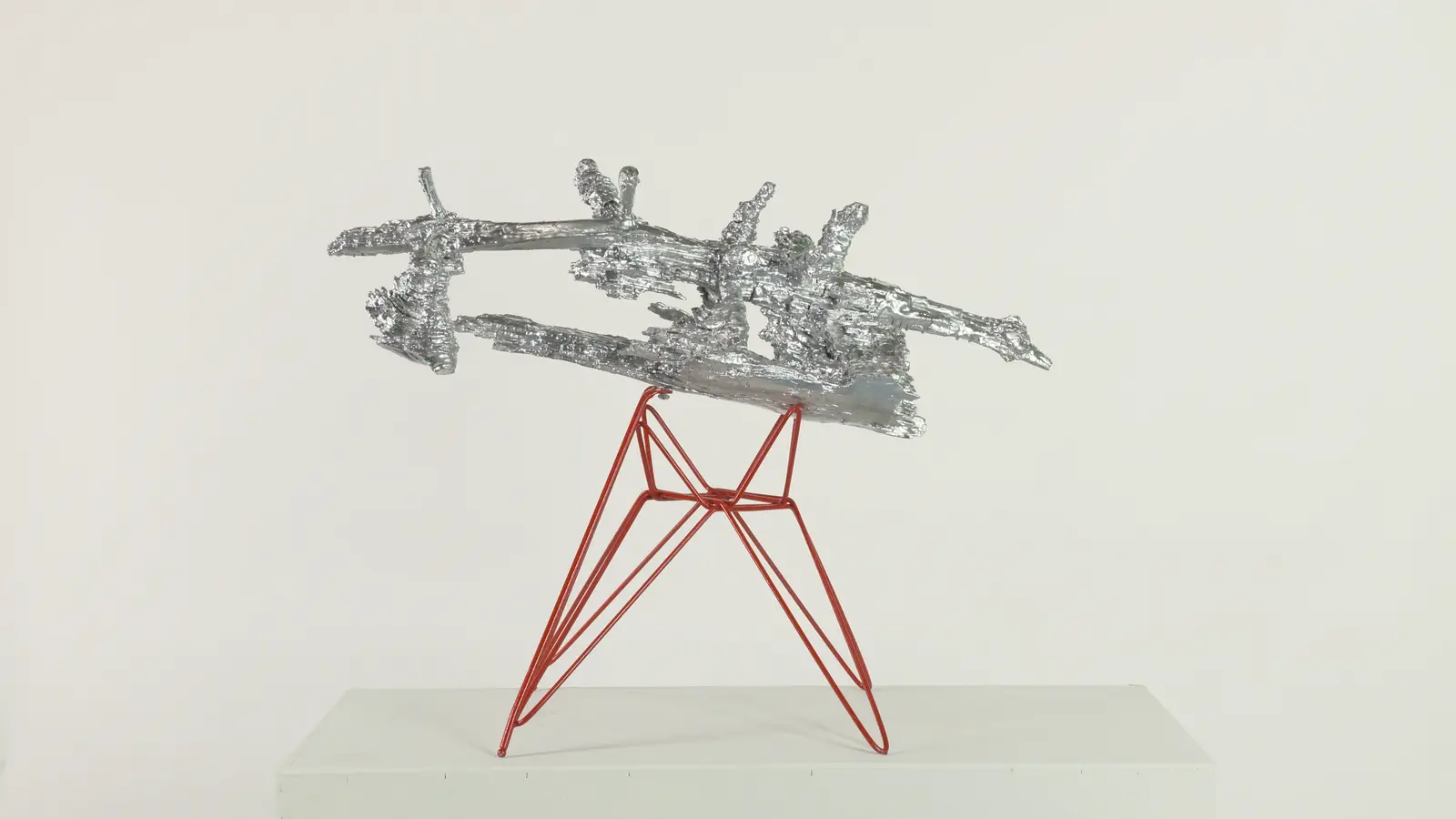
An elongated mass, set horizontally, sheathed in a silvery metallic crust with a crumpled relief. Beneath the gleaming surface the form keeps a branching silhouette: thin ramifications on the left, tapering like the tip of a branch, and a denser right-hand section bristling with short vertical spurs. The surface catches light in small irregular facets, and the piece, raised on its support, stands roughly 89 cm tall. The stand, in red lacquered steel wire, opens clean angular lines beneath the mass and holds it aloft, as if balanced on a slender rib.
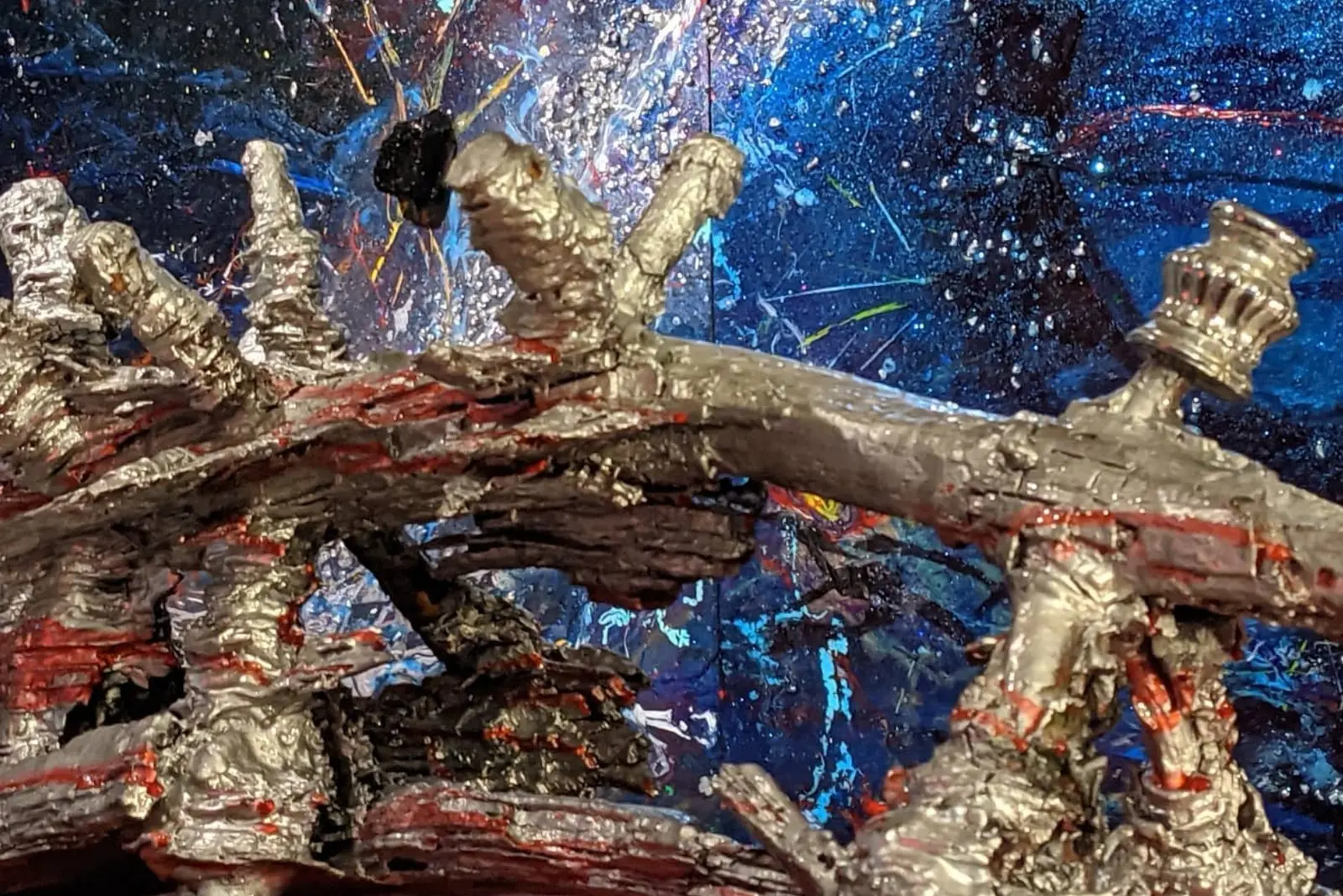
The piece sets itself apart from the rest of the corpus. Robert Bibeau usually works by direct carving on found wood, and tends toward the vertical. Here the material seems wrapped rather than hollowed out, and the object lies flat. The armature suggests a picked-up fragment, as in the abstract upright forms, yet the surface treatment tilts toward the industrial: what was organic becomes reflective metal, smooth and hard to the eye.
The support also shifts the reading. This taut wire base, geometric and slender, points to the vocabulary of modernist furniture more than to ritual sculpture. The title, "Spaceship", goes along with that drift without locking it down: the reclining, metallised form, suspended above its base, suggests a hull hovering in place as much as a branch frozen under frost. The work stays open to both readings.


The piece converses openly with the history of modern design, Charles Eames, Harry Bertoia, that mid-century moment when furniture became sculpture and the reverse. But it also summons the augmented Duchampian *ready-made* tradition: the found object is not shown as is, it is coated, transformed without being negated. Robert Bibeau here proposes his own path, between the chthonic *outsider art* that characterises most of his corpus and the pop-conceptual elegance that opens another door.