Ghost Ship
Zeus thundered all at once and hurled his bolt upon the ship.
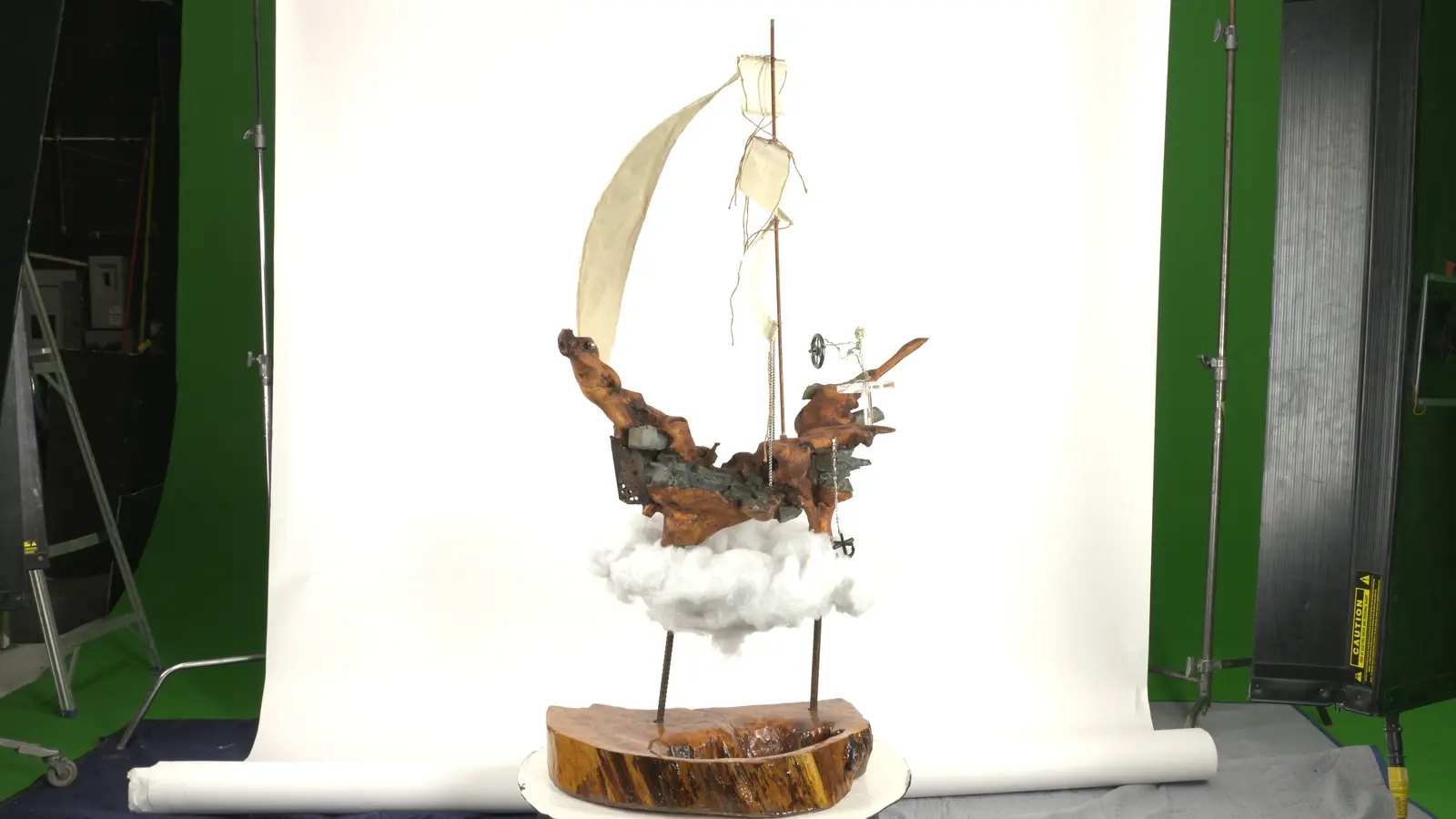
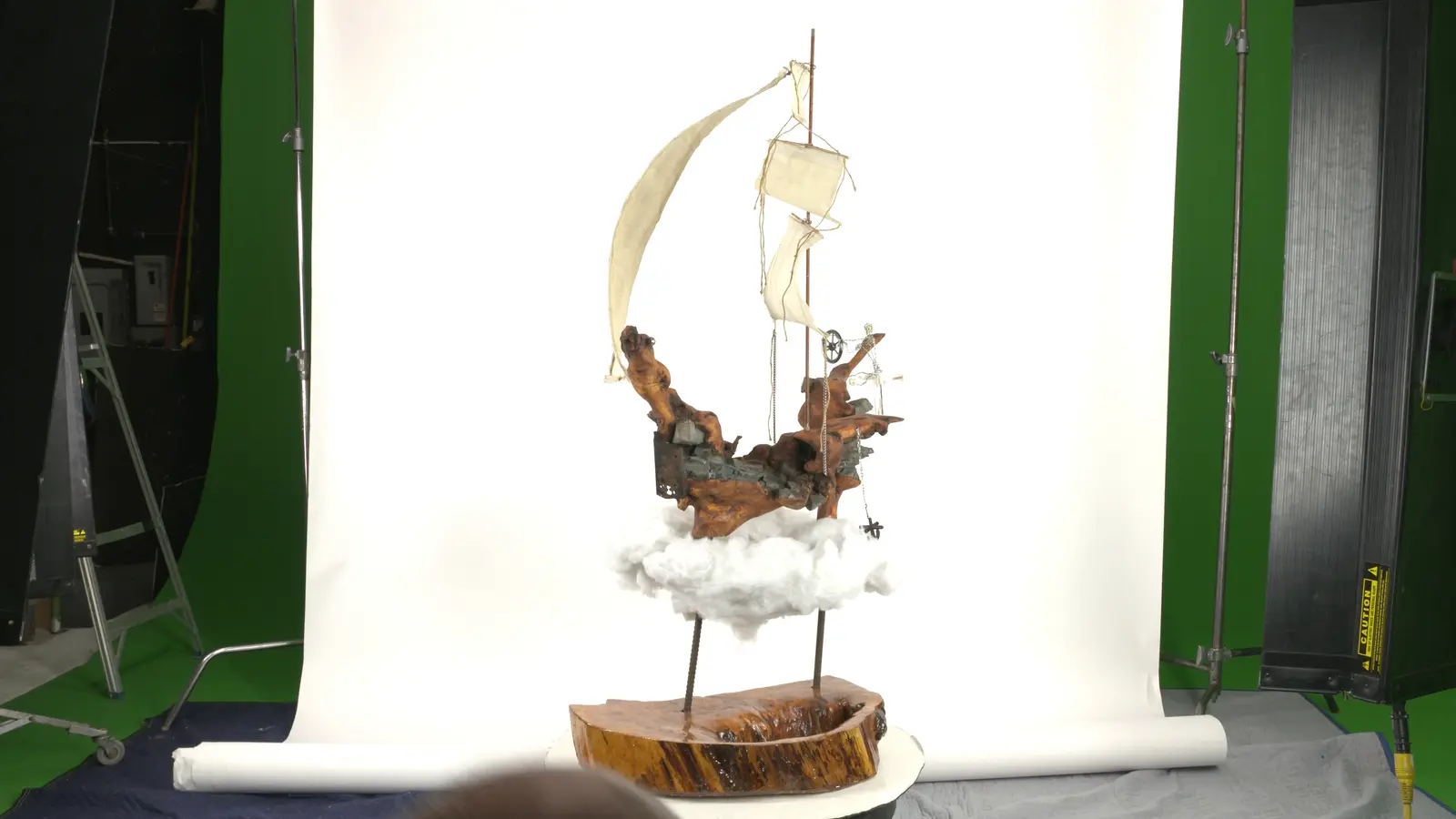
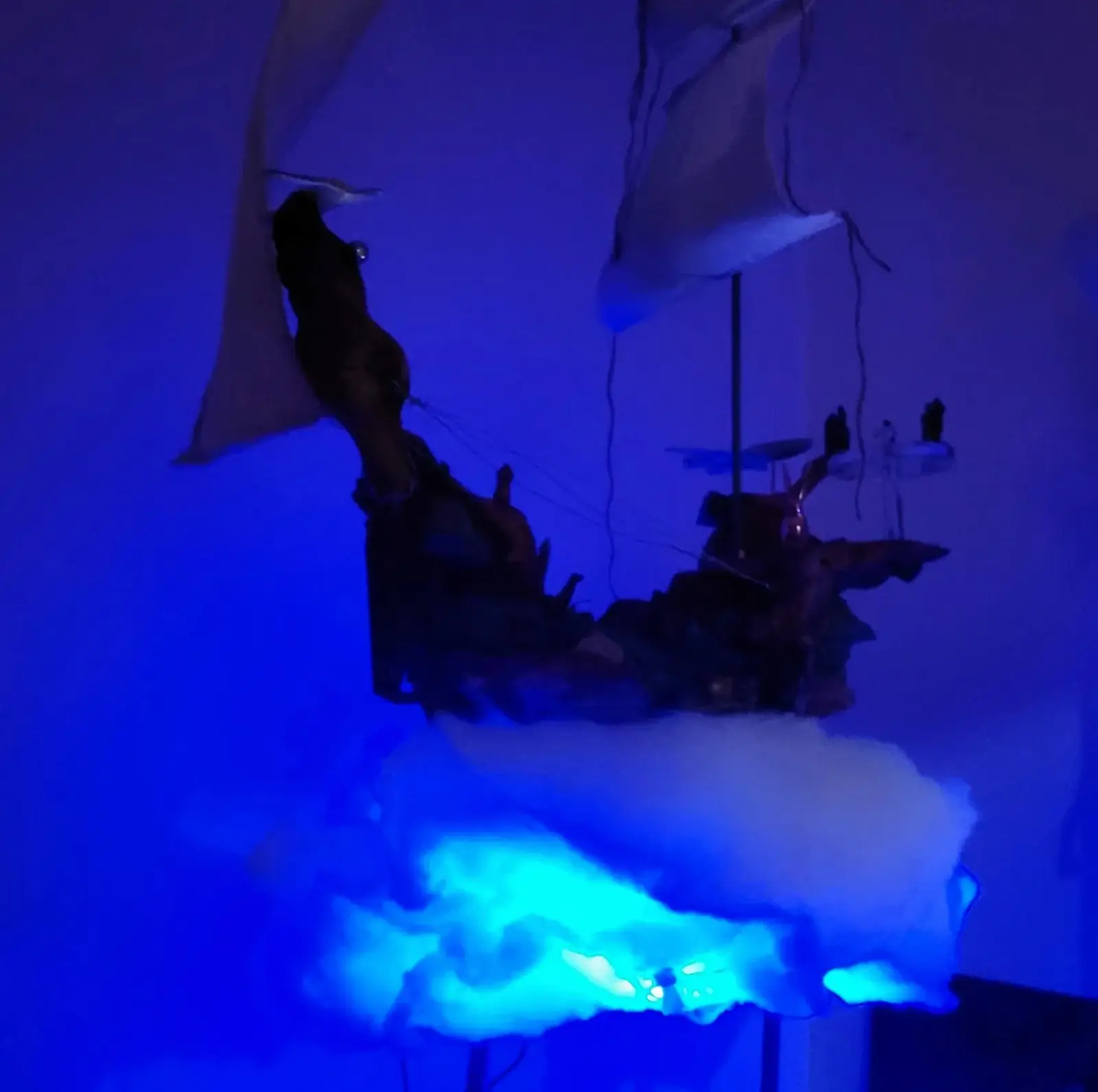
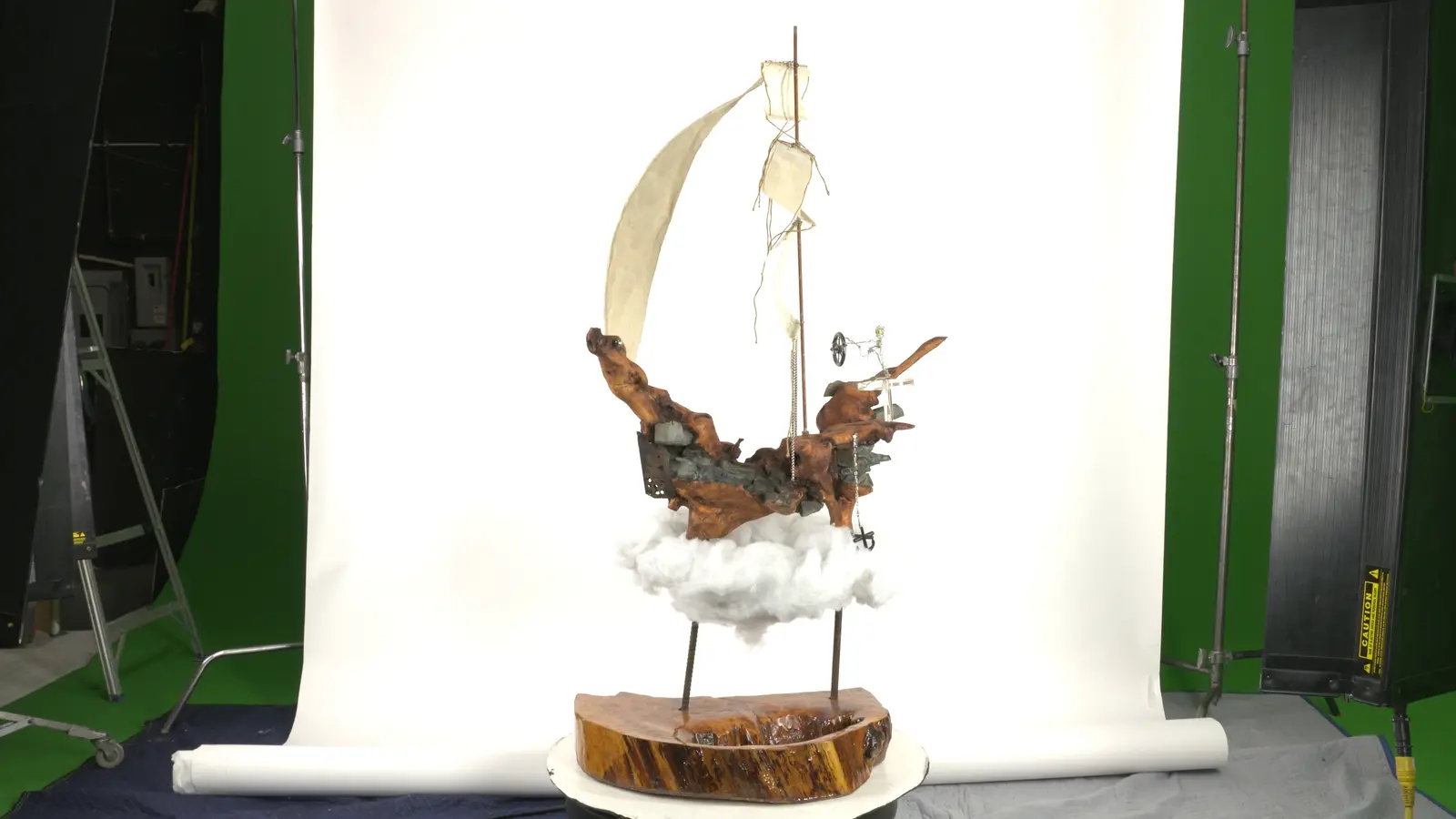
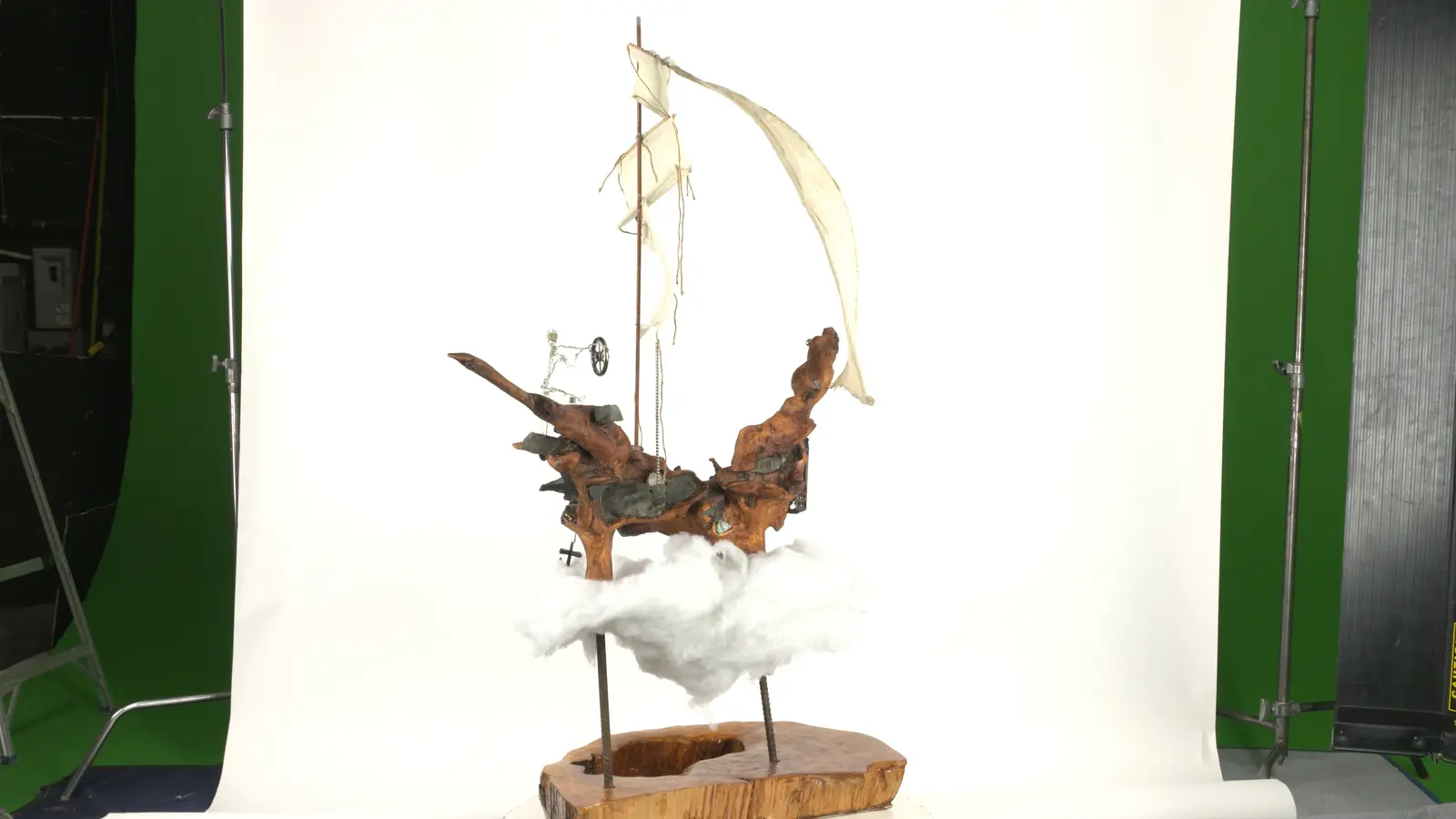
A sailing vessel roughly ninety centimetres tall, held above its base on two metal rods that let it hover in the air. The hull is carved from a contorted piece of found wood, a root or a split trunk, its prow rising into the silhouette of a wreck. Slabs of grey stone are wedged along the gunwale as cargo and as ballast, and a small pierced metal plate closes the stern. From the deck hangs a metal chain ending in a small dark cross, and a block of clear acrylic sits among the timbers, a cross-shape running through it.
Above, a pale wooden mast carries one large crescent-shaped sail of beige fabric, joined by three smaller square sails lashed with twine. A single figure stands at the helm: a skeleton of twisted wire, topped with a pale bead, set against a black spoked ship's wheel. Beneath the hull, a cloud of white cotton wool wraps around the rods, suspended halfway between the keel and the varnished wooden base.
The work takes on a frankly narrative register. The vessel sails through the sky, its lone deckhand works the wheel, and the cloud stands in for the sea below. The scene calls up seafaring legend and romantic shipwreck: Géricault's *Raft of the Medusa*, Shakespeare's *Tempest* reduced to a crew of one dead sailor. At this small scale, the object seems to hold a whole story within a contained volume.


The Calder kinship reveals itself here more clearly than anywhere else in the corpus. It is a transposed Cirque Calder: the same miniaturisation of an entire world, the same noble bricolage that assembles found materials into expressive figures, the same invitation extended to the gaze to lean in and enter the scene. But where Calder summons the collective jubilation of the circus, Robert Bibeau summons the dark theatre of the shipwreck. Calder in light metal that floats; Robert in heavy wood that sinks, and yet the sculptural gesture is kindred.