ÜGLY
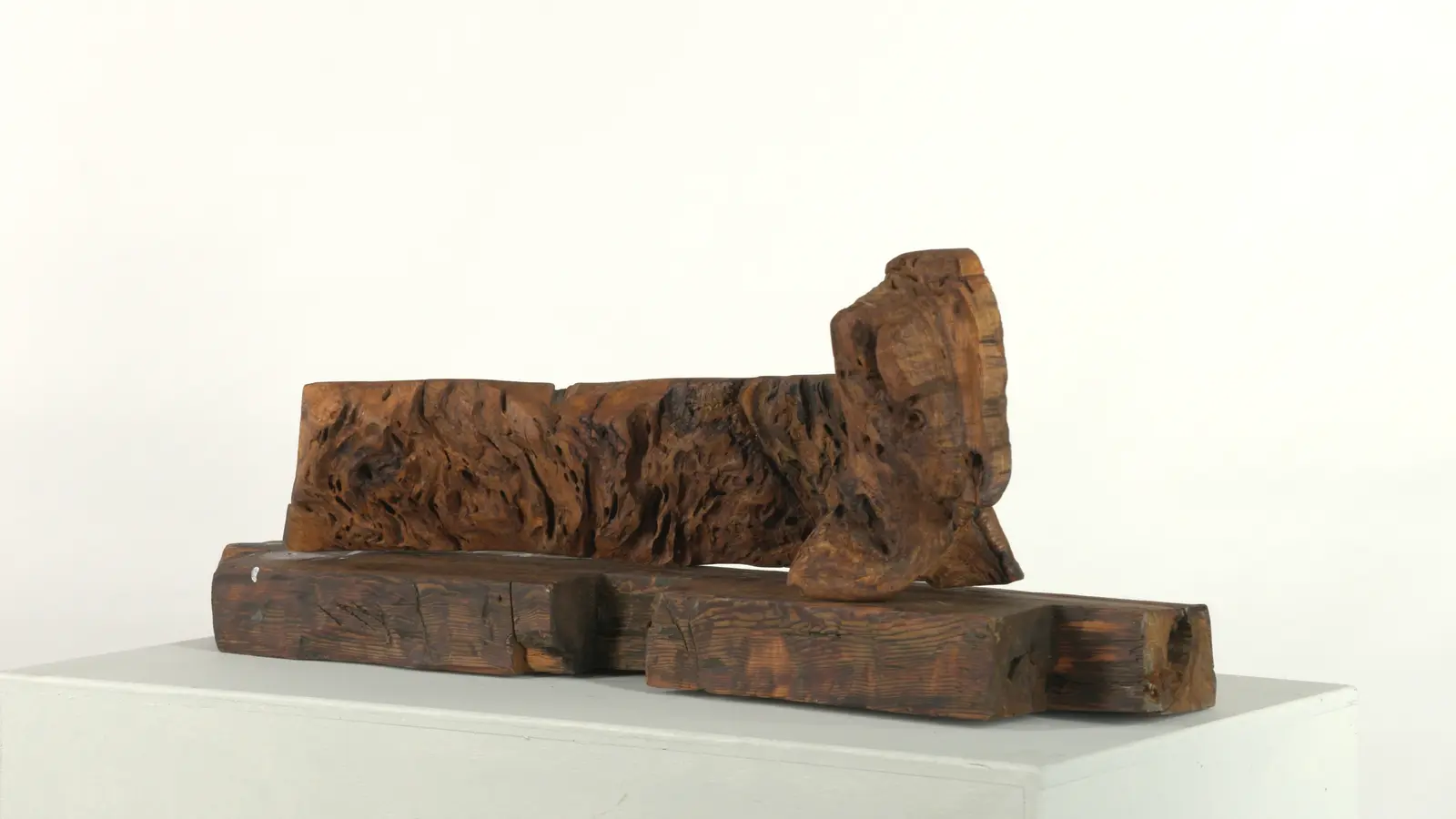
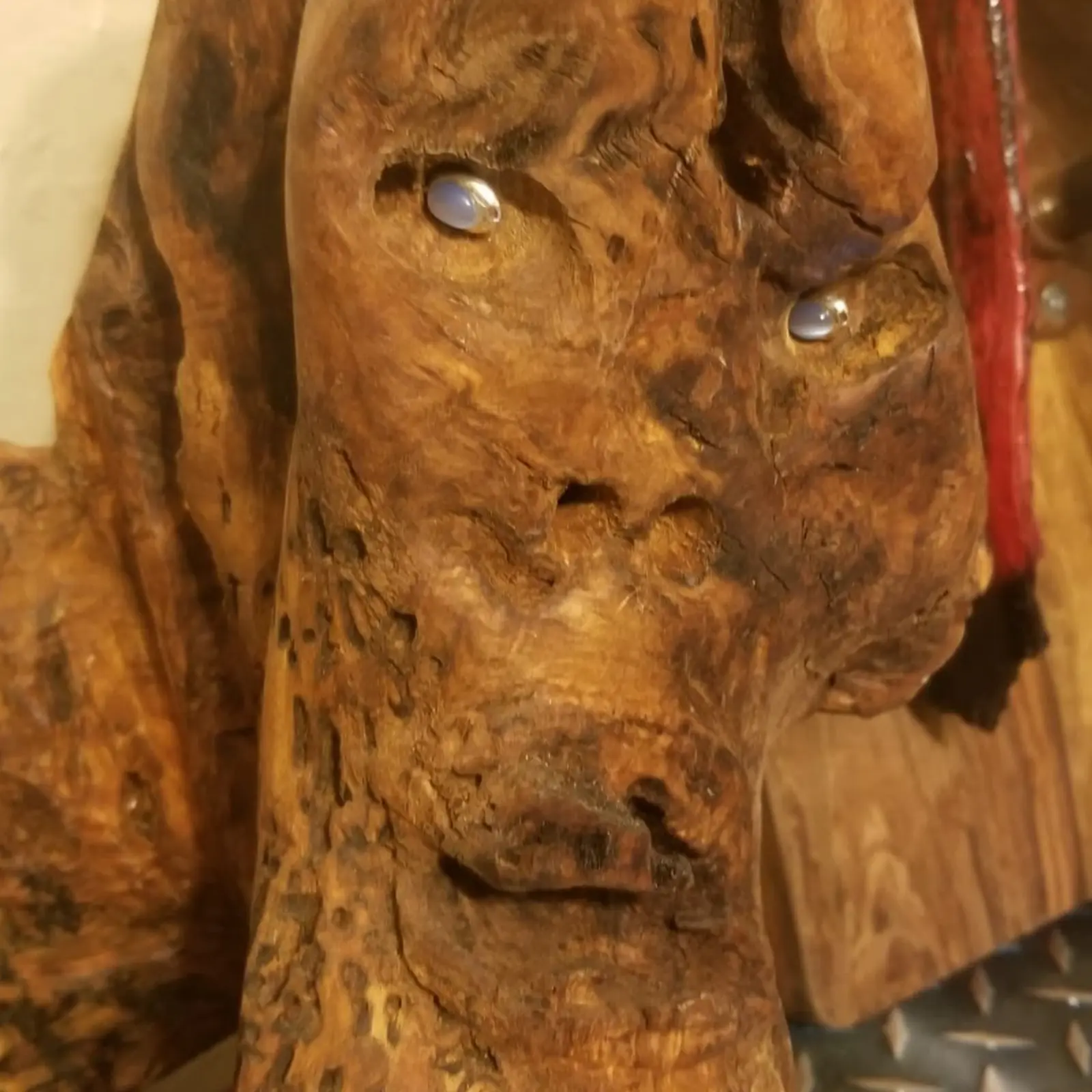
Close-up of the reclining figure's face: an old man's profile hollowed from the wood burl, metal eye, the abstract body stretching left over an old beam, white background

Untitled

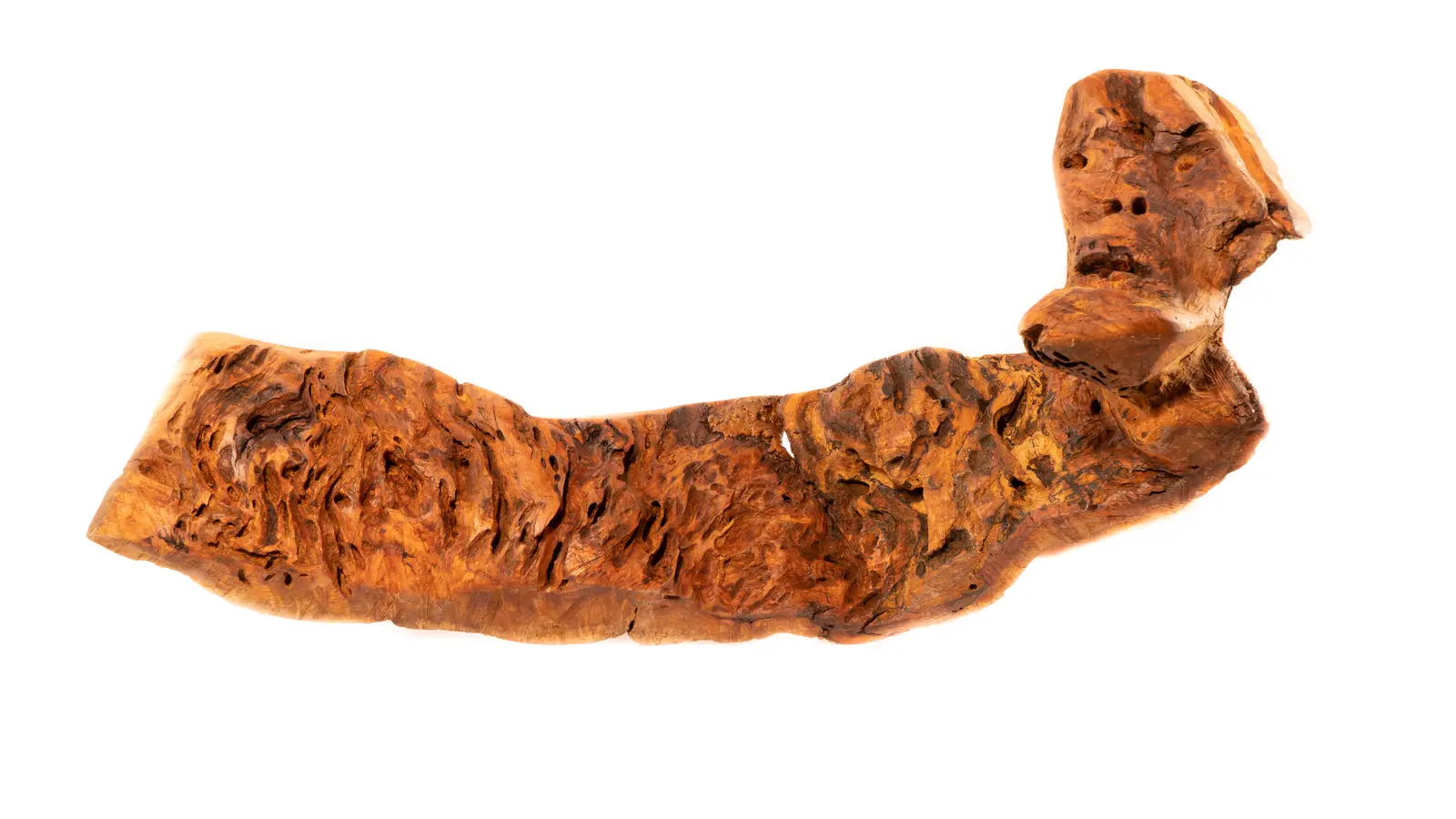
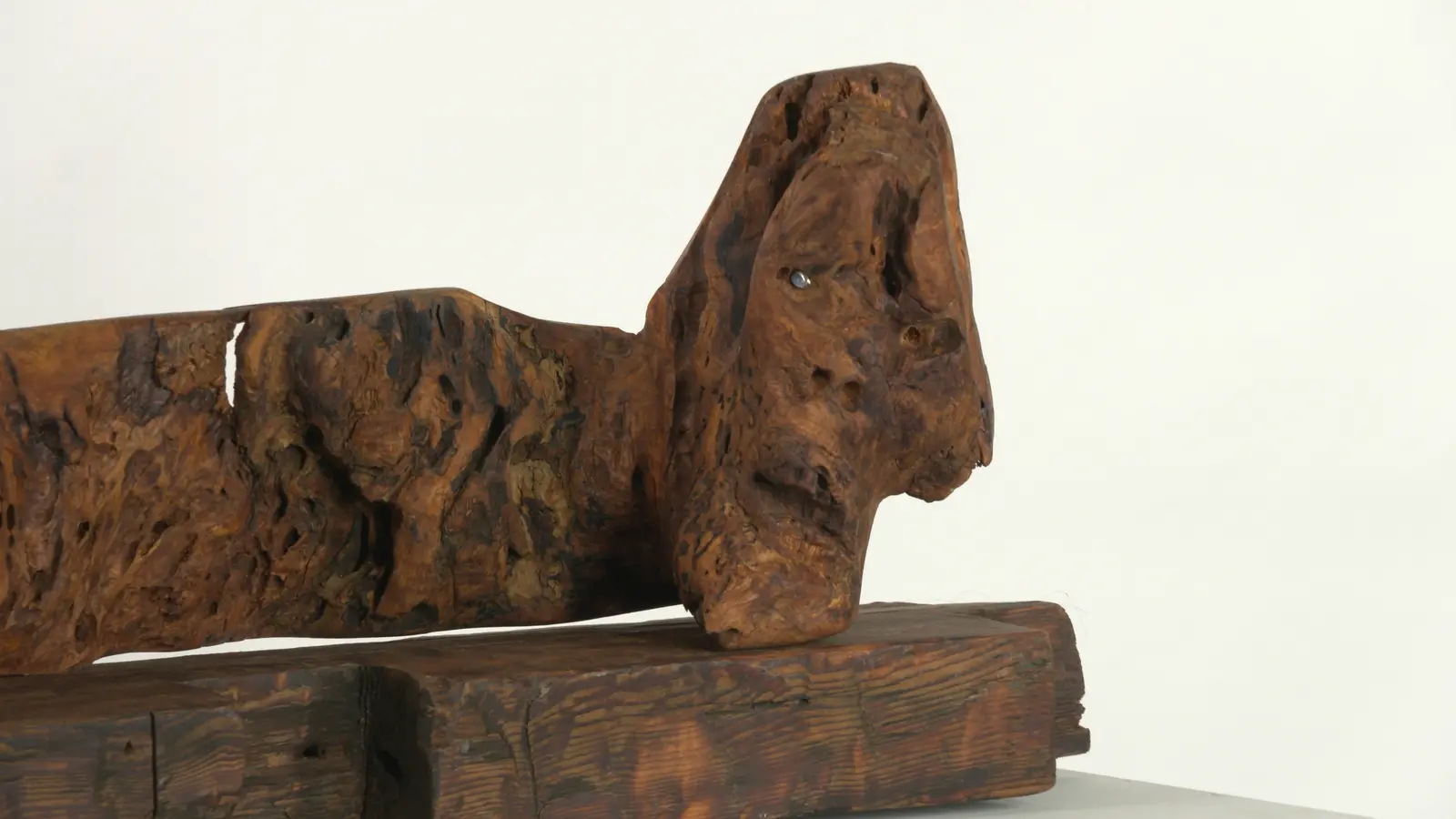
A reclining figure of medium format, carved from a dense, dark brown burl-grained wood, set horizontally on an assembly of old beams, likely recovered framing elements. The piece is anthropomorphic without being descriptive: only the head is truly freed from the mass — a hollowed profile, a heavy brow, a half-open mouth, a metal eye driven into the wood — while the body remains an abstract, elongated mass that the tormented grain is enough to animate. The figure rests on the beams as on a bed too hard for sleep.

Robert Bibeau performs a double gesture here. He releases the face by direct carving from a knotted wood chosen for its irregularities — a gnarled knot becomes a cheekbone, a cavity becomes an eye socket — and leaves the rest of the trunk as a suggested body, without limbs or anatomy. Beneath the sculpture, the assembly of old beams ennobles the recovered material. Robert turns joiner and assembler, and the work draws its apparent age from the dialogue between the figure and the architectural wood.

The effect is that of an old man worn through to the end — a body finished the way the wood is: weathered, pierced, and yet enduring. The reclining position evokes the recumbent effigy more than rest. Horizontality is the exception within a body of work dominated by verticality, and that exception takes on status of its own: the piece settles to the ground like someone who will not rise again.
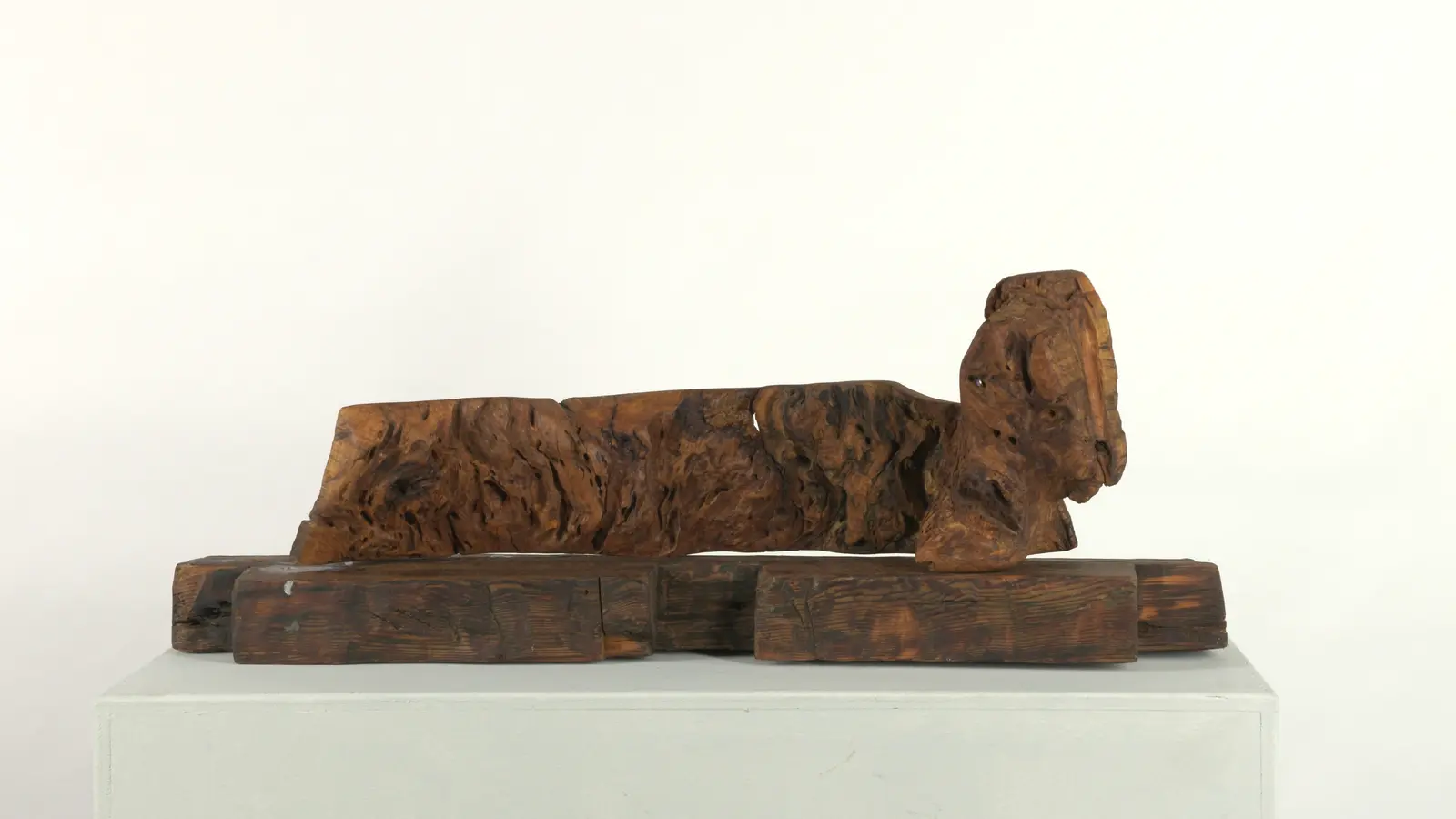
Full view of the reclining burl-wood figure on its assembly of old beams, head raised at right, white background
Three-quarter view of the reclining figure, dark burl mass set on the recovered beams, head at right, white background
Horizontal heavily ridged wood burl, right end rising into a head-like form, white studio background, work by Robert Bibeau
Video
Reading notes

One thinks of medieval recumbent effigies, those figures lying on tomb stone, and of their raw variant, the transi, which shows the body as time leaves it. The contemporary kinship runs through Mark Manders, whose figures seem abandoned mid-making, neither finished nor ruined. Robert Bibeau adds a properly Québécois gesture: recycled framing elements as a base, laying the figure down on local built memory — an old man returned to the wood that houses are made of.