ÜGLY
Untitled, work by Robert Bibeau

Untitled

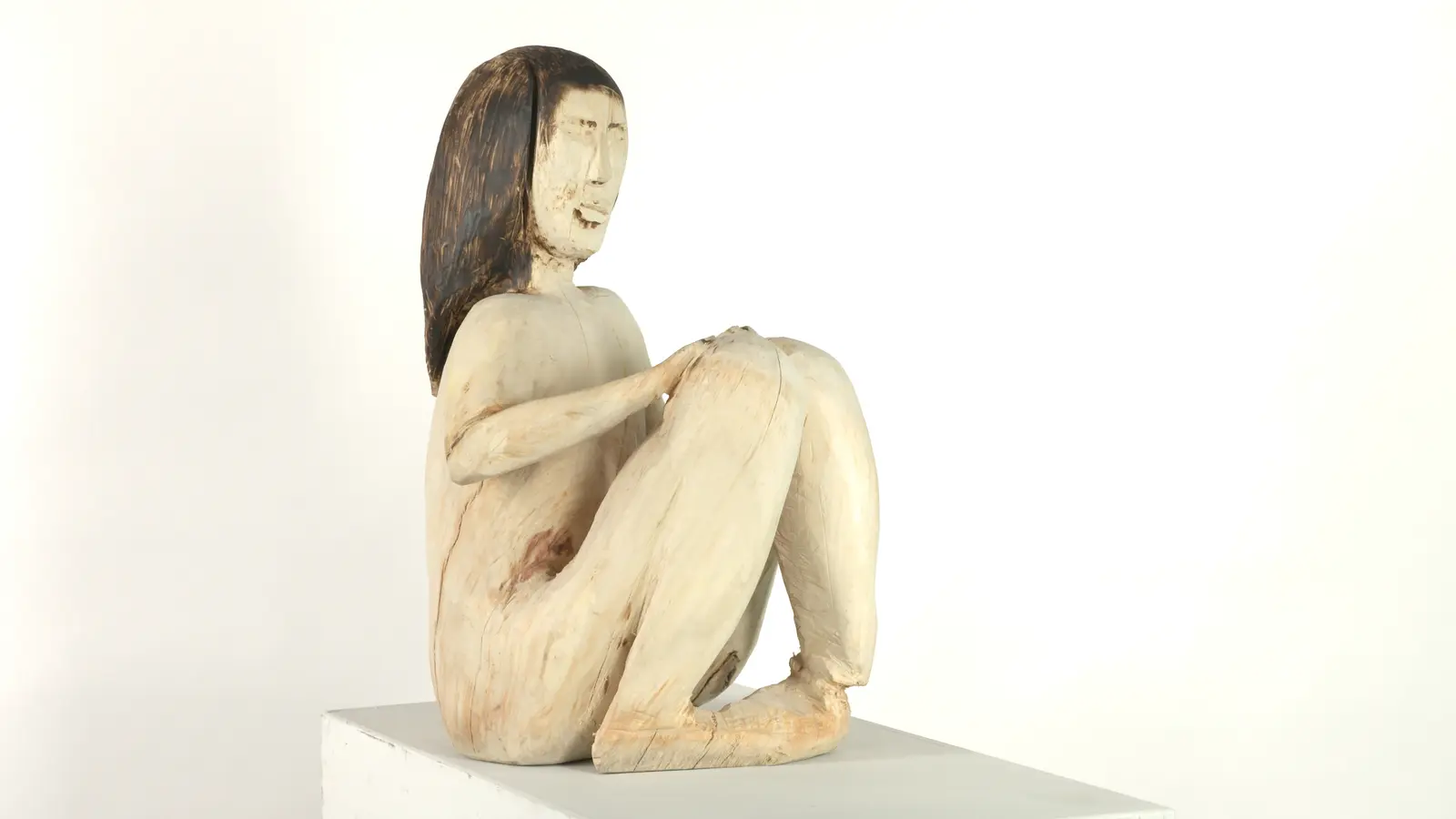
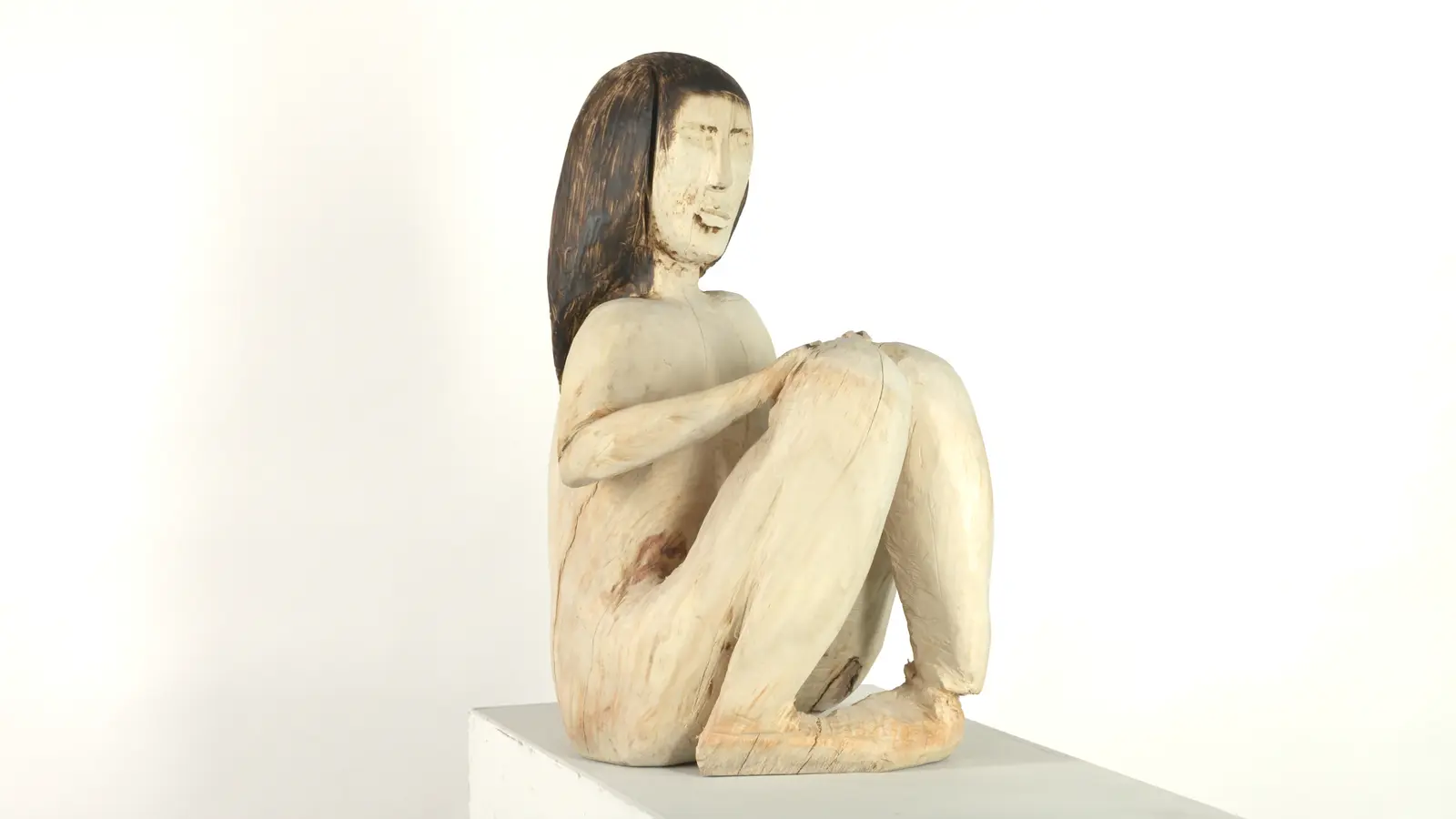
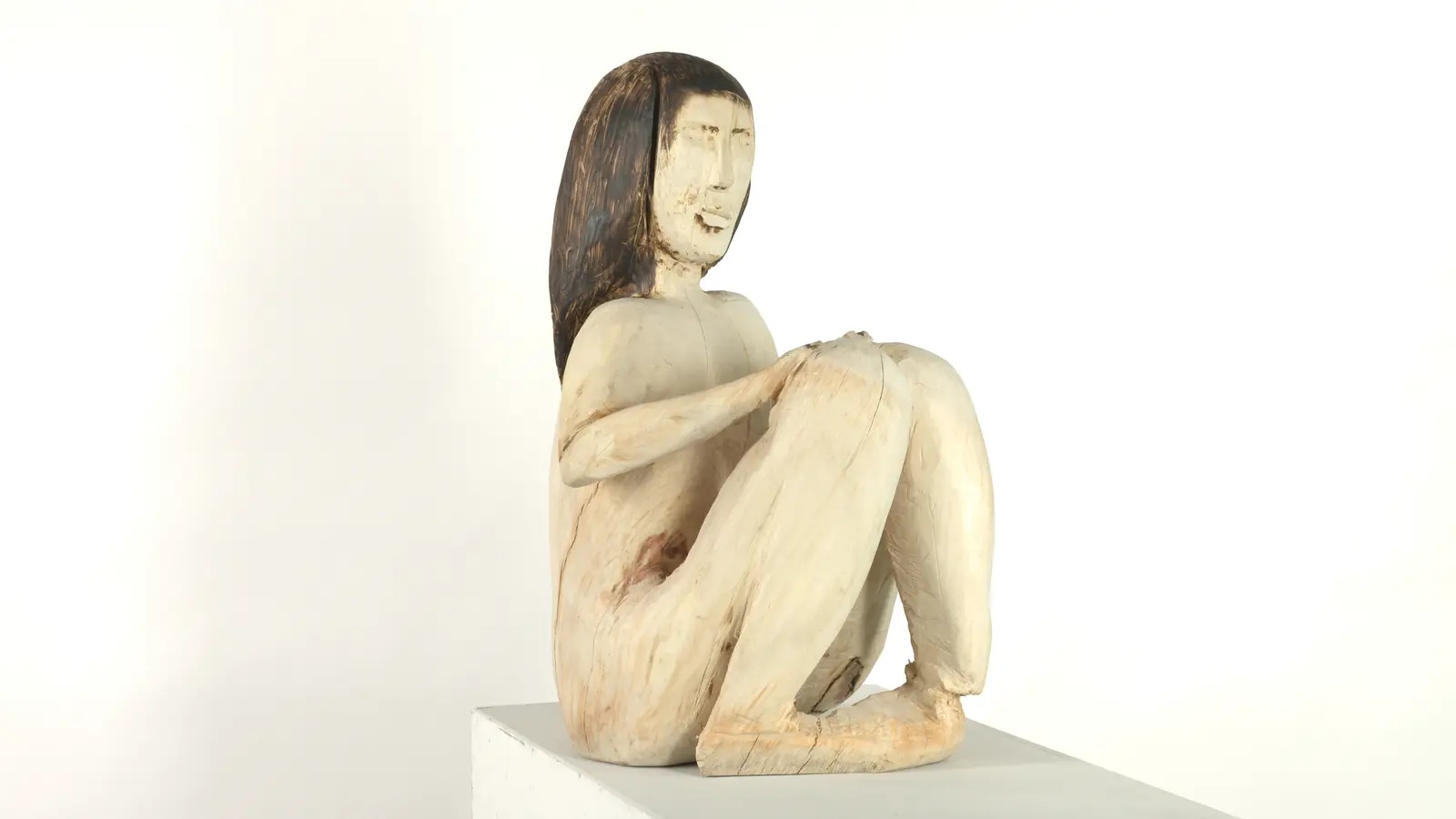
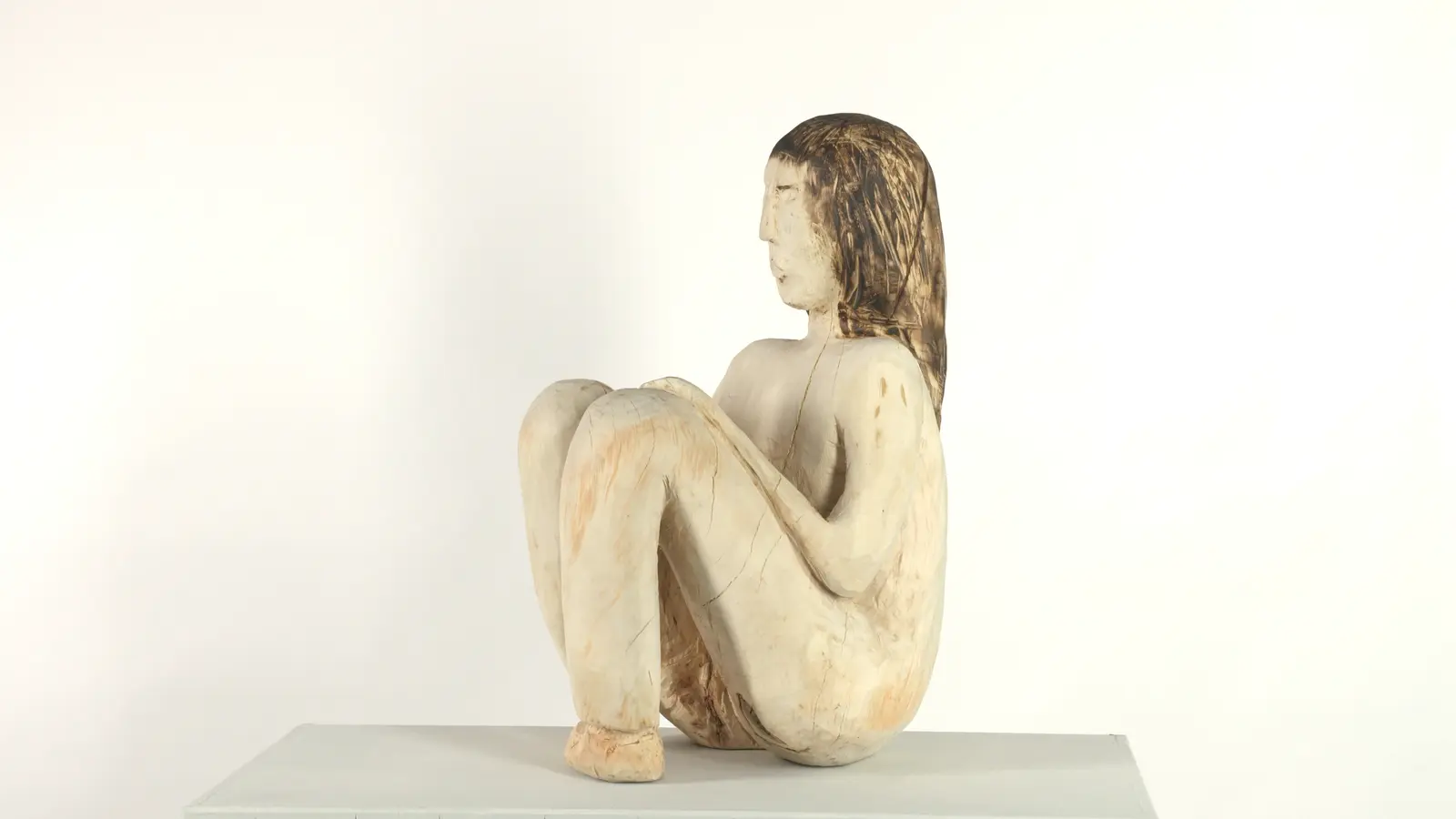
A seated female figure, roughly seventy centimetres high, carved from a pale wood, almost off-white, left unvarnished. The knees are drawn up against the chest, both arms wrap the shins, the head is held upright with the face turned outward. The hair falls in a long dark mass over the shoulder and back: a darkened wood, run through with vertical striations that follow the grain, a brown that thickens toward near-black while letting the pale tone show through in places. The body keeps the natural split of the wood, readable down the back and the hip. The face is stylised, almost naive, and still fully modelled, with arched brows, two carved eyes, a long prominent nose, defined cheeks, and a slightly parted mouth.

This is the most withheld work in the corpus. Robert Bibeau holds here to wood alone, with no assembly and no added materials, no flowers or stones. The darkened hair is enough to set the contrast, joined by a faint trace of red pigment on the flank, muted and seemingly oxidised. The posture stays turned inward, the gaze carried a little past the piece itself. The wood seems to have curled in on itself to bear this figure.

One lingers a long time in front of this sculpture. It sets aside the death, mythology and theatre that run through other works, holding instead to a seated, silent presence that looks elsewhere. It is the ritual object in the first sense, the one before which a person may sit and fall quiet. In a corpus marked by grave verticality and slow unease, this seated figure offers a rest, an anchor where the gaze can settle.

Untitled, work by Robert Bibeau
Video
Reading notes

The piece sits within the long tradition of intimist sculpture, Shaker ritual statuary, the funerary figures of African sculpture, Käthe Kollwitz's prints in which the seated, gathered female figure became an emblem. Robert Bibeau adds a contemporary dimension: pudic nudity, wood chosen for its near-flesh paleness, the black paint of the hair contrasting like jewellery. It is, without doubt, the emotional centre of the corpus, that to which one returns once one has seen everything.