Untitled
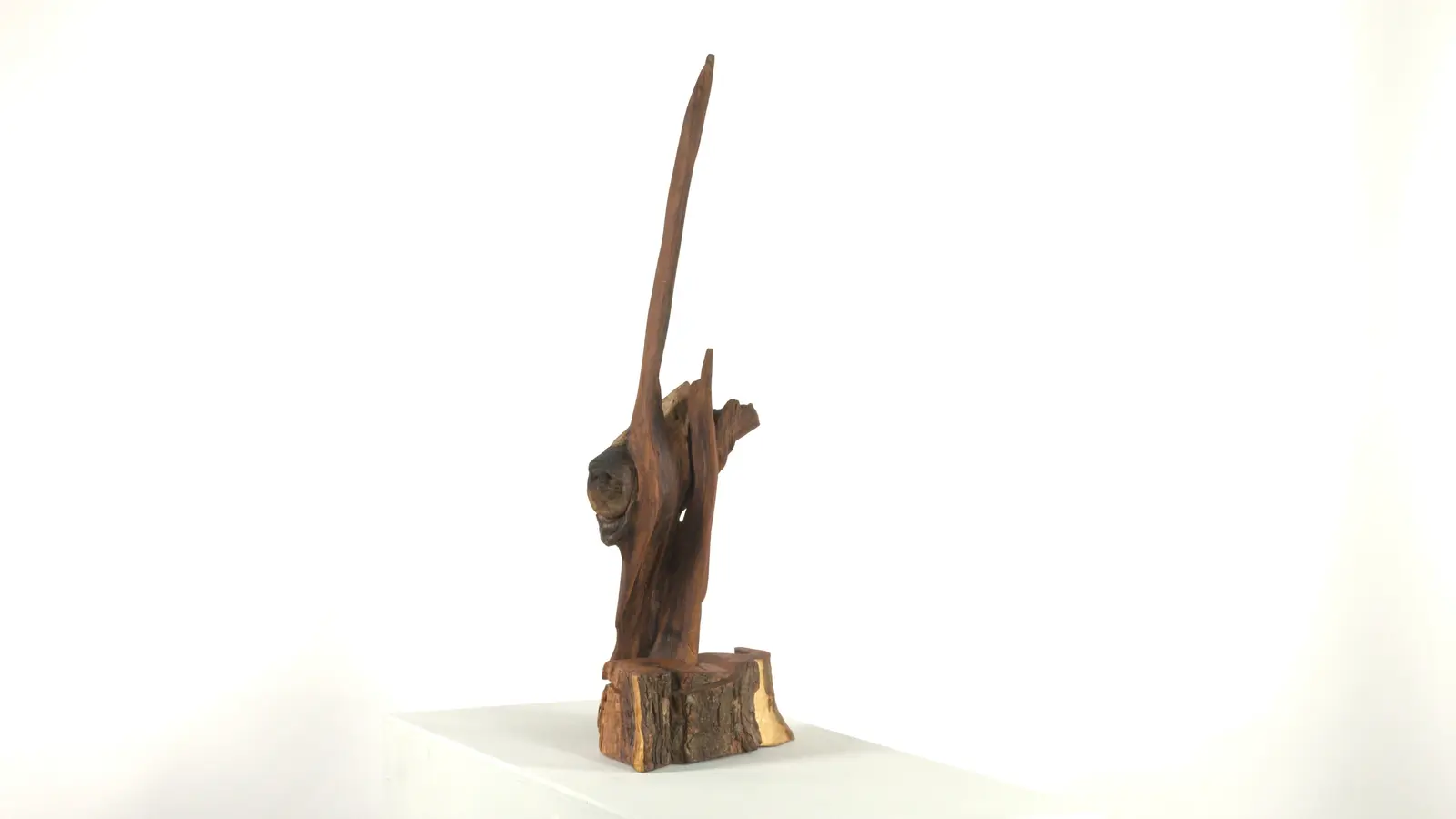
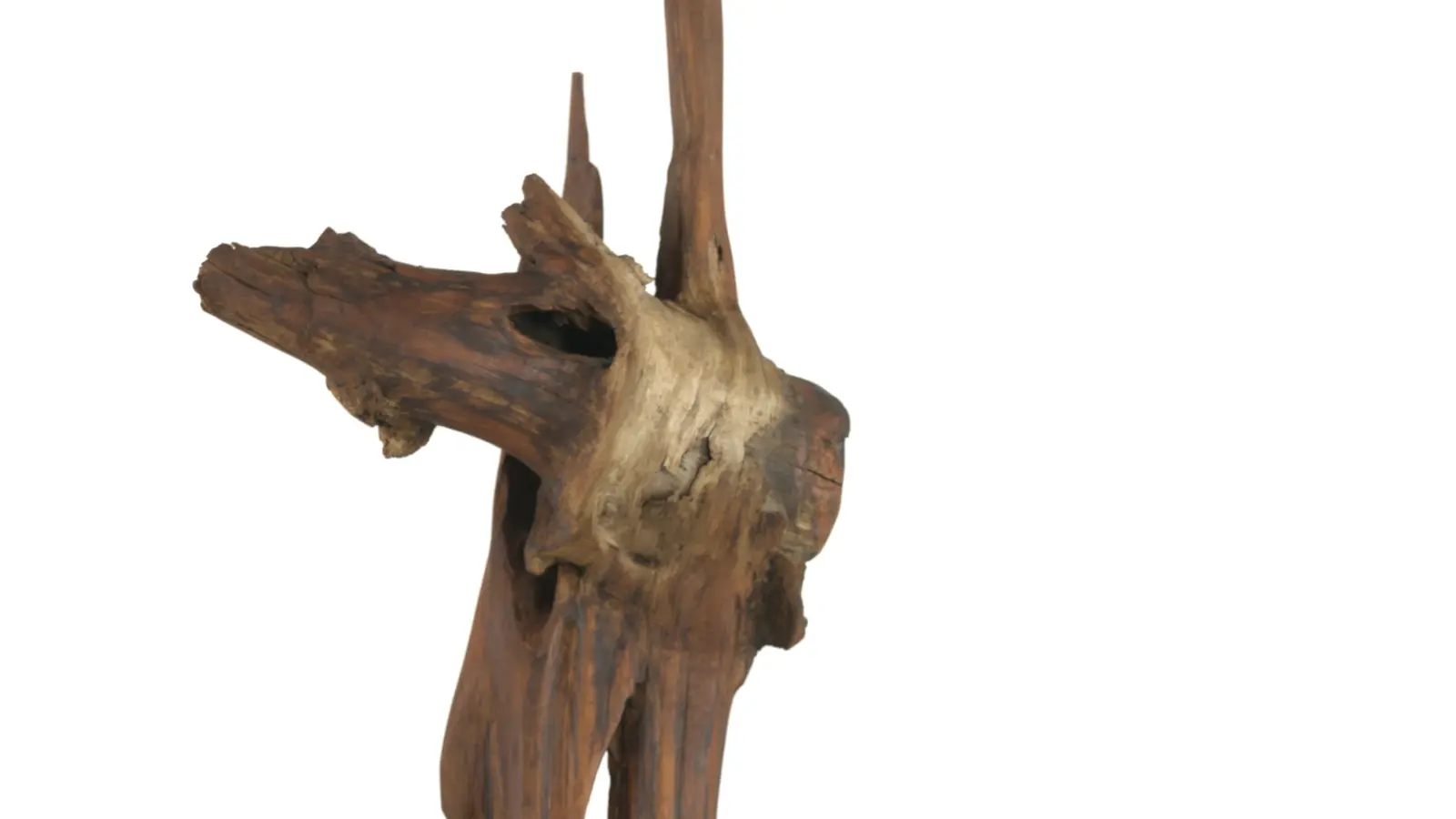
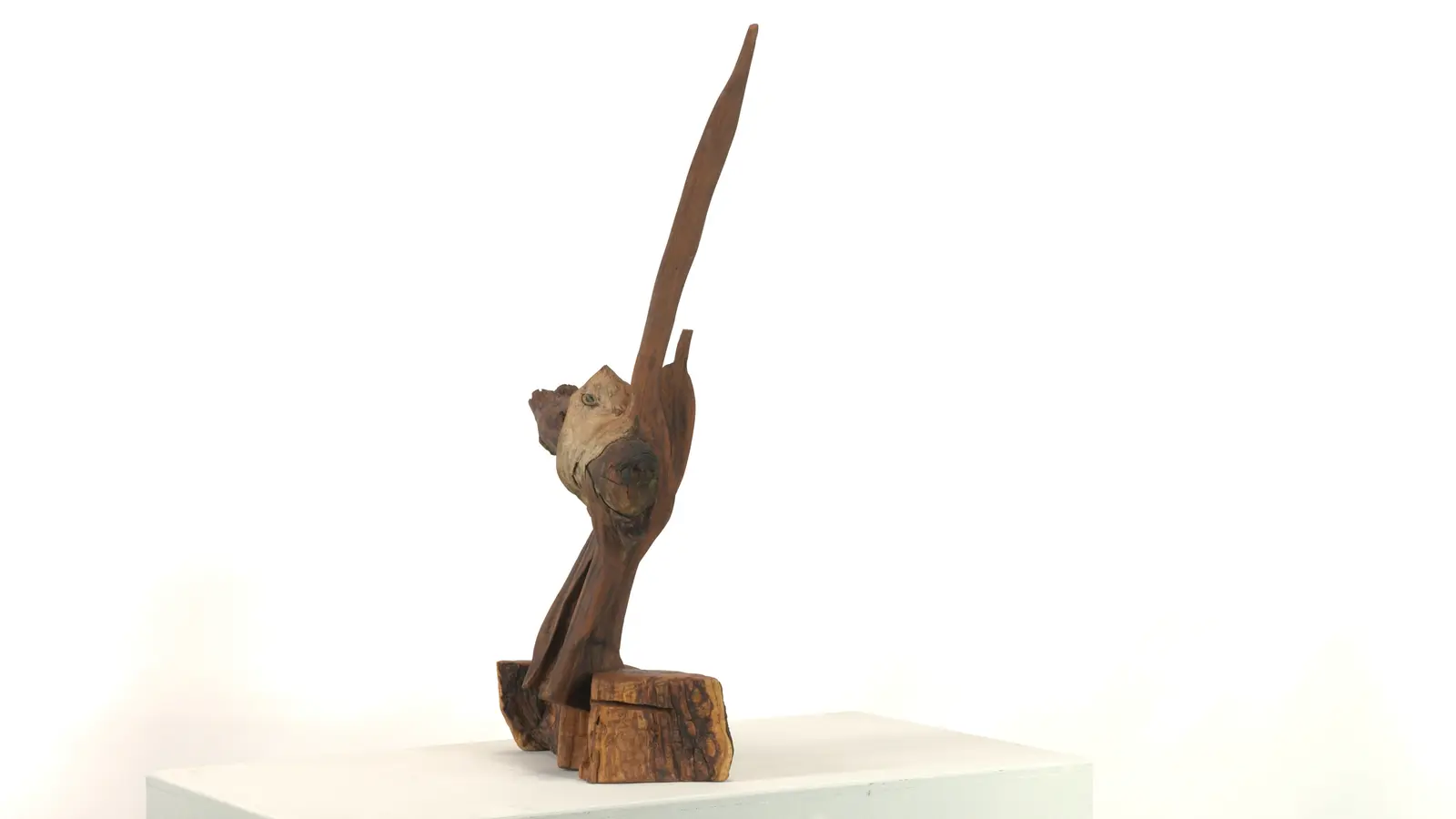
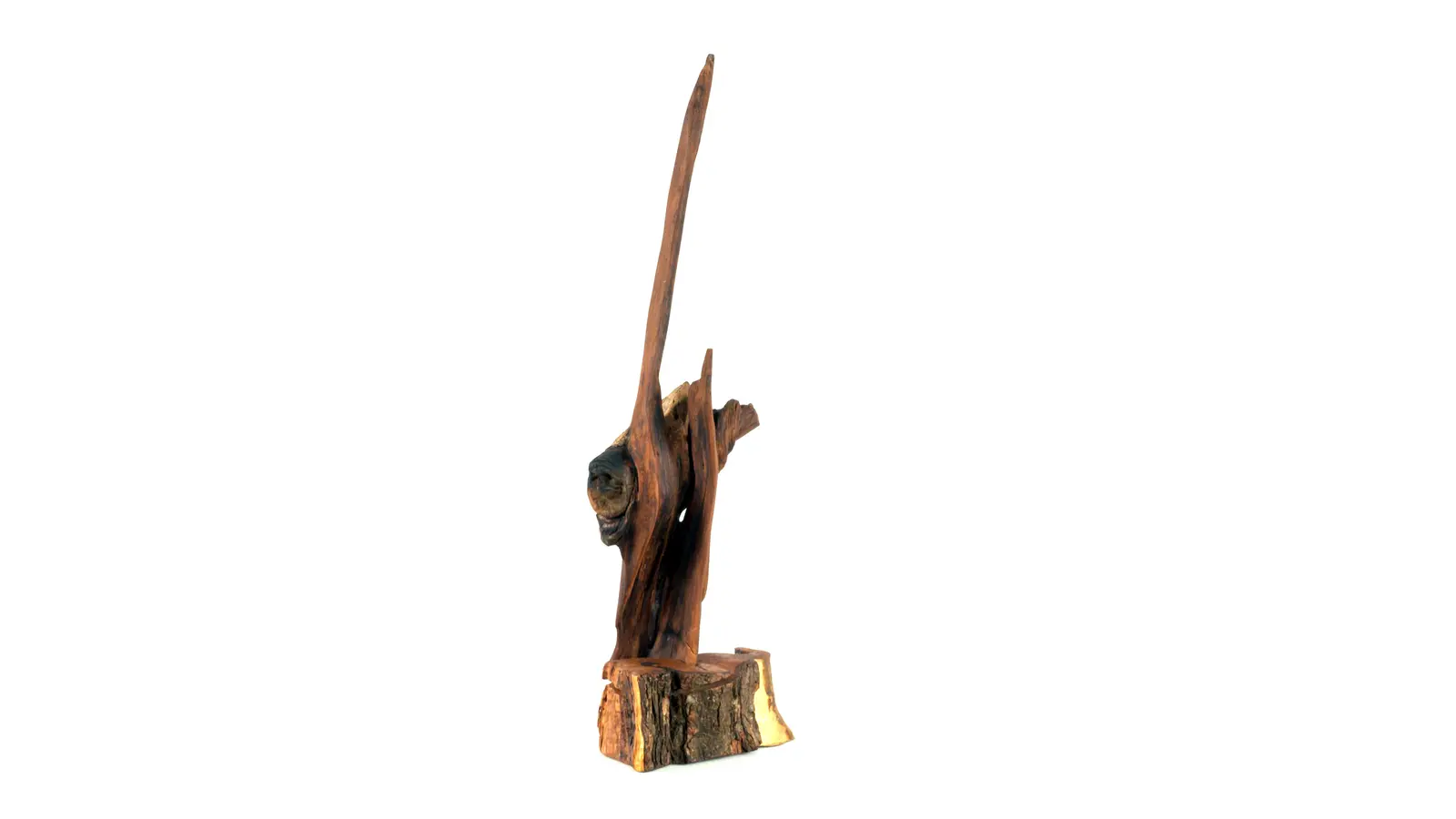
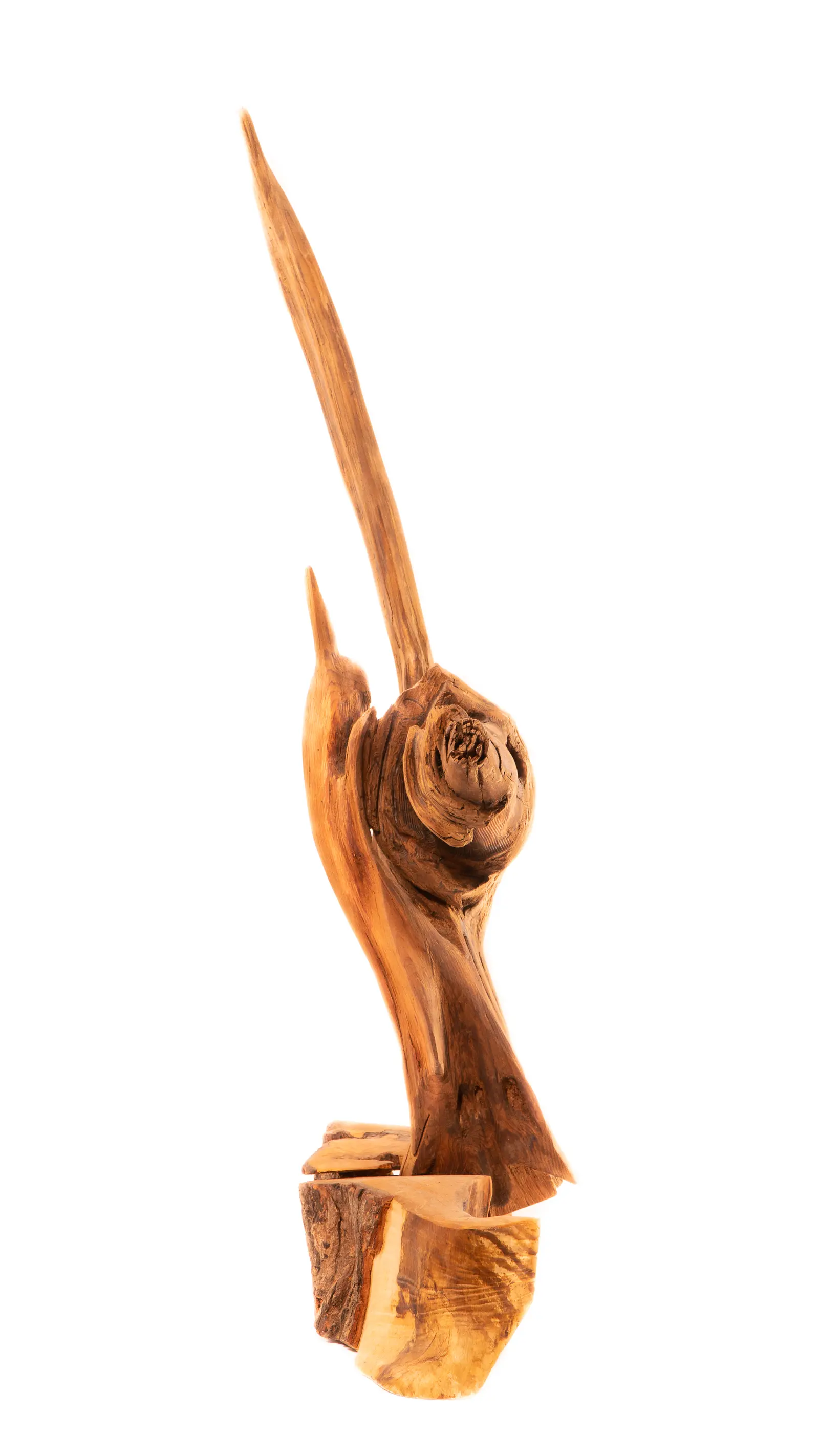
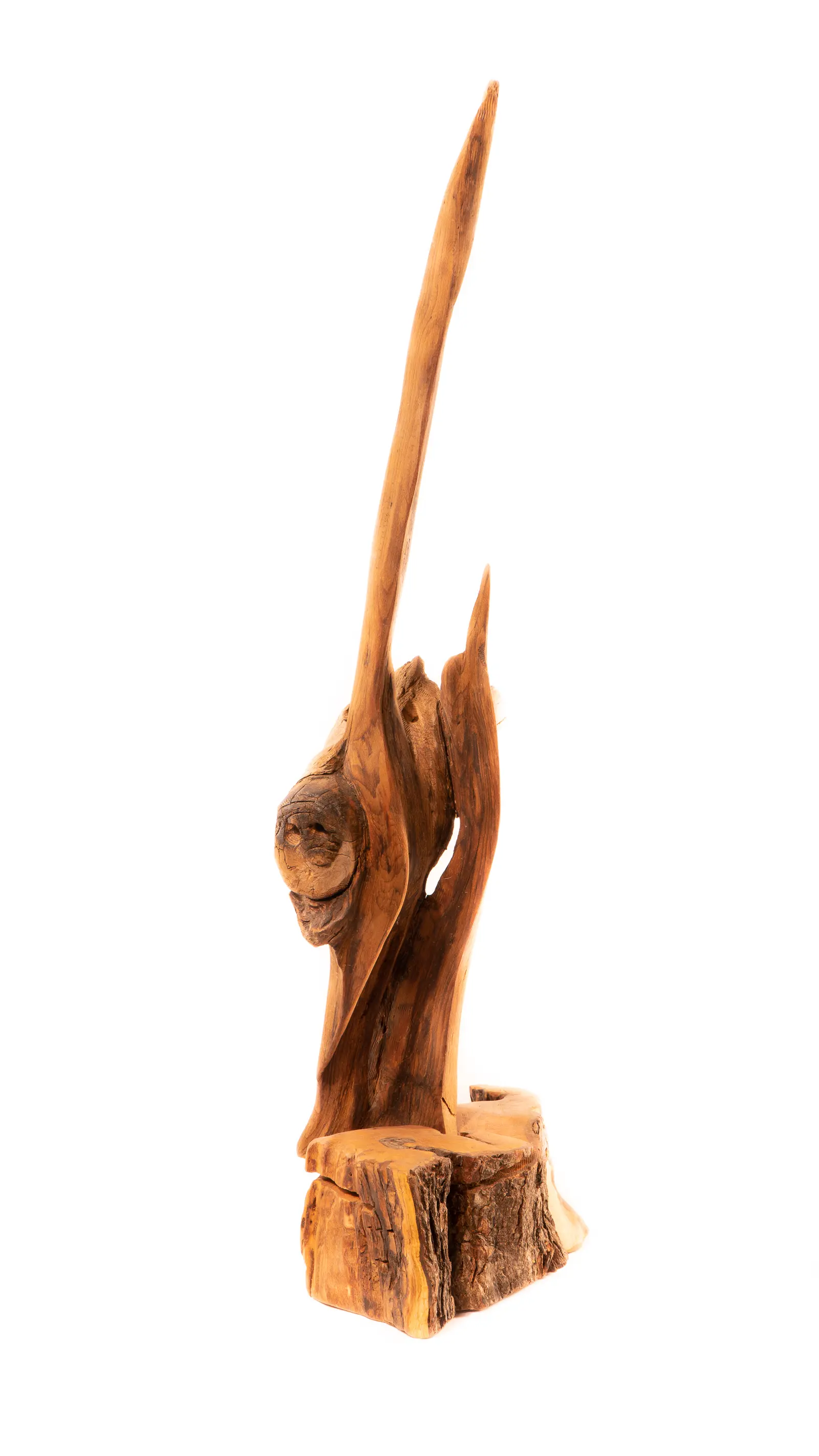
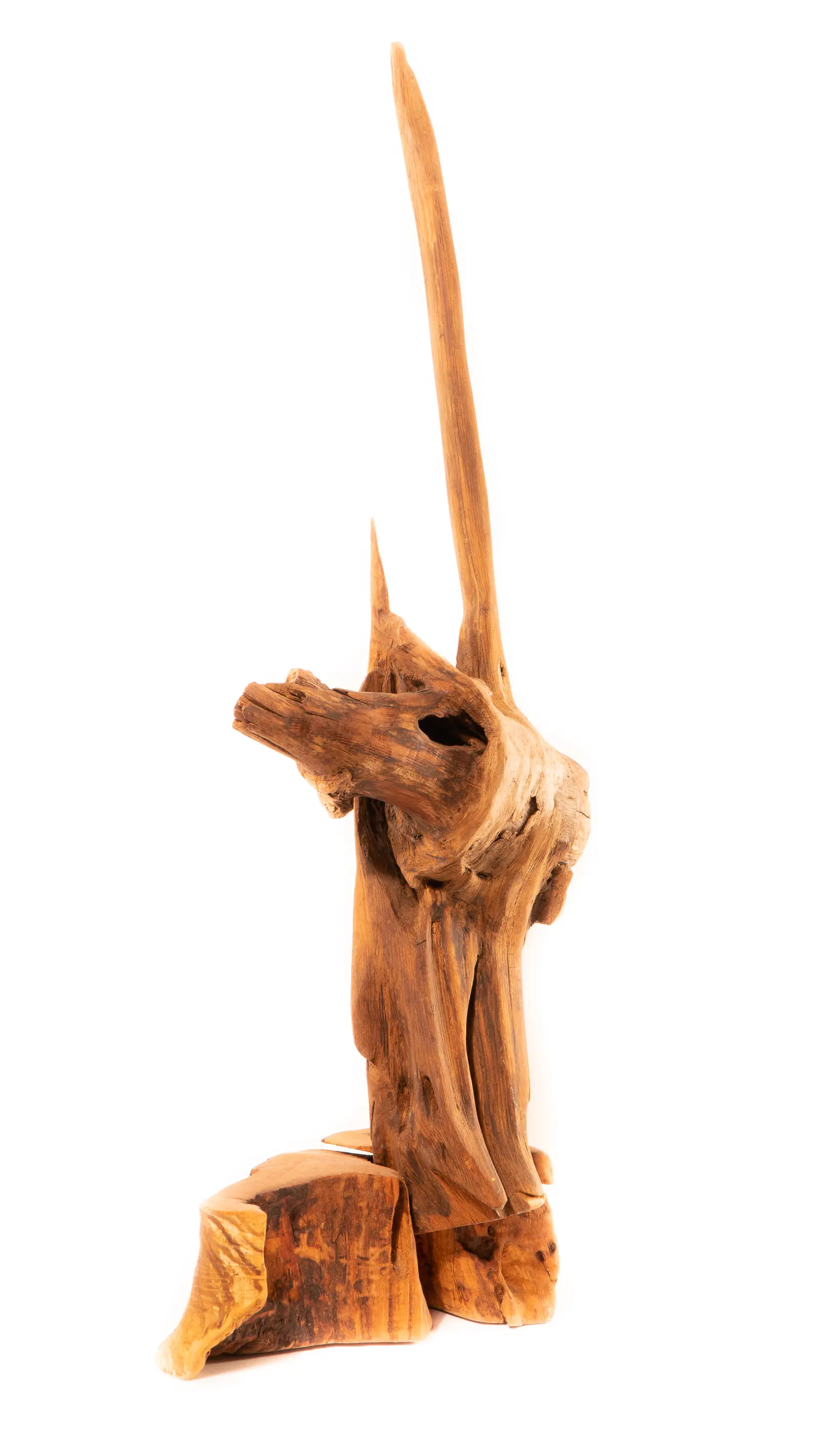
A vertical stele of about eighty centimetres, carved from found wood of a reddish brown, knotted and root-like, set on a section of trunk that keeps its bark. A long blade of wood rises from the mass, tapered and slightly curved, running up to a fine point. Lower down, the piece concentrates around a circular knot whose hollowed core reads as a kind of eye.
Robert Bibeau starts from an already eloquent root and clears away what obstructed its reading. The carving stays minimal: a few withdrawals, a light polishing along the blade, a cavity opened around the eye. The wood keeps its original colour, its fissures, the rough scarring of its knots. The base holds onto its raw bark and shows the pale sapwood where the wood has worn.
The found object is raised here to the status of a sign. Verticality does most of the work: an upright silhouette, held by its balance alone, that seems to mark a threshold rather than tell a story. In a body of work run through with figure and narrative, this piece appears to hold the part of a pause, set between two more talkative works.


The piece sits in the lineage of Brâncuși and Henry Moore, for whom vertical sculpture had no need to represent in order to exist. Brâncuși sought the perfect outline; Moore accepted the biomorphic form found in the material and revealed it through polishing. Robert Bibeau opts for a rawer path: he keeps the irregularity of the driftwood and adds only the minimal touch that makes it a work of art rather than a fragment of nature. An abstraction that renounces neither its organic origin nor the modesty of format.