ÜGLY
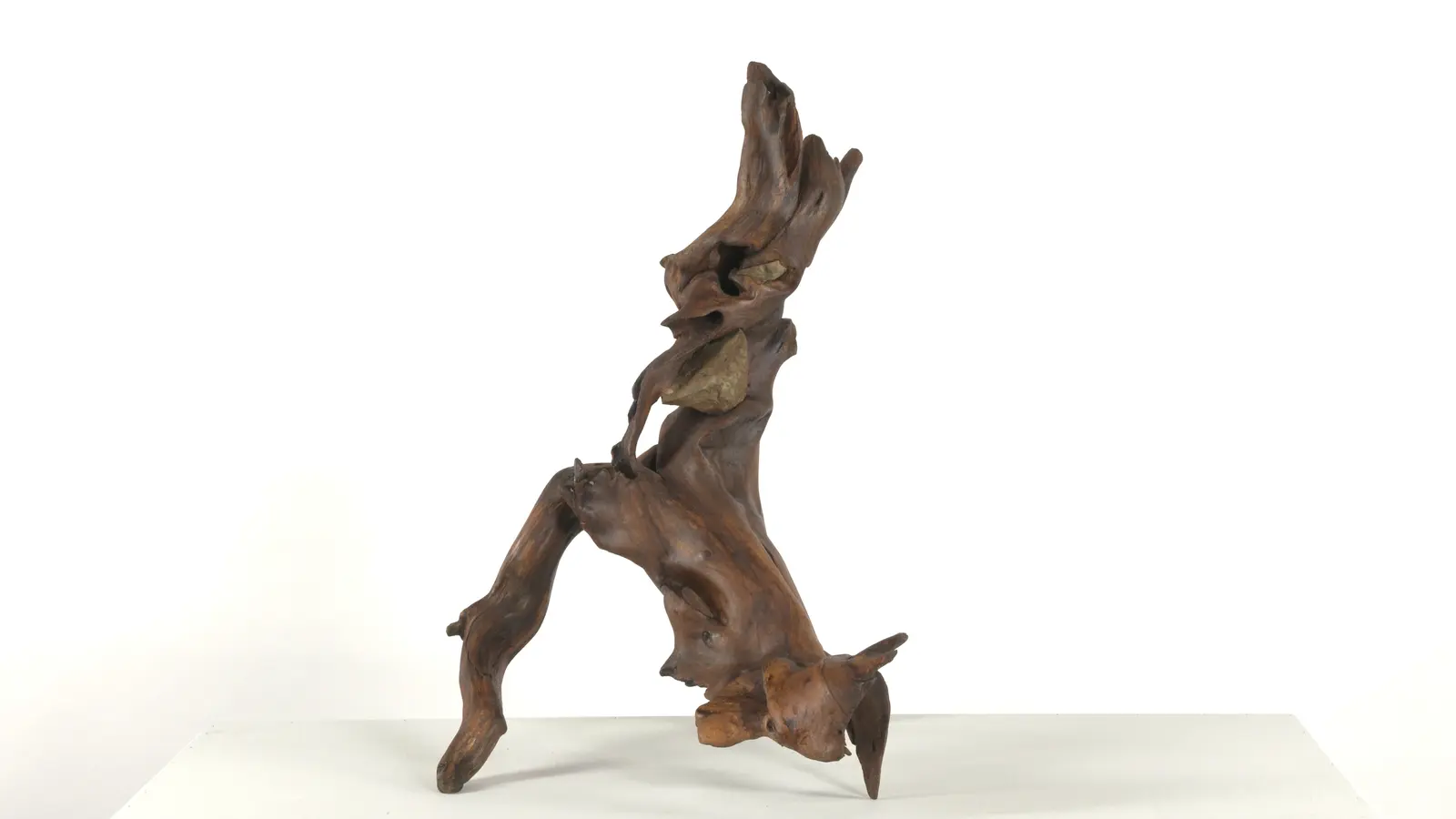
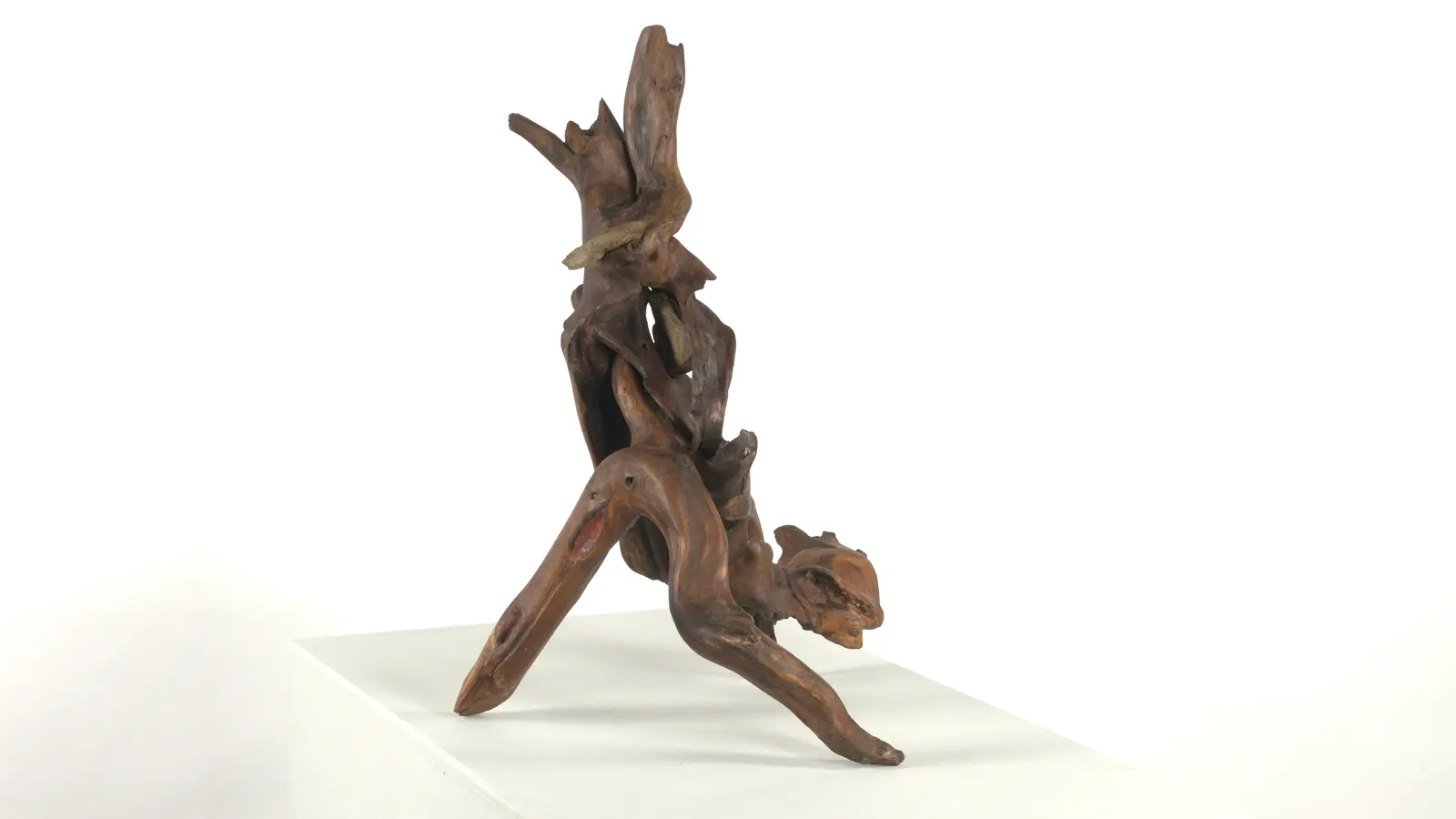
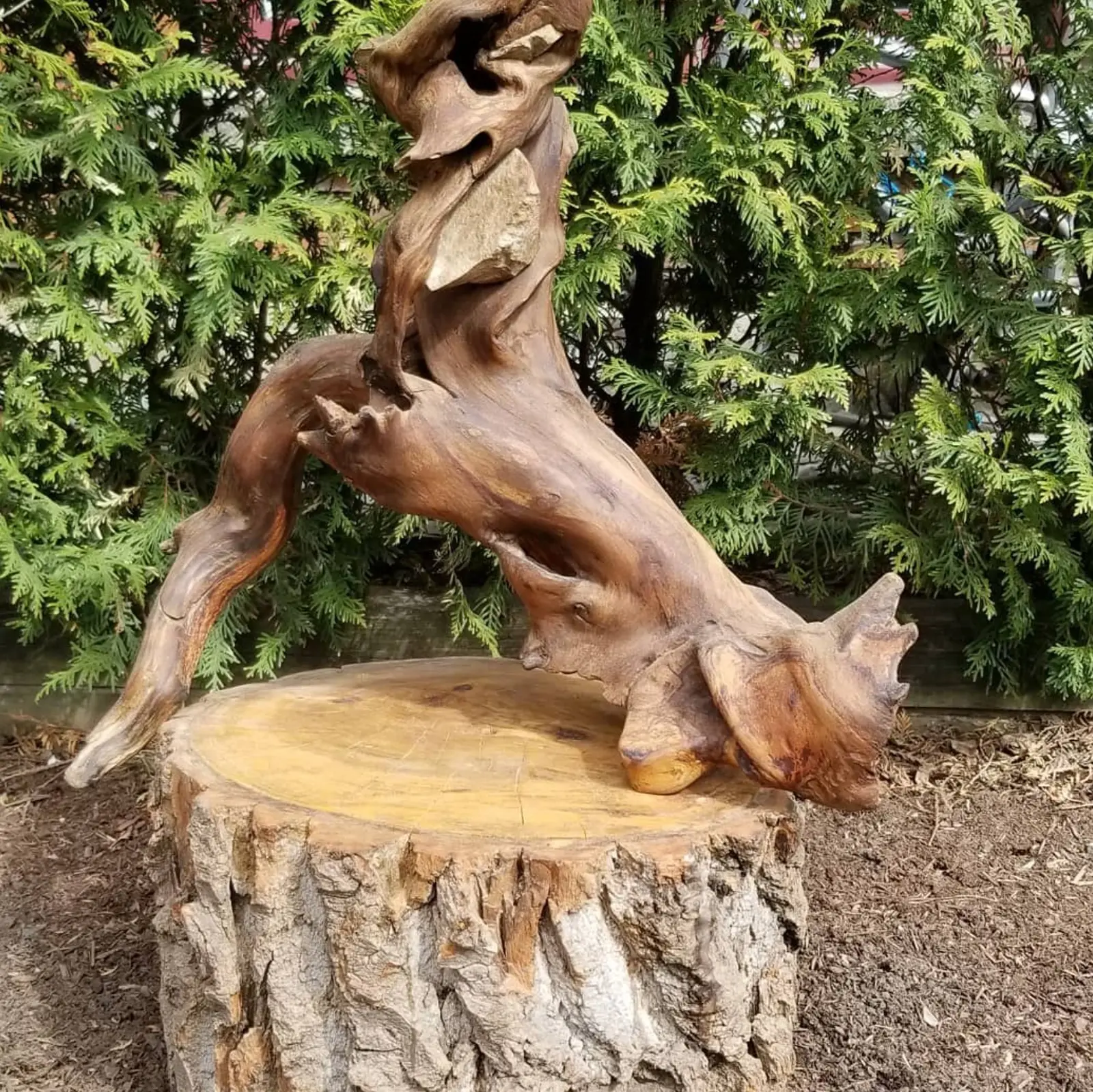
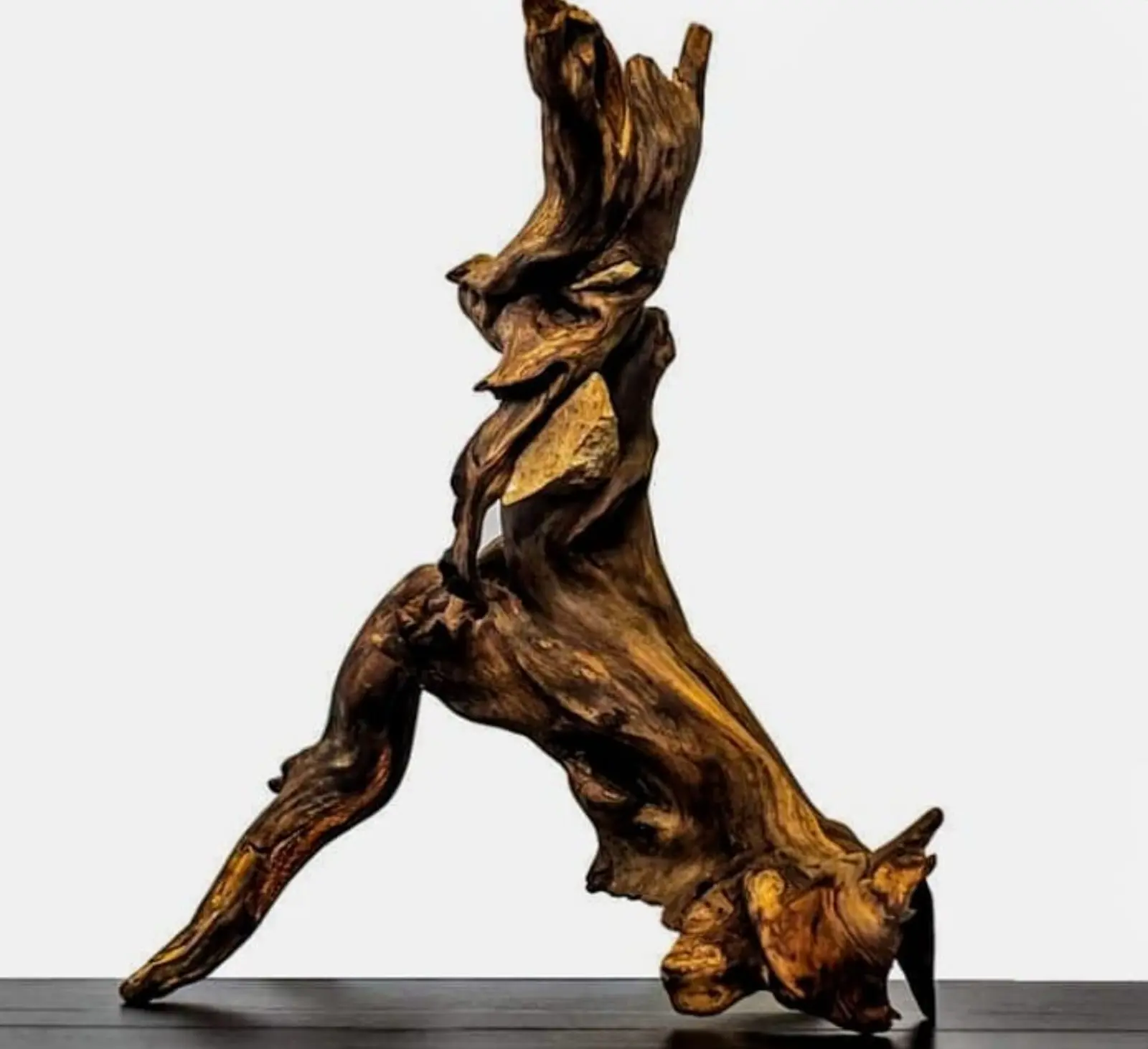
Striding root figure with a twisted crest and a pale stone set into the torso, white studio background, work by Robert Bibeau

Untitled

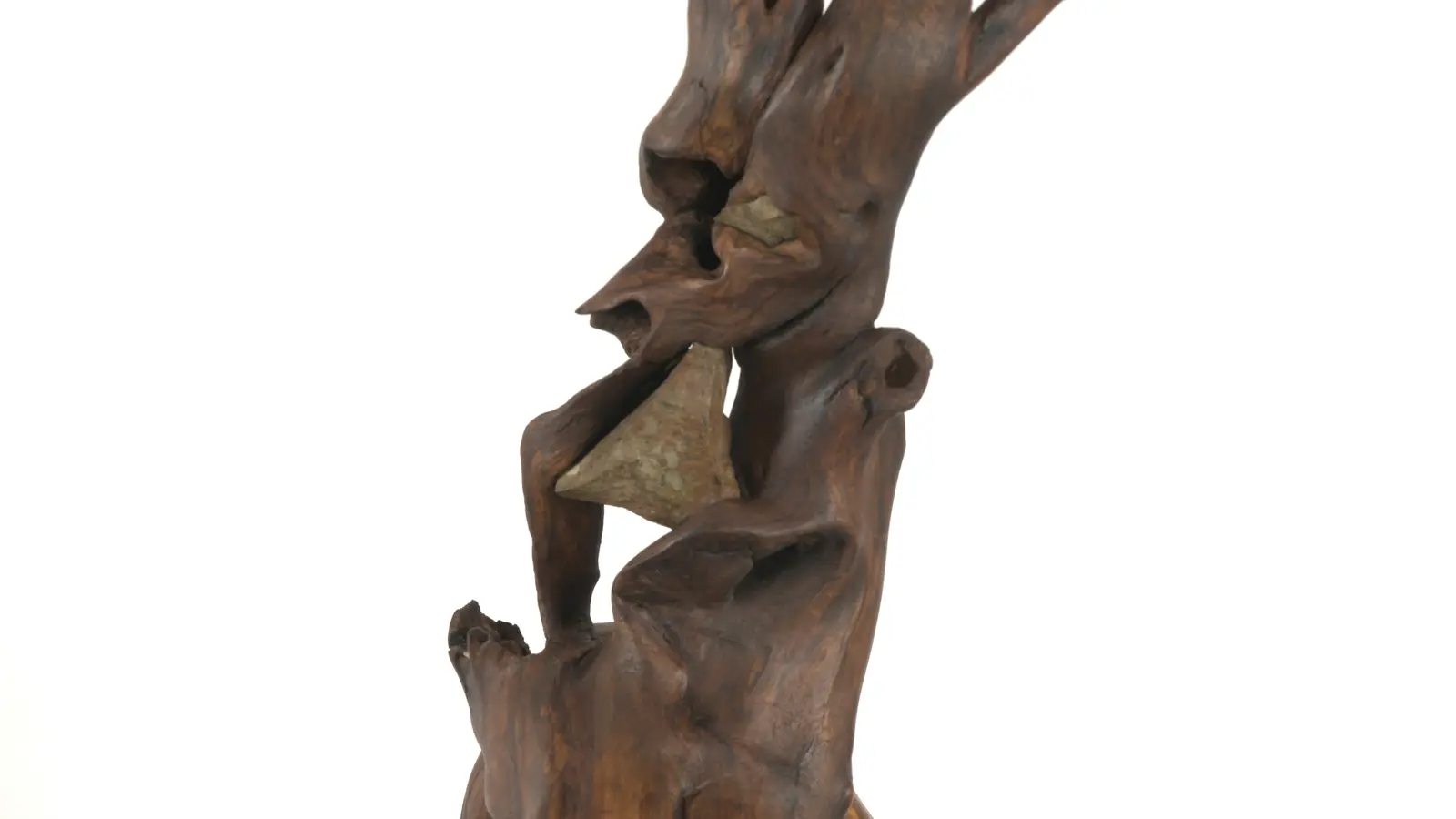
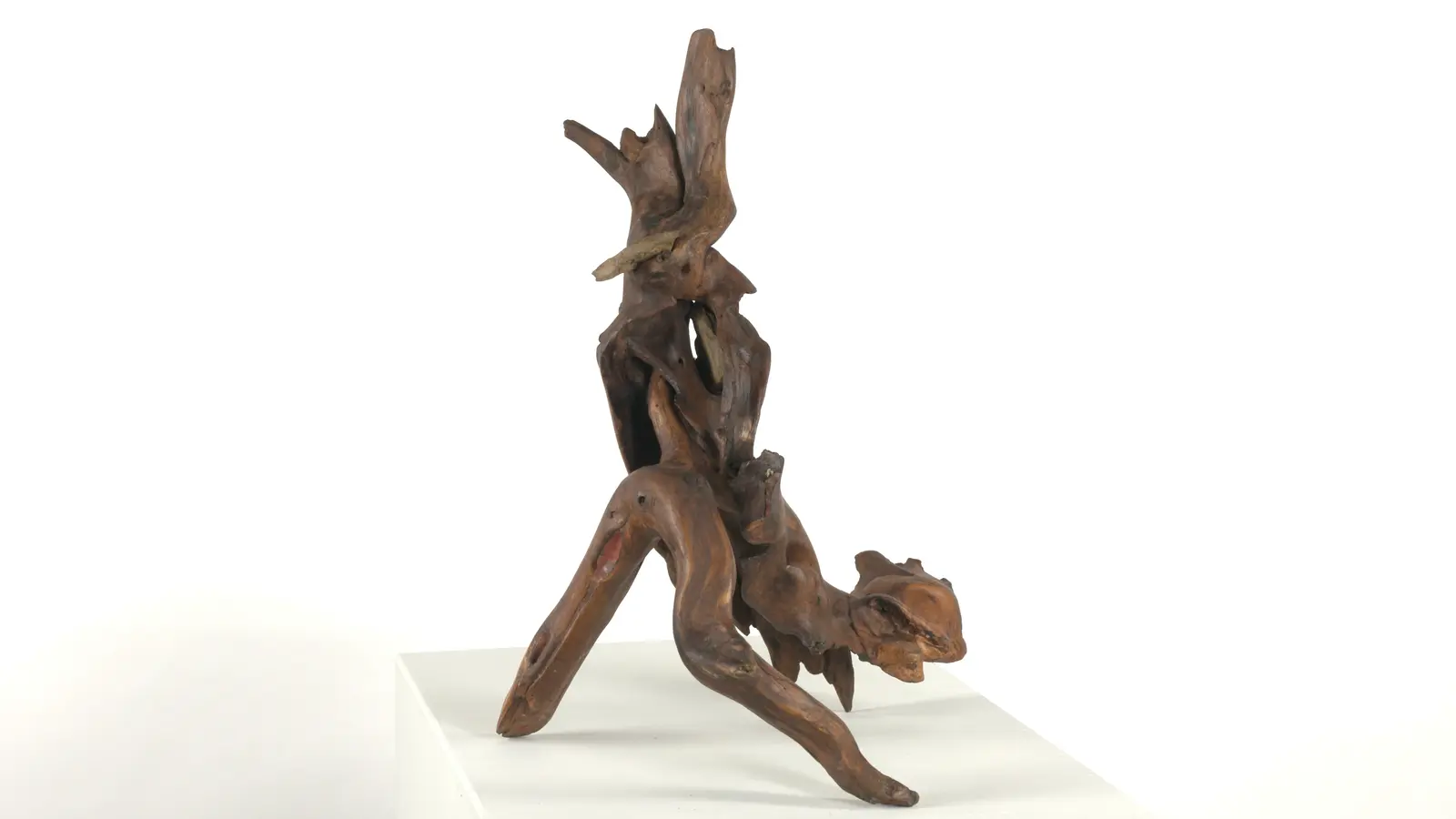
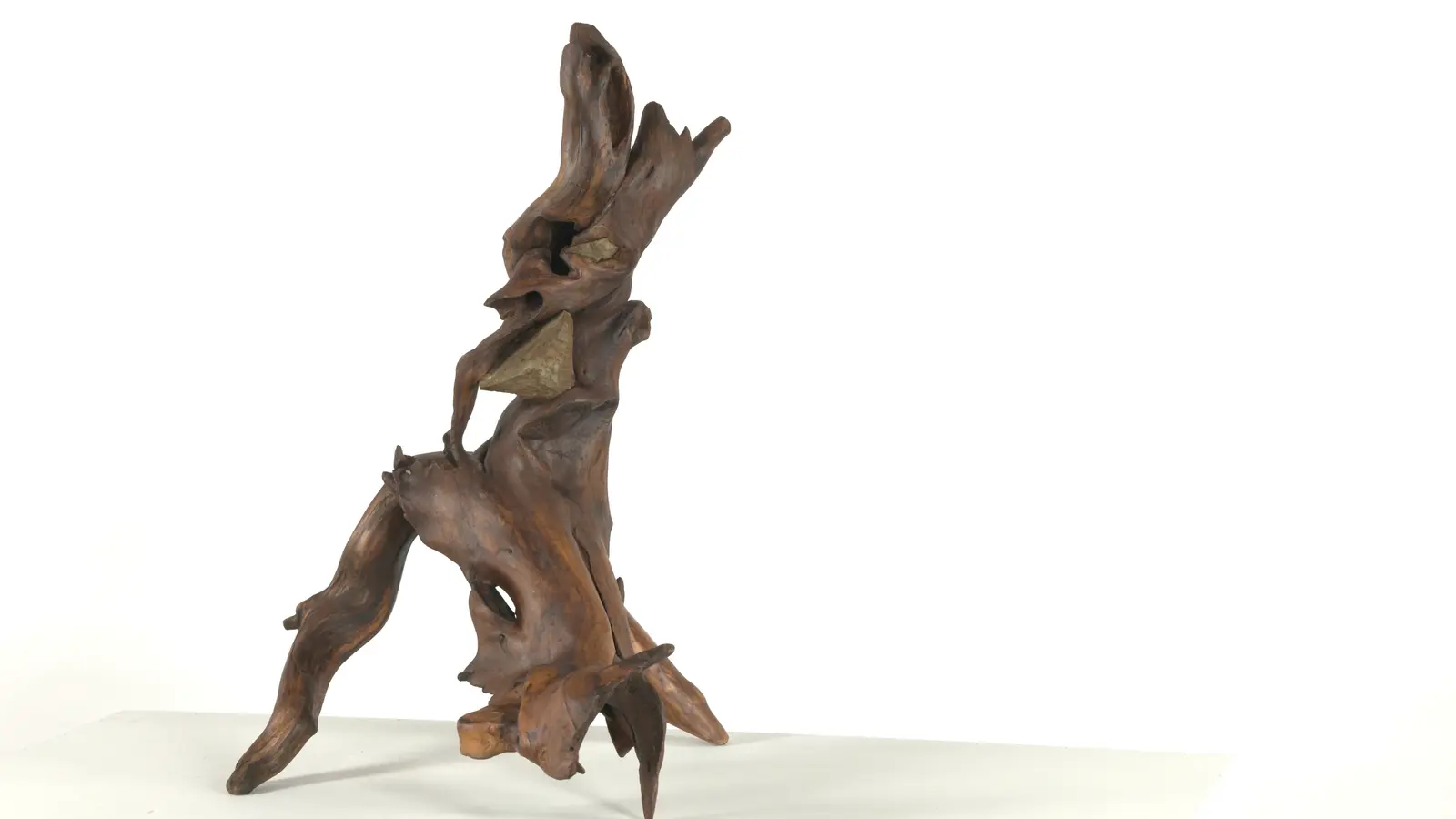
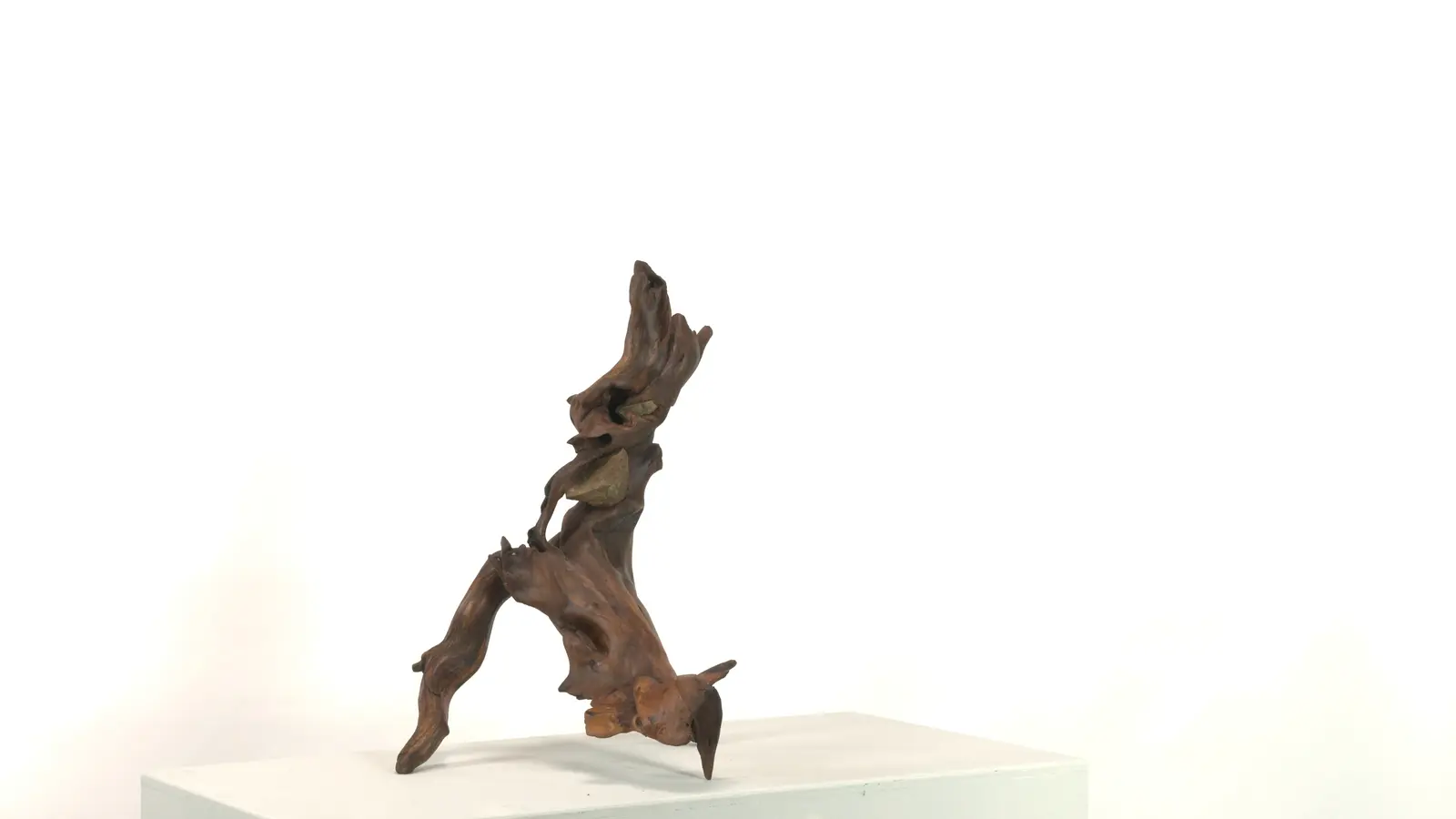
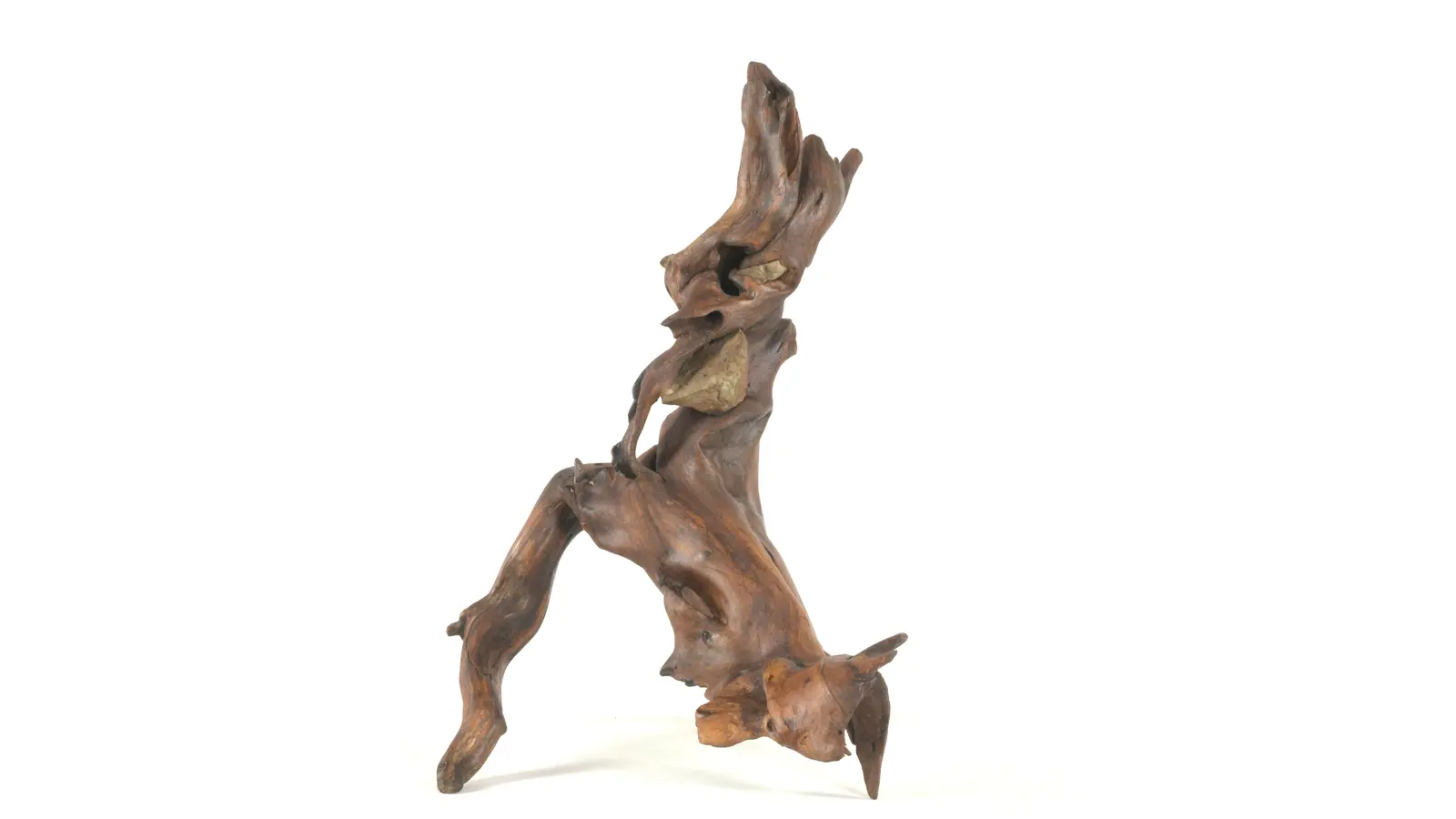
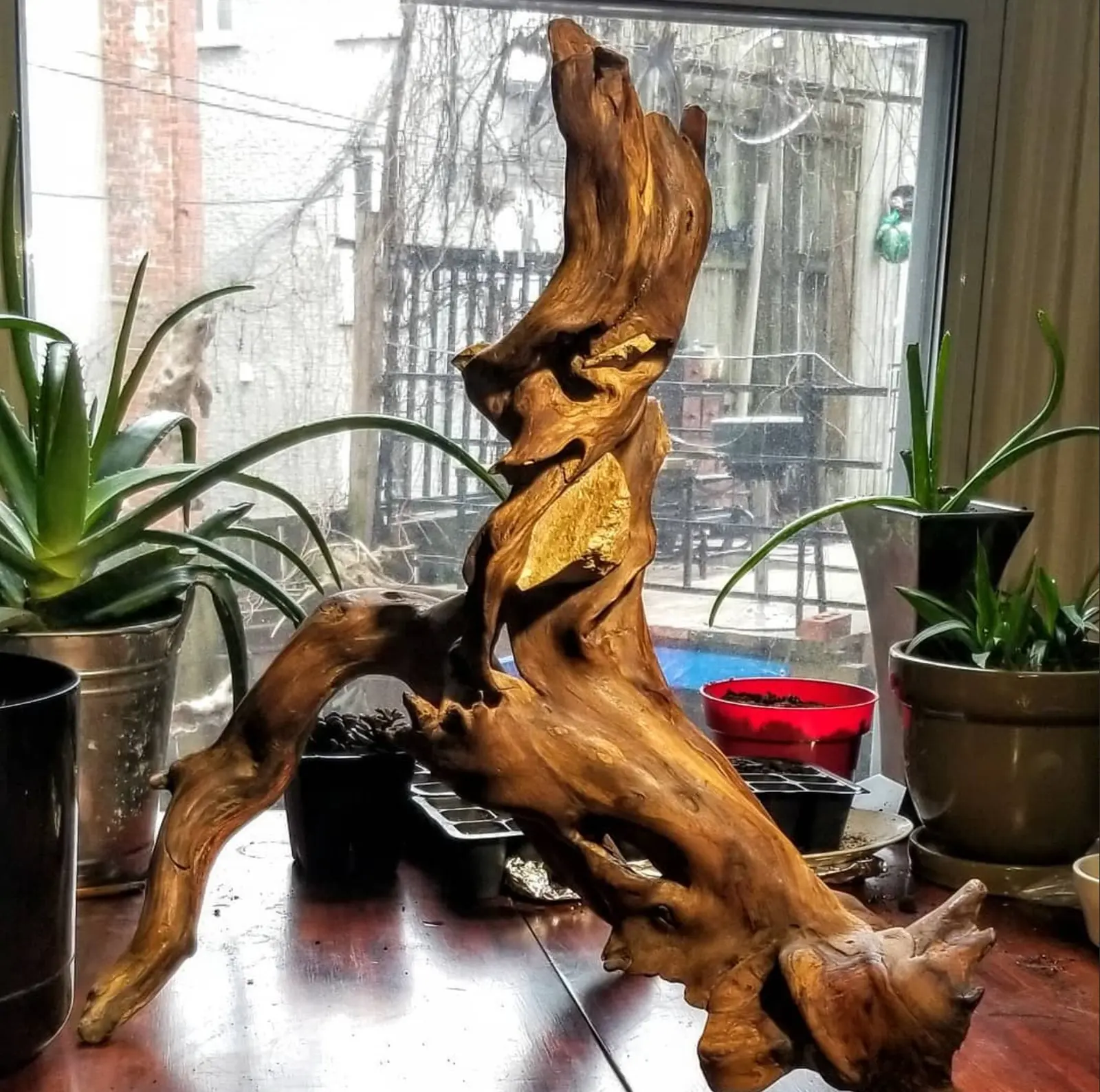
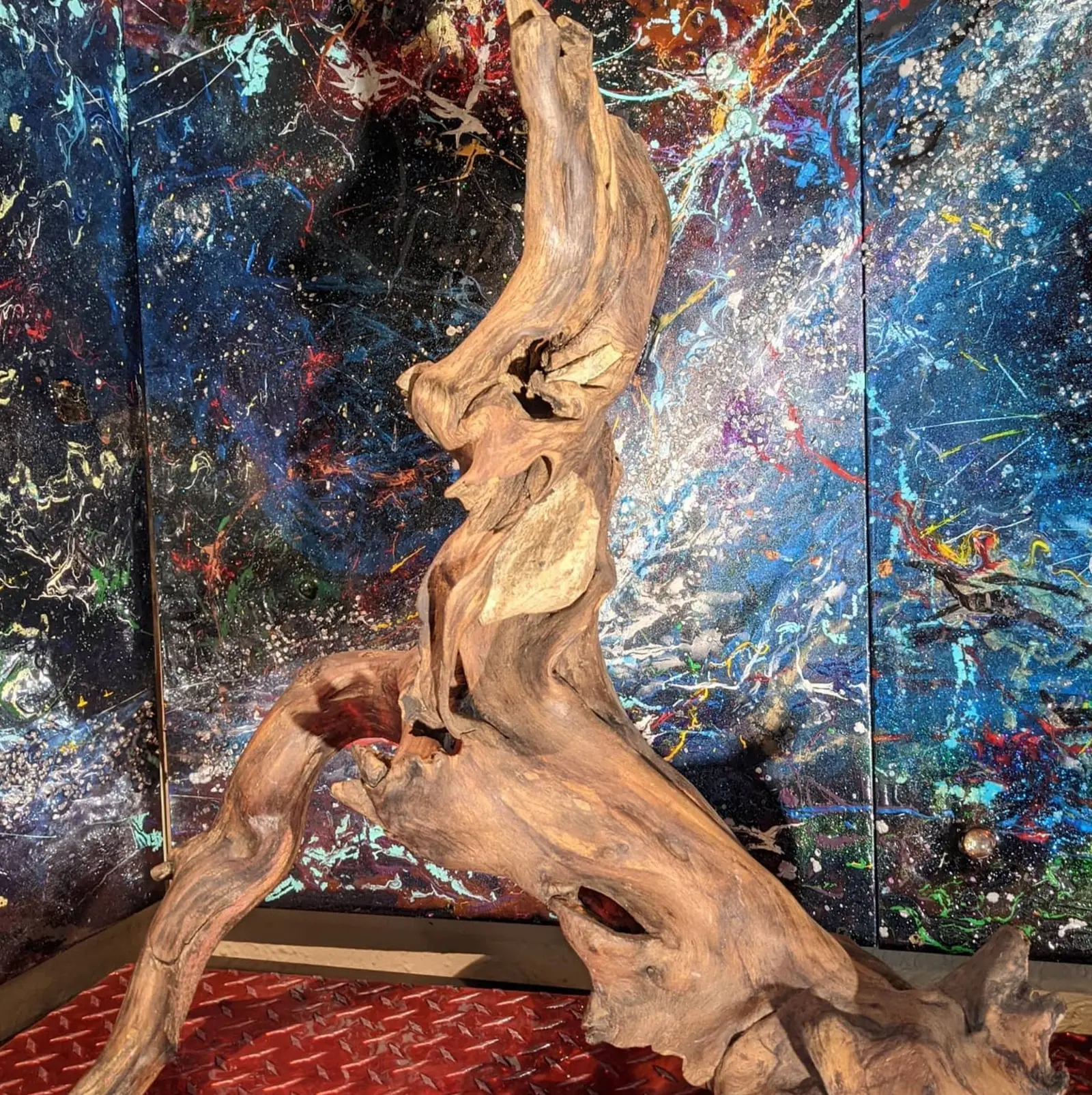
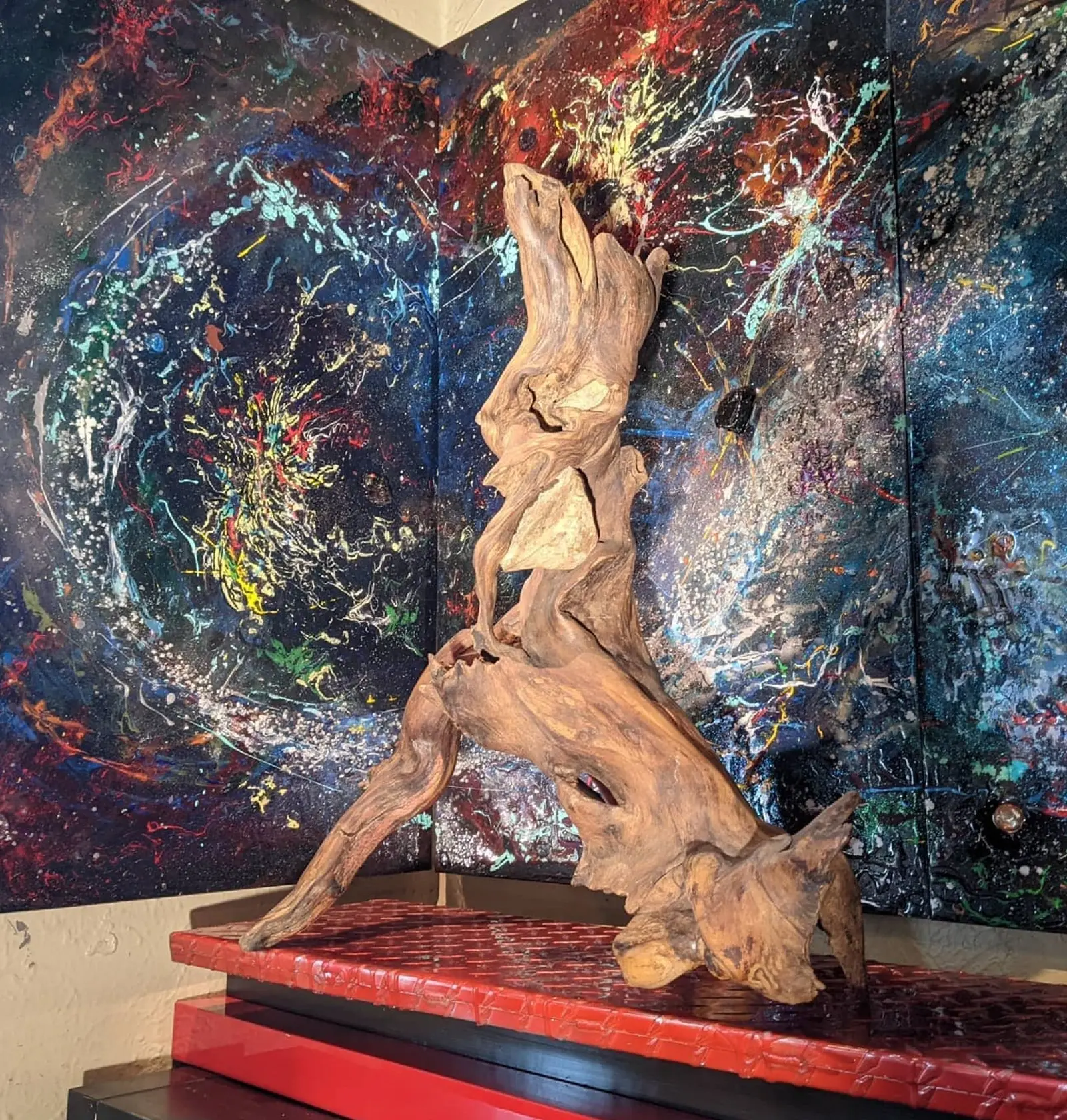
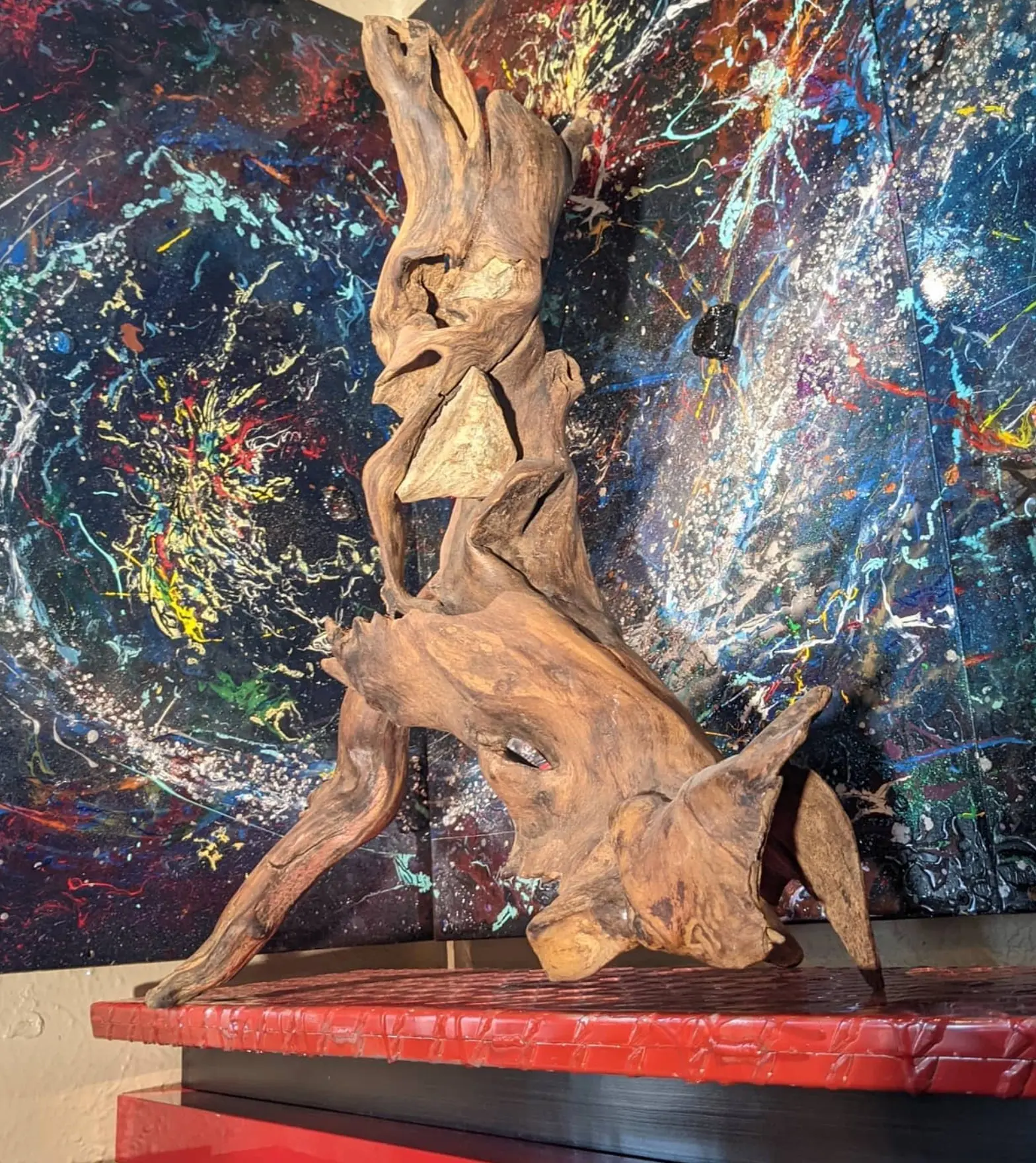
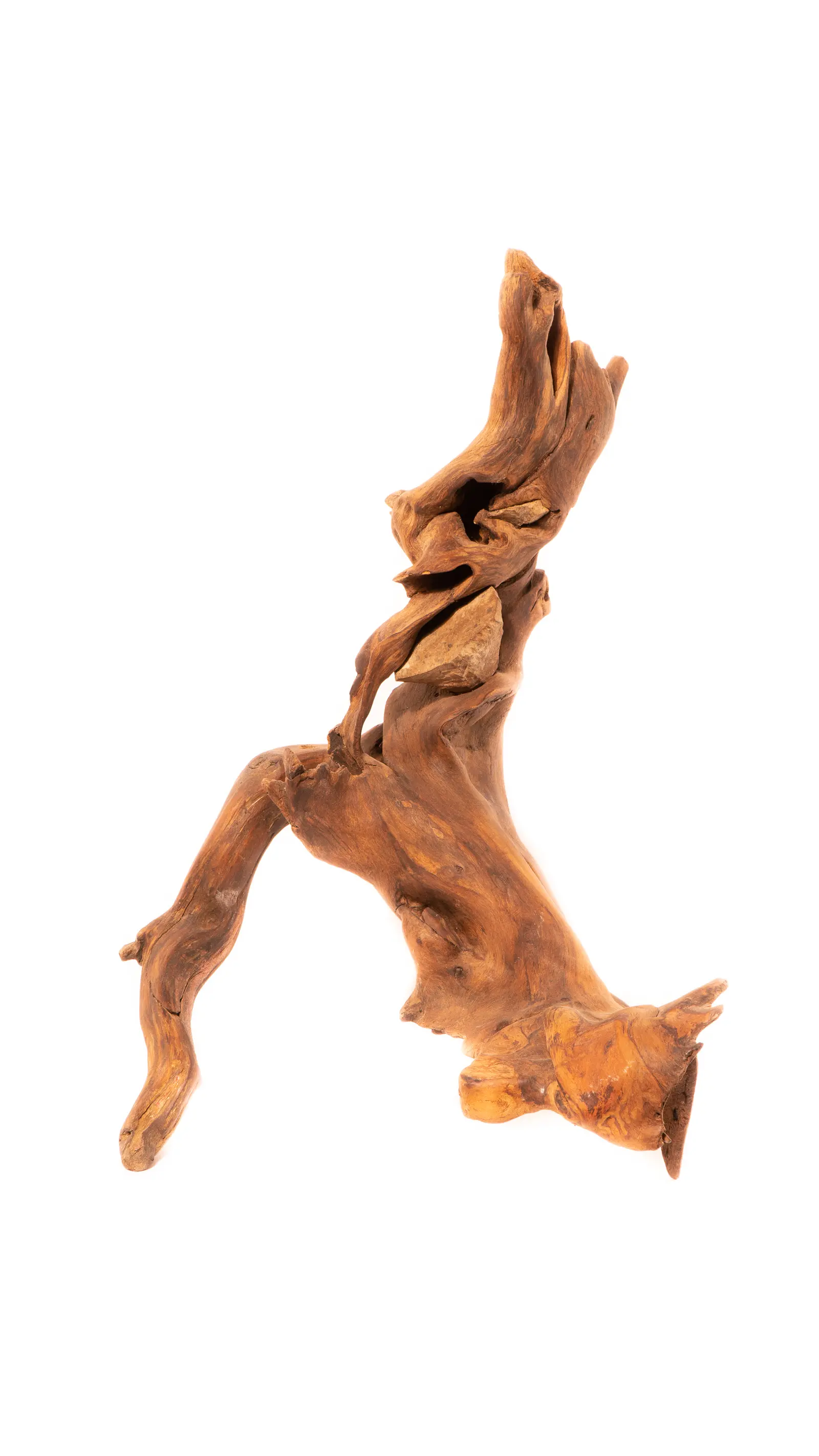
A carved root of roughly fifty-eight centimetres, standing on its widened base. The wood, a warm near-russet brown, coils on itself in a serpentine twist that climbs unevenly. Robert Bibeau kept the curvatures of the material: the knots, the hollows, the cavities opened by erosion all stay in place. Into two of those cavities, grouped in the upper third of the piece, he has set raw stones. One fills a high niche; the other lodges just below it. The crown stays bare wood, a flared crest that tapers upward like antlers.

The gesture leans toward revelation rather than transformation. The artist reads the root the way one reads a block before cutting into it: he locates the form already inscribed in the matter and removes what conceals it. The embedded stone works as a material counterpoint, the mineral that weighs in the hollow of the dead wood, the inert thing lodged into the once-living and held there.

The base unsettles the reading. Wide and splayed, it opens into an arch where the wood bridges the void on two supports, like outstretched limbs. Toward the right, tapered protrusions faintly suggest a bowed snout or an animal's head, though they never settle into a clear figure. The piece wavers between stump and beast. That ambiguity holds the eye: you look for the quadruped or the bird the form seems to promise, and the root slips away, becomes wood again.

Root totem with stones — twisted found wood in vertical S, embedded stones. — view 1
Root totem with stones — twisted found wood in vertical S, embedded stones. — view 2
Root totem with stones — twisted found wood in vertical S, embedded stones. — view 3
Root totem with stones — twisted found wood in vertical S, embedded stones. — view 4
Root totem with stones — twisted found wood in vertical S, embedded stones. — view 5
Untitled, work by Robert Bibeau
Studio view, white background.
Reading notes

The piece converses openly with Brâncuși and with Tim Whiten, ritual verticality pared to its material essentials, with no superfluous figure. But where Brâncuși sought the perfect outline and Whiten the finished ritual object, Robert Bibeau keeps the wood in something close to its raw state. What was the root's accidental twist becomes formal signature; what was a chance cavity becomes the intentional housing for stone. A material abstraction that does not renounce its organic origin.