ÜGLY
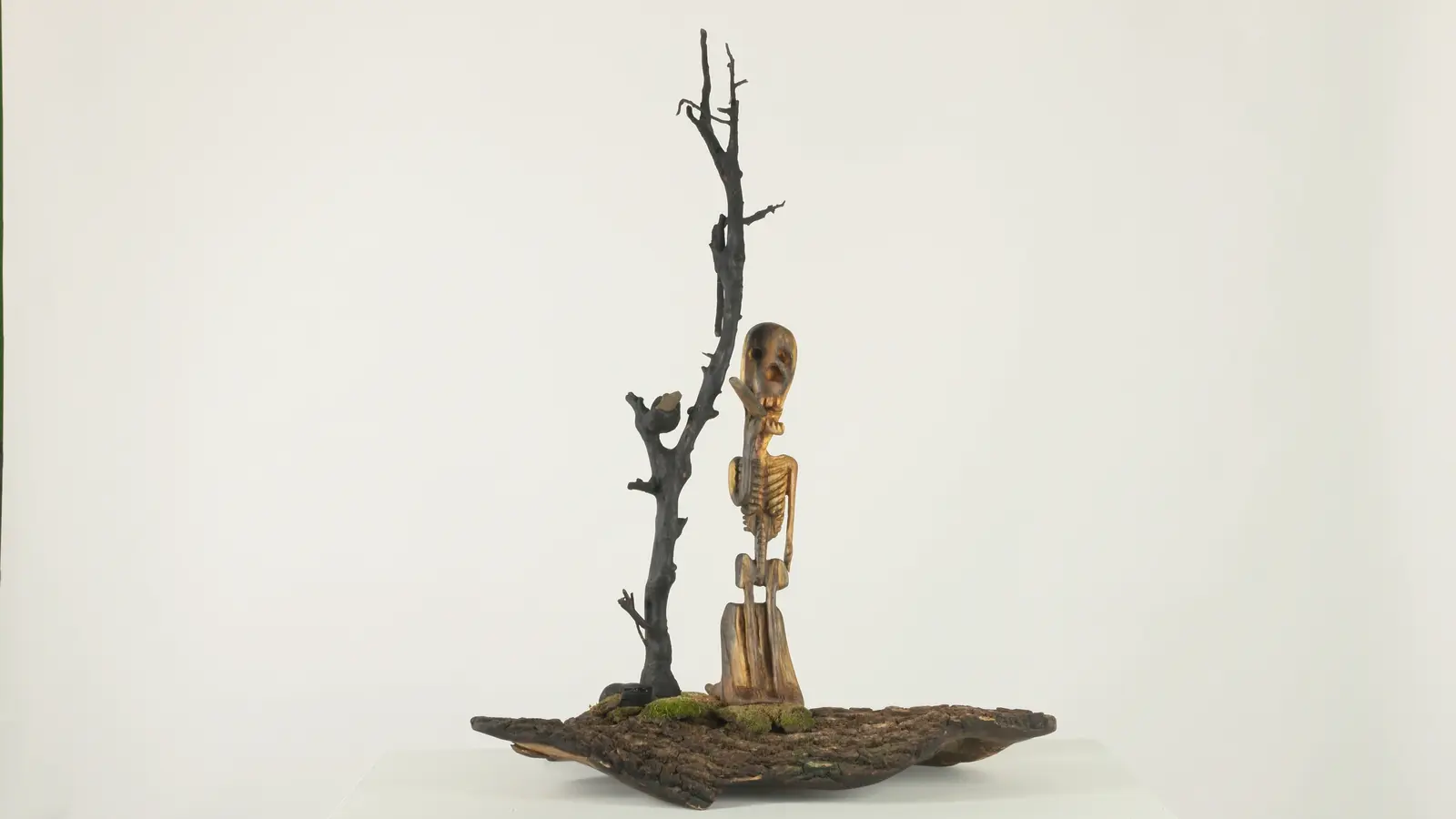
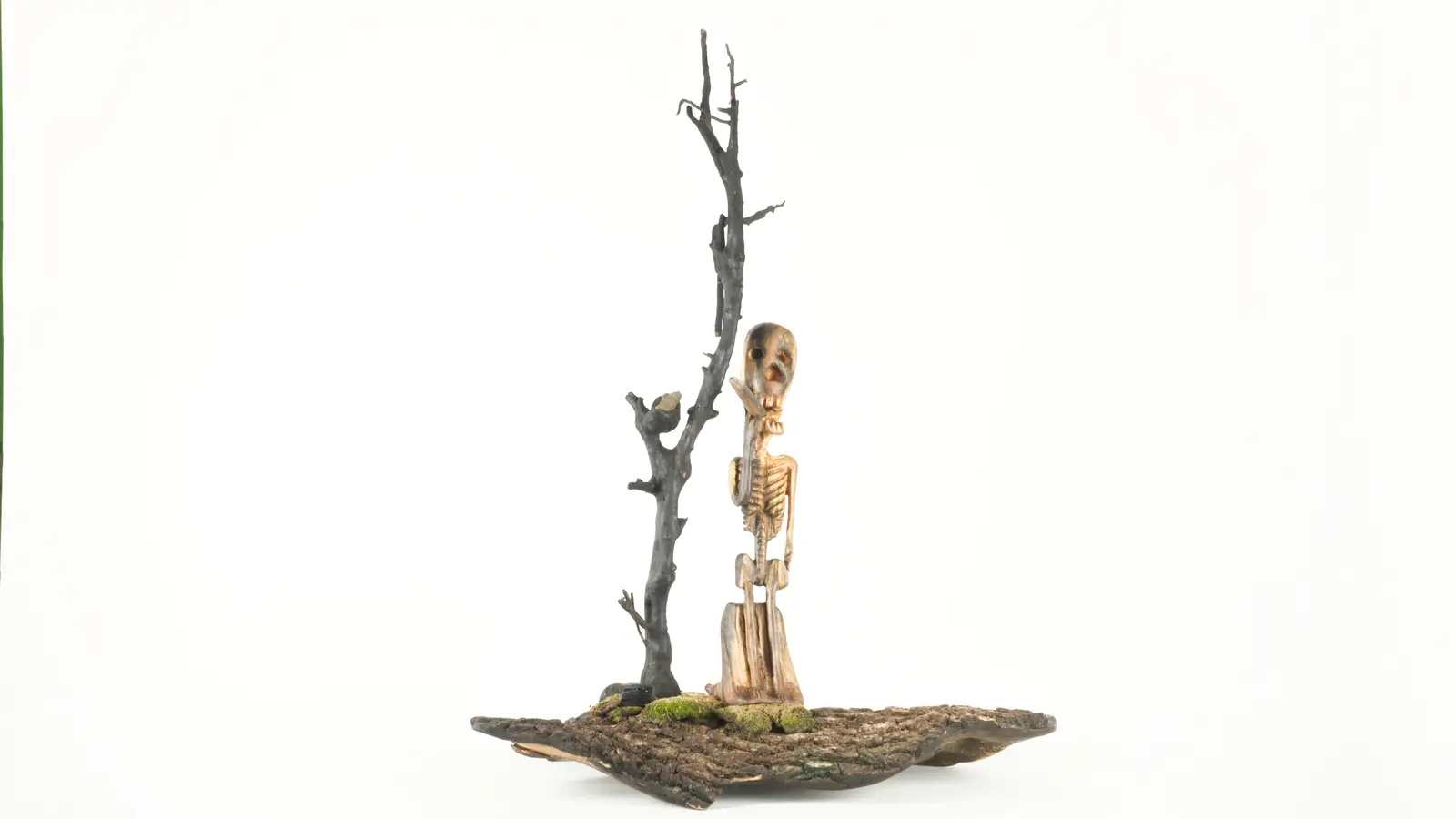
Memento mori diorama, carved wooden skeleton, charred dead tree, bark base, moss, work by Robert Bibeau

Dead But Alive 1

Our relationship with the environment in which we live is comparable, say, to the relationship between a container and its contents, each of which has developed independently of the other. Such a relationship may or may not imply a reciprocal correspondence. Ours is always a relationship of correspondence—which does not rule out the possibility that such a relationship (as often happens) can turn out to be substantially negative for us and our environment. And yet there is no doubt that here the container and the contents, the human condition and the human environment, are the result of one and the same dialectical process, one and the same process of mutual conditioning and formation.
Tomas Maldonado, Human Ecology & Dialectic of the Concrete

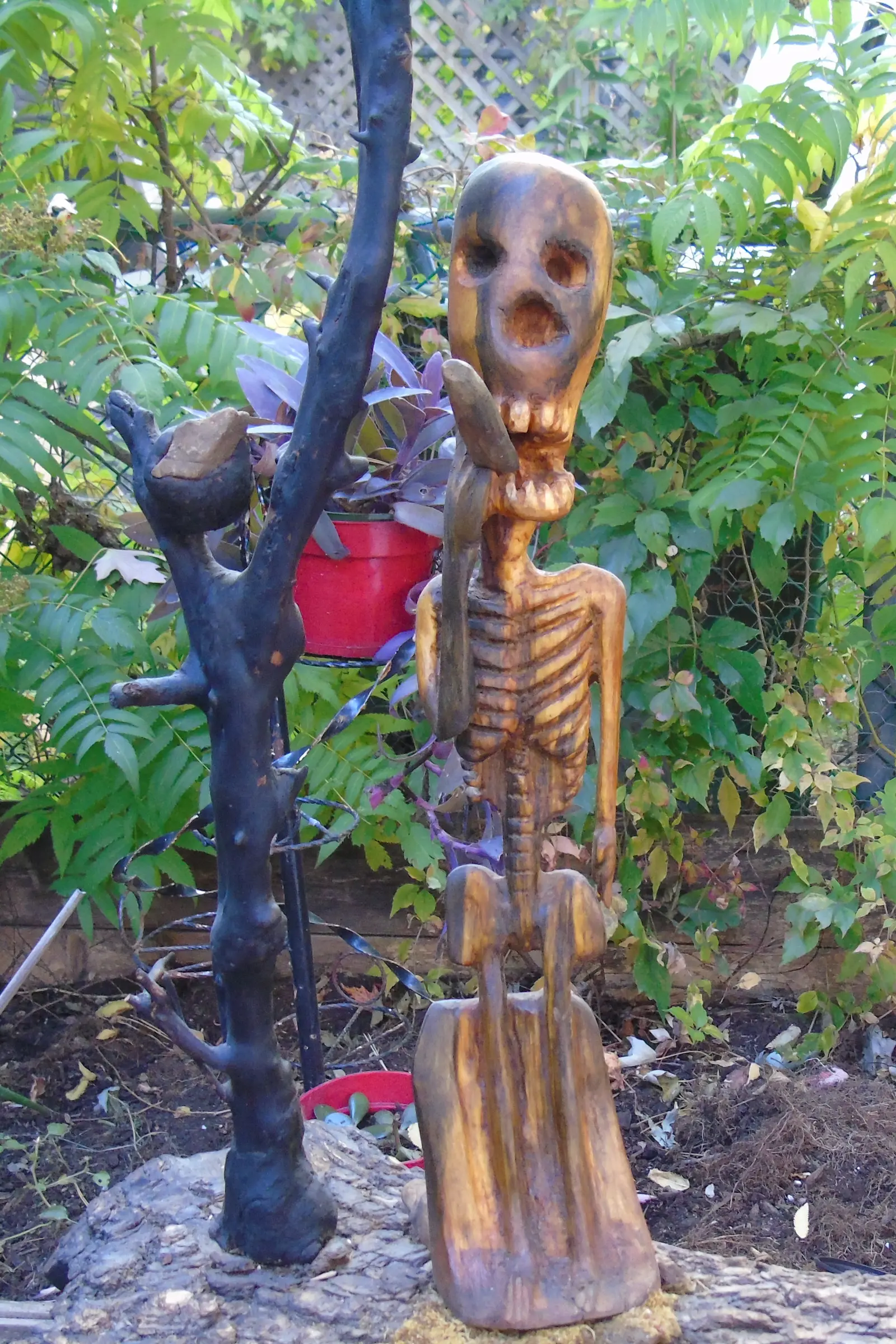
In 2023, wildfires ravaged an unprecedented stretch of Canadian territory. Dead But Alive was conceived in memory of those forests: the mourning sits in the material itself. A charred branch rises, blackened, stripped bare; beside it, a skeletal figure carved from pale wood stands upright on its pedestal. Both verticals climb from a single slab of bark, and there, on that burned ground, a carpet of moss lays a quiet green at the figure's feet. The tree is dead, the body too; so is the moss, and yet it keeps its green. The moss needs no watering.
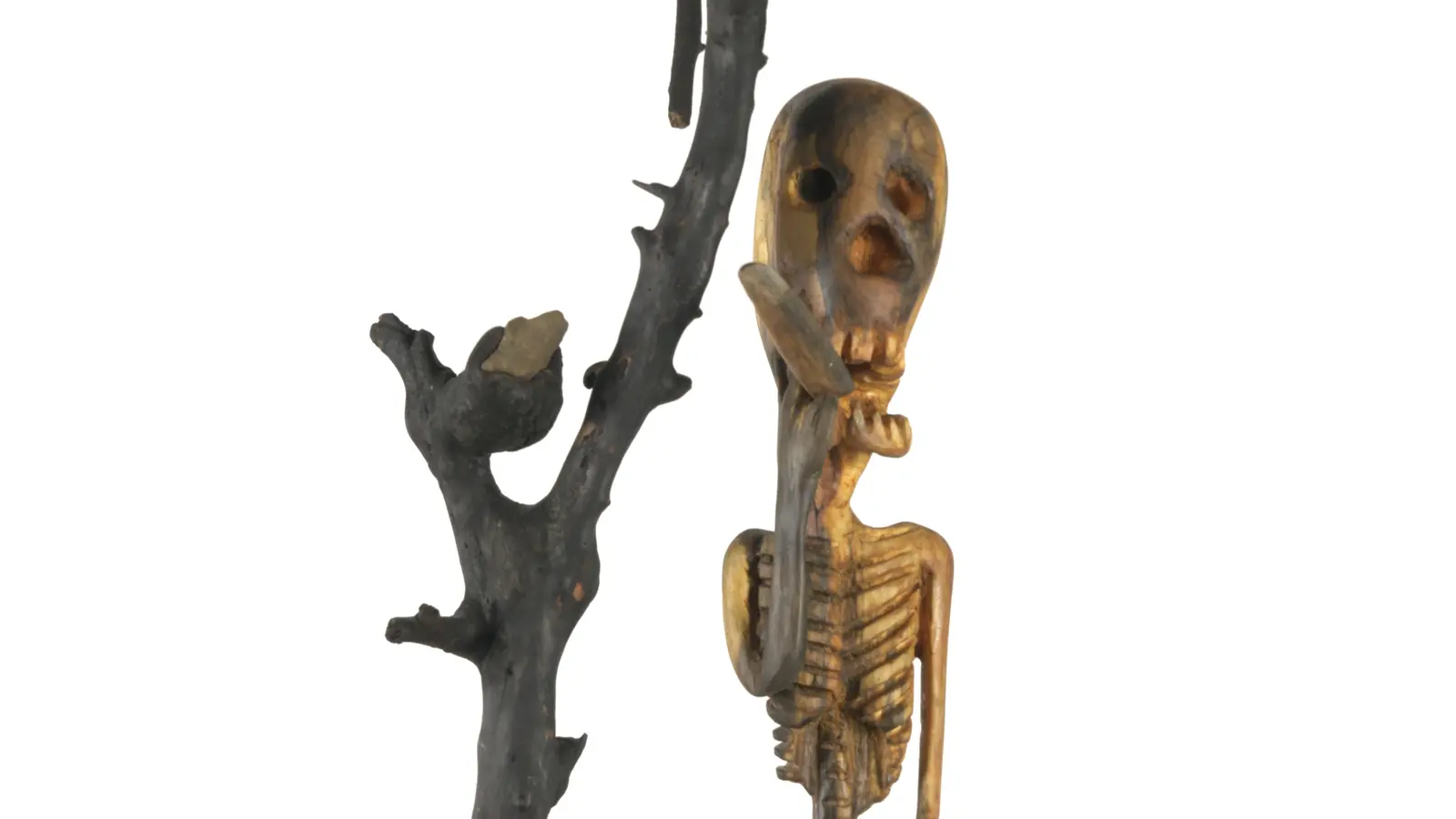
Dead But Alive 1, detail on a white background: the upper part of both uprights, the pale wooden skull with round eye sockets and open mouth, the stone held against the jaw, the ribs, and at left the black branch carrying its stone
Studio view, white background.
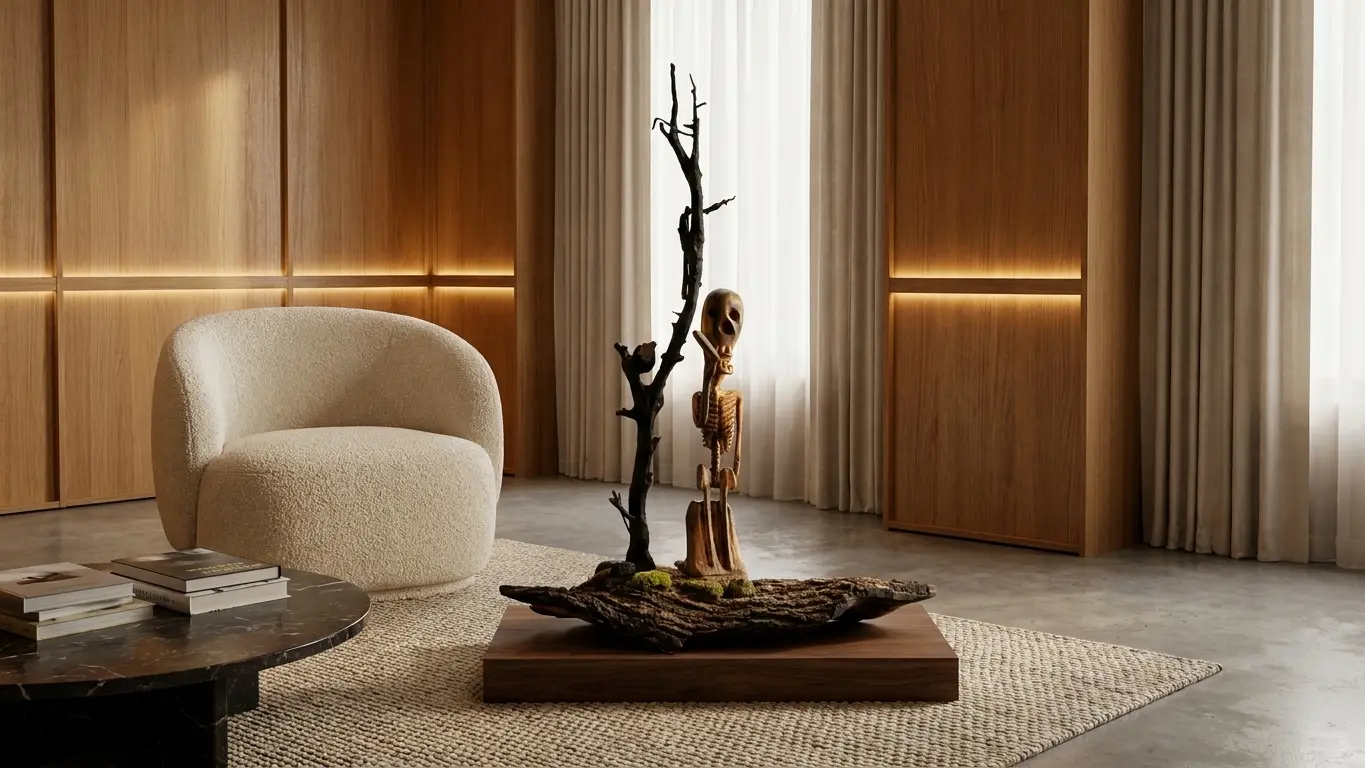
Dead But Alive, in a contemporary reception space
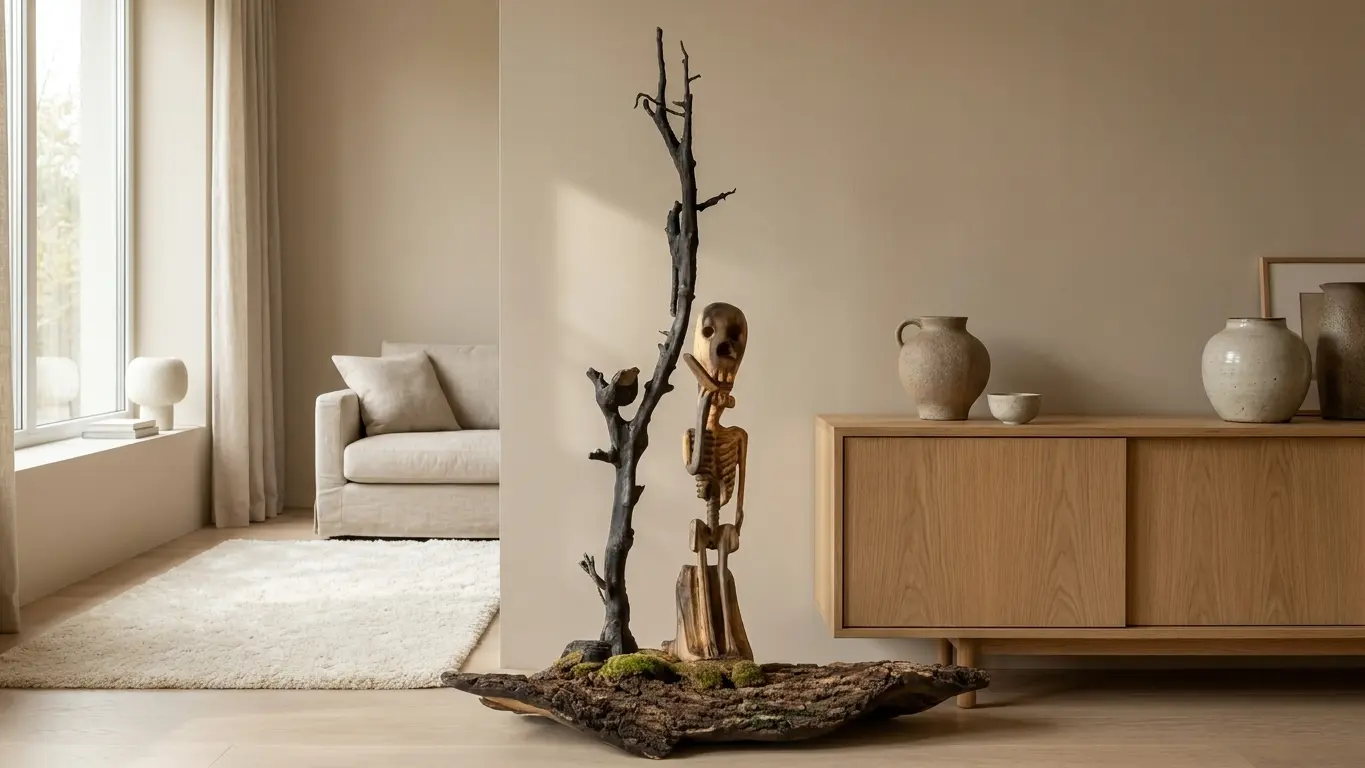
Dead But Alive, in a contemporary residential interior
Dead But Alive 1: front view, the skeletal figure in pale wood standing on its base, a stone held against its jaw, the charred branch rising at left, both set on a bark slab with moss at the figure's feet, against dense foliage
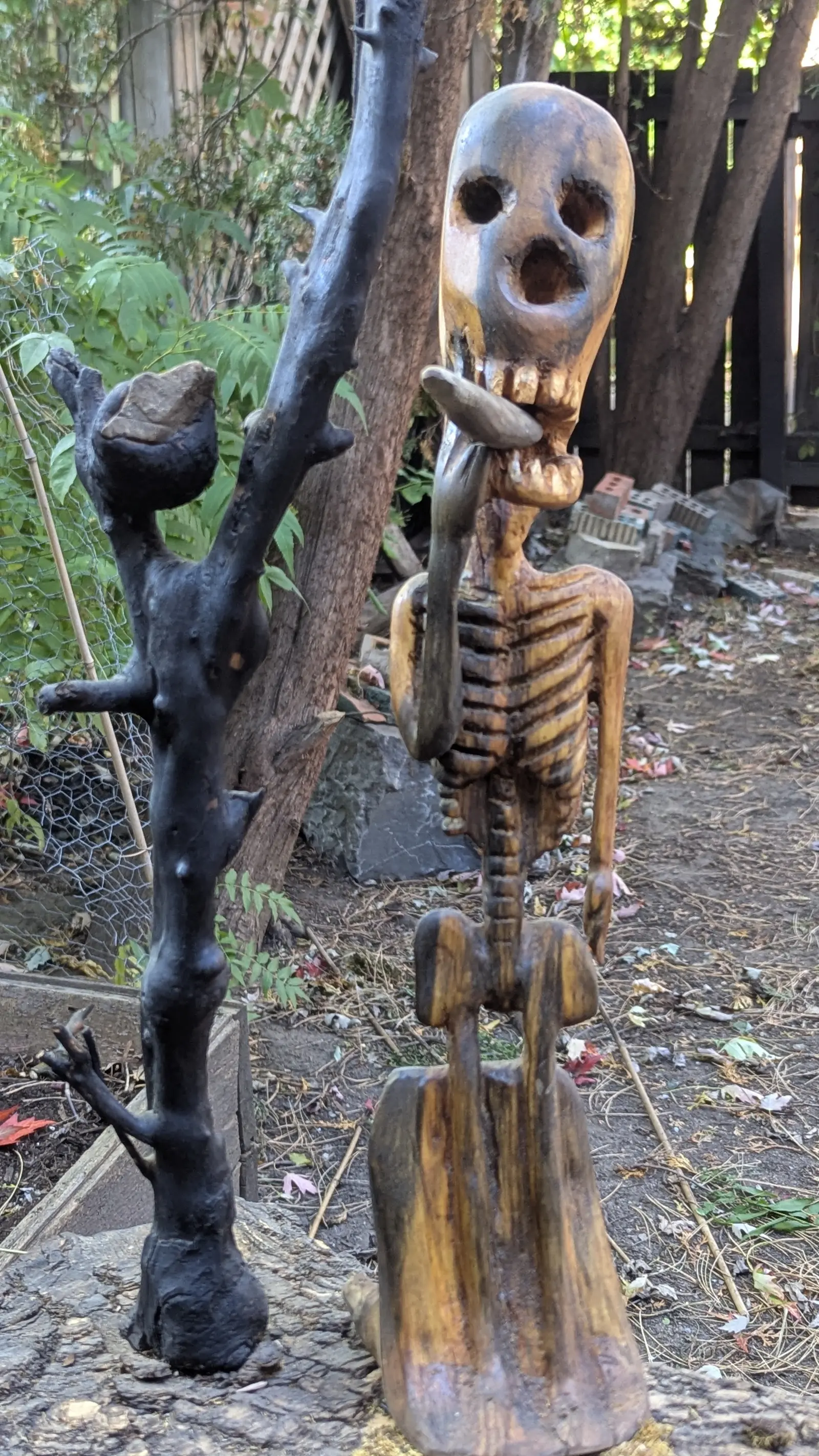
Dead But Alive 1: both uprights seen closer, the skull with round eye sockets and open mouth, ribs in relief, the wedge-shaped base streaked with brown, the blackened branch and its stone, in front of a fence and bricks
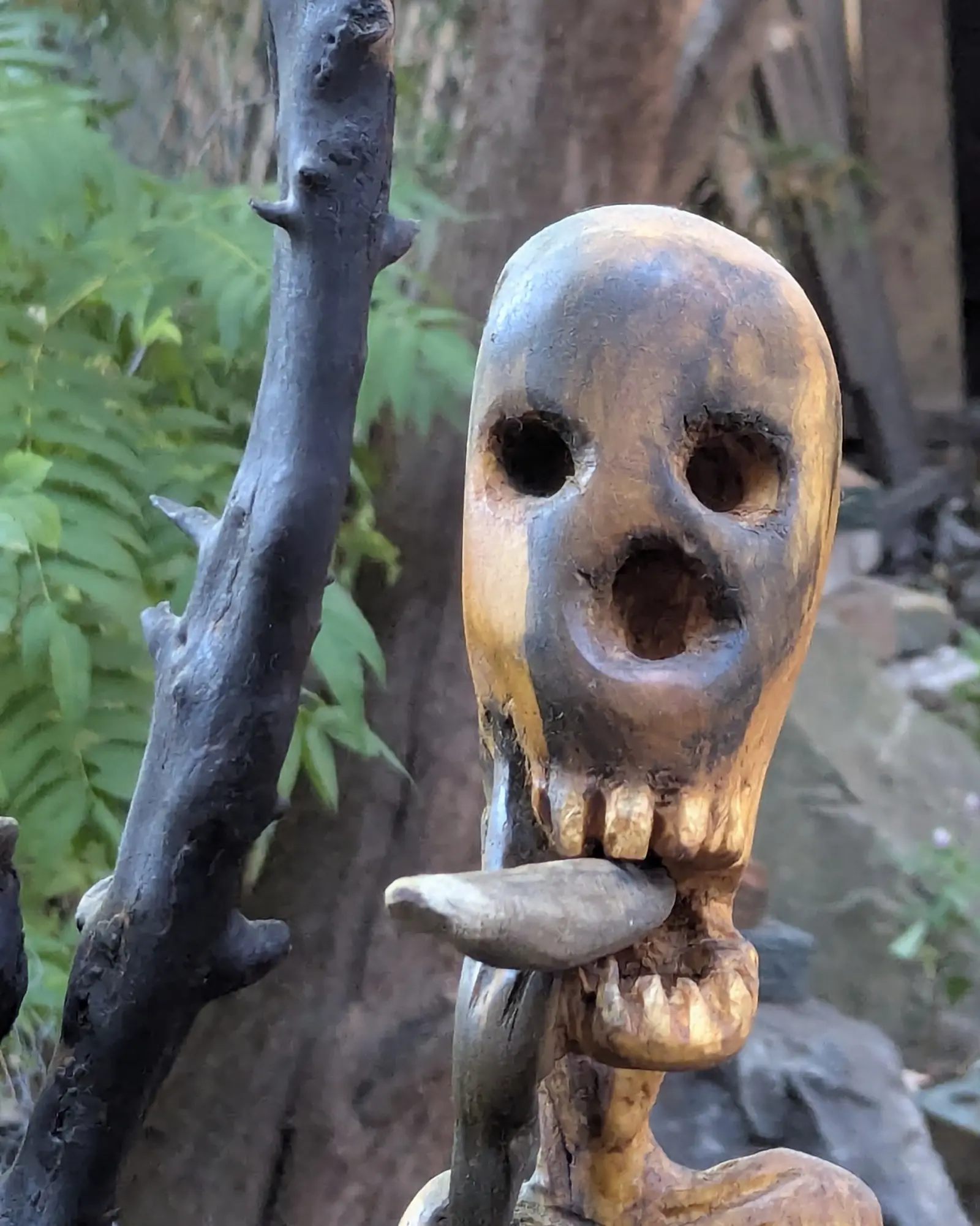
Dead But Alive 1, detail: the elongated skull in pale wood with darkened areas, two round eye sockets, a gaping mouth, a row of teeth with the stone held beneath it, the shoulder and upper ribs, the charred branch at left against foliage
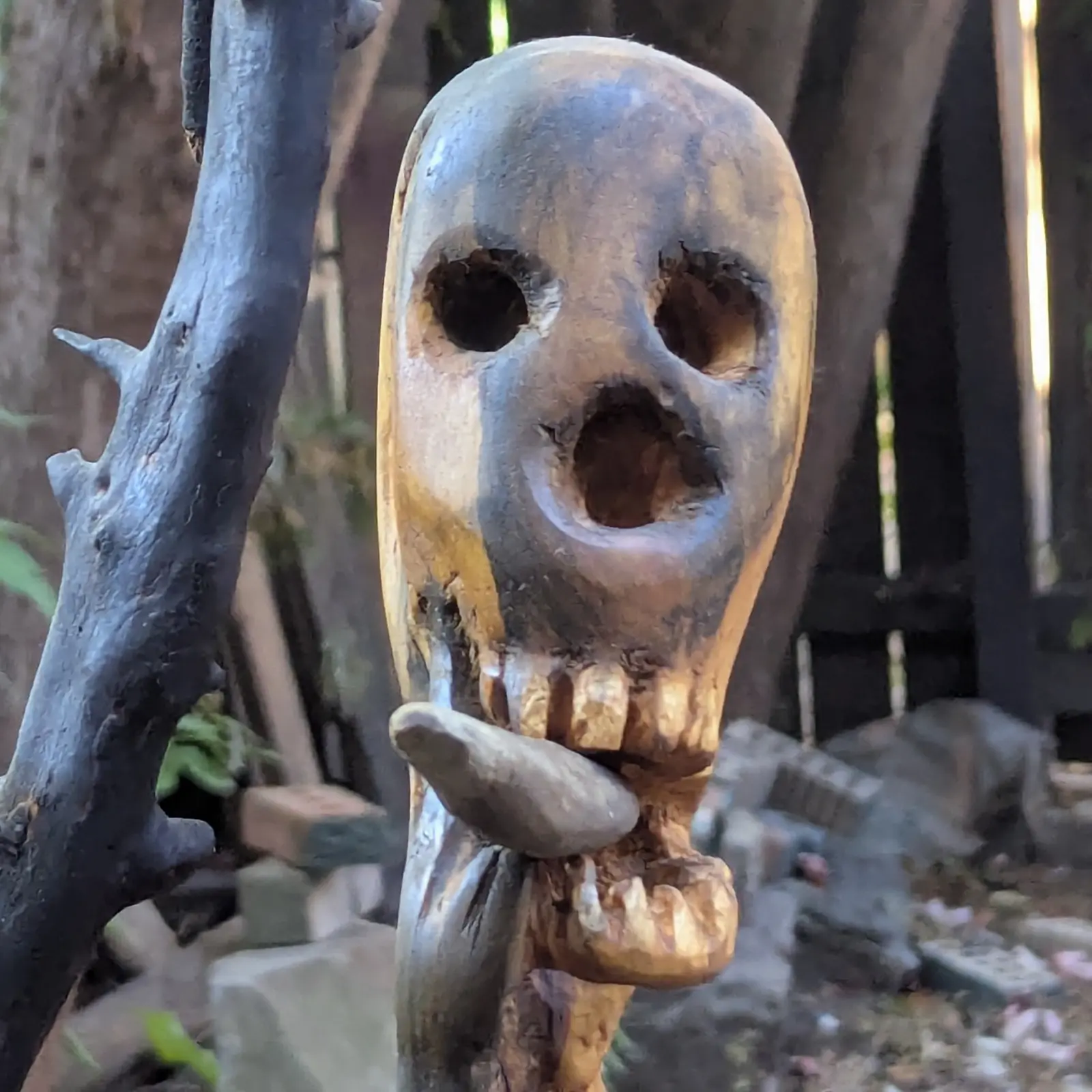
Dead But Alive 1, square close-up of the face: two eye sockets and a mouth opening in the pale wood, upper and lower teeth framing the smooth stone, the stubs of the blackened branch at left, a dark fence blurred behind
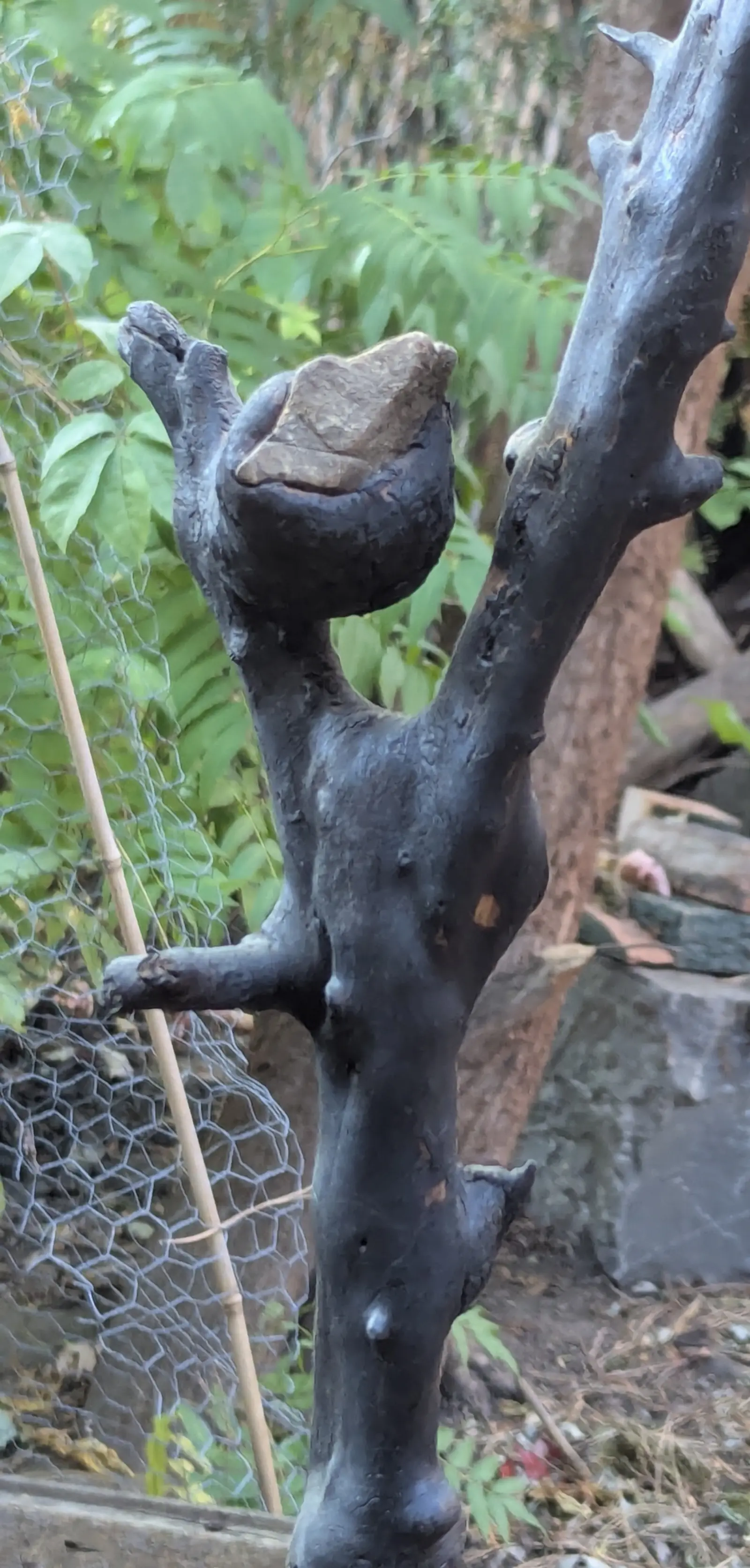
Dead But Alive 1, the charred branch seen close: cracked black surface, a short side shoot, and at the top of a fork the flat stone lodged in a rounded hollow, wire mesh and green foliage behind
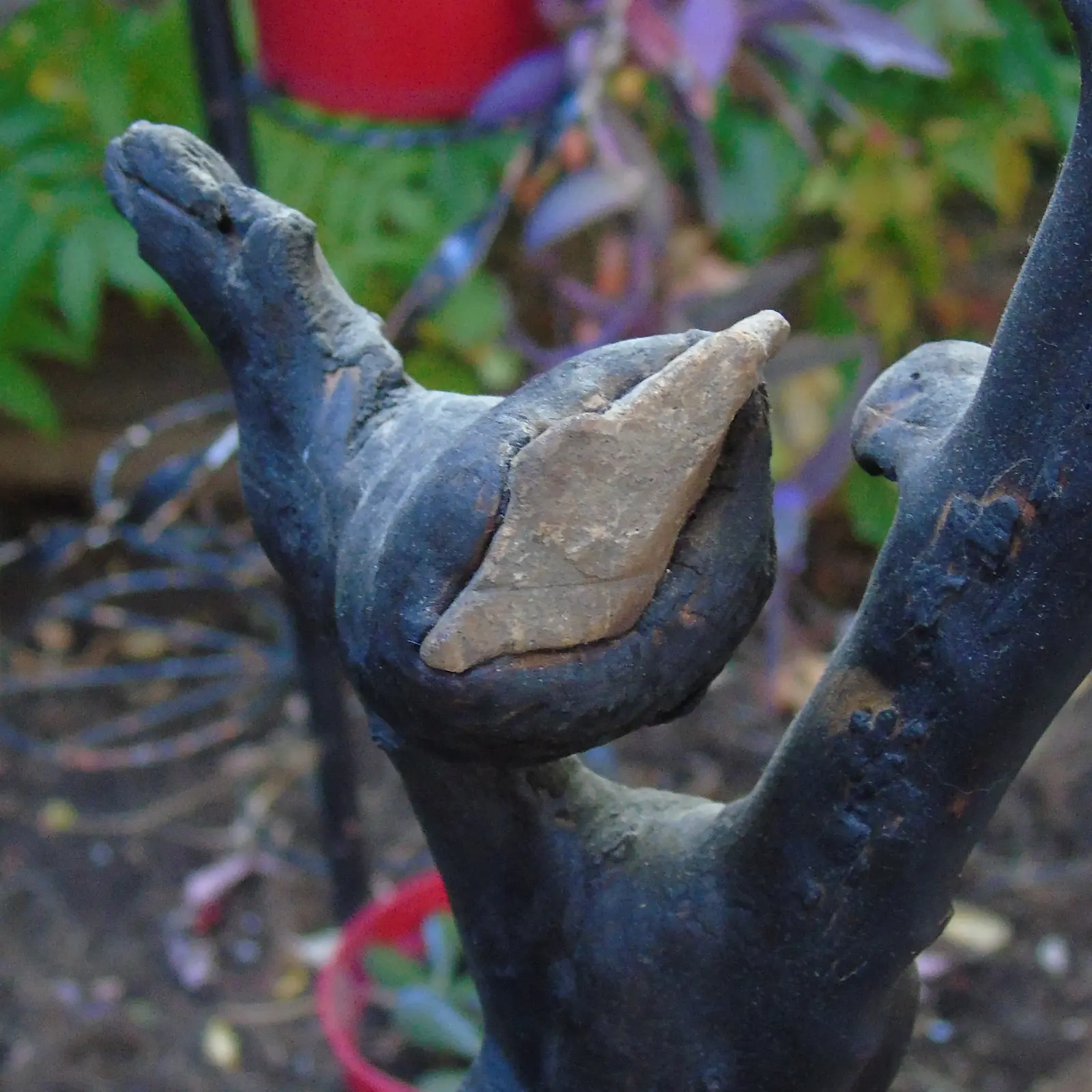
Dead But Alive 1, square close-up of the charred branch's fork: the flat beige stone set between two lobes of black wood, a stub pointing up at left, green and purple leaves blurred in the background
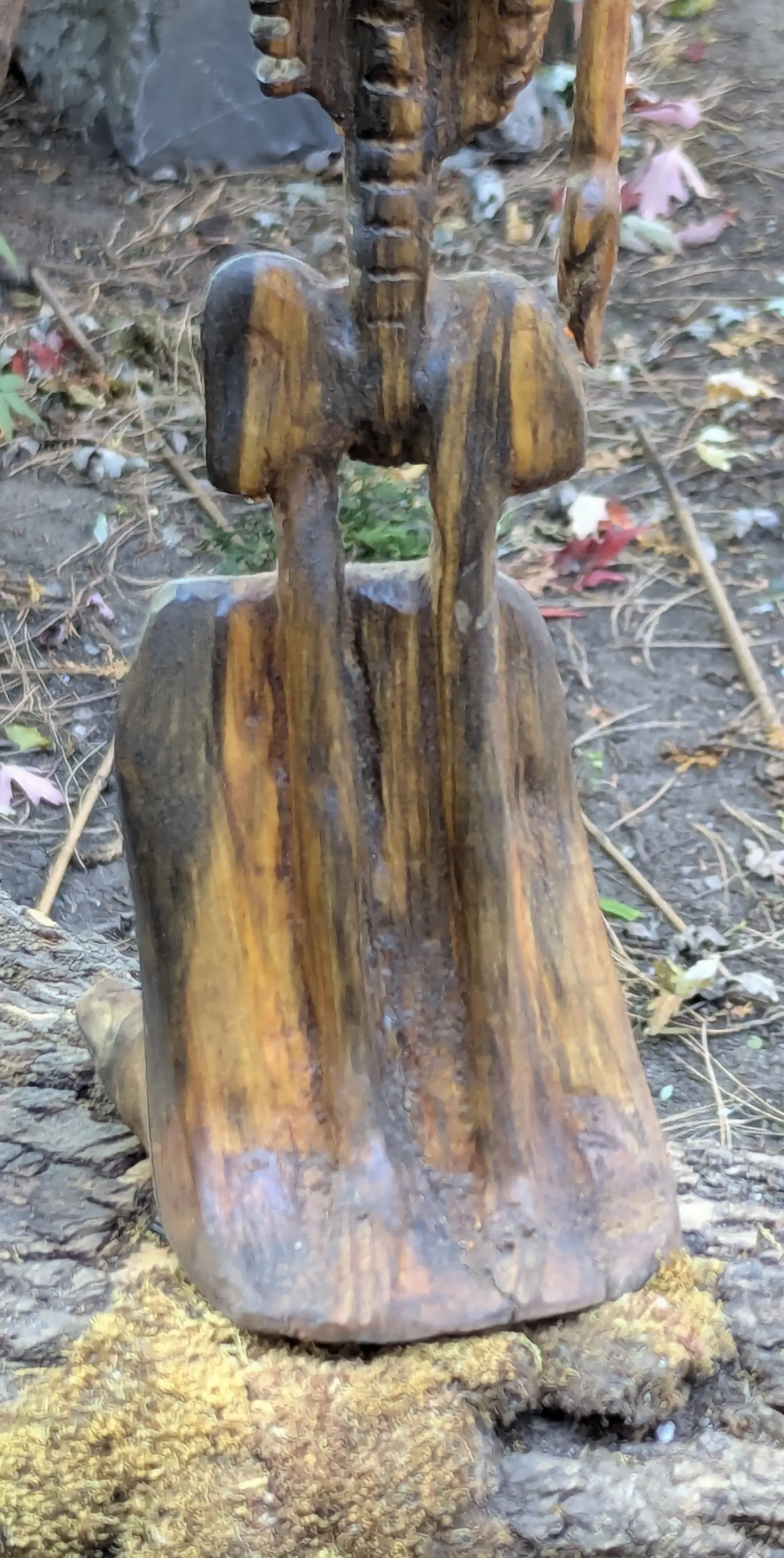
Dead But Alive 1, the lower figure: the segmented spine, the two-lobed pelvis, two thin legs meeting the wedge-shaped base with its brown-streaked wood, yellow-green moss at its foot, fallen leaves on the ground
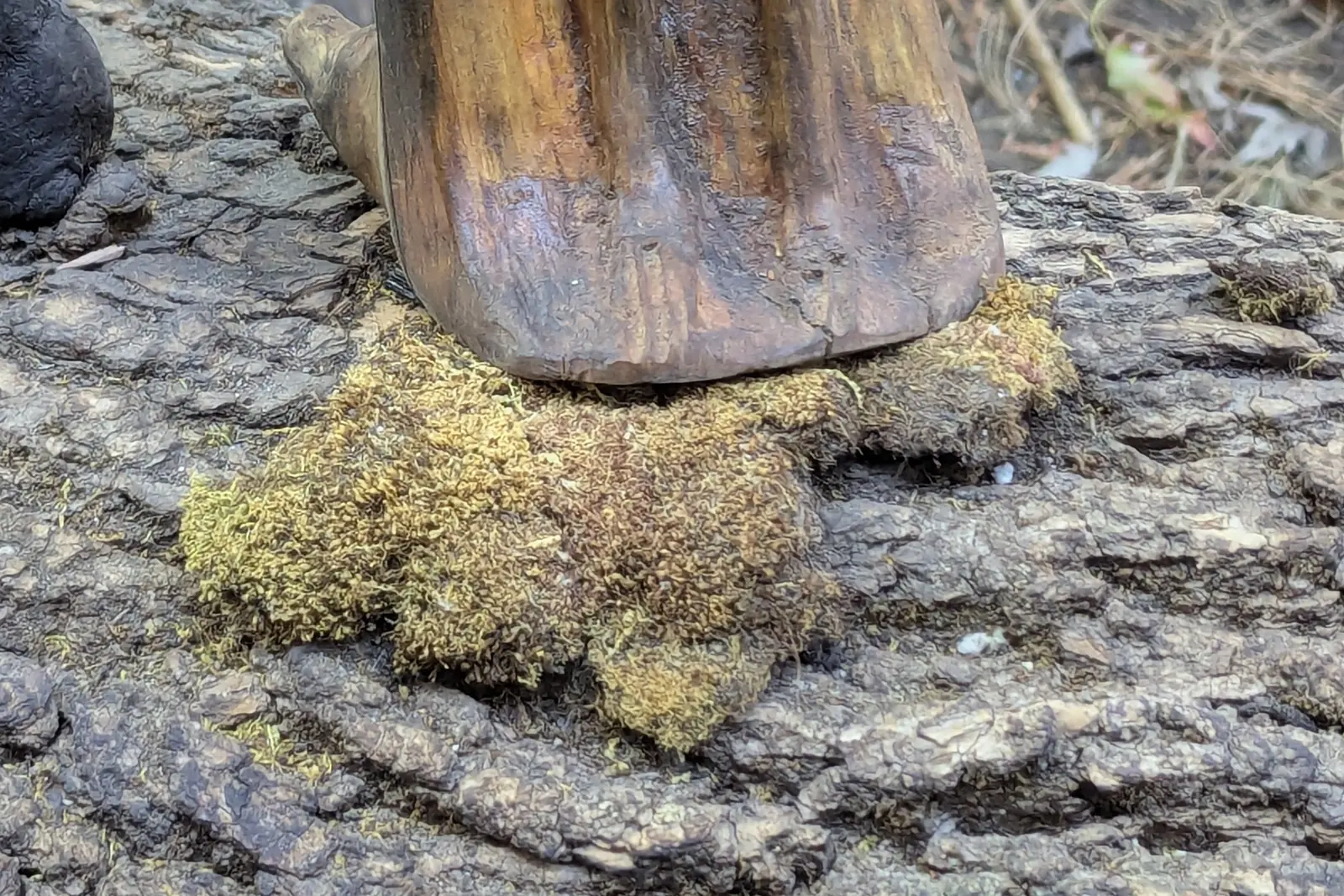
Dead But Alive 1, detail seen from slightly above: the foot of the streaked wooden base resting on a tuft of yellow-green moss in the foreground, grey fissured bark all around, the black foot of the branch in the upper left corner
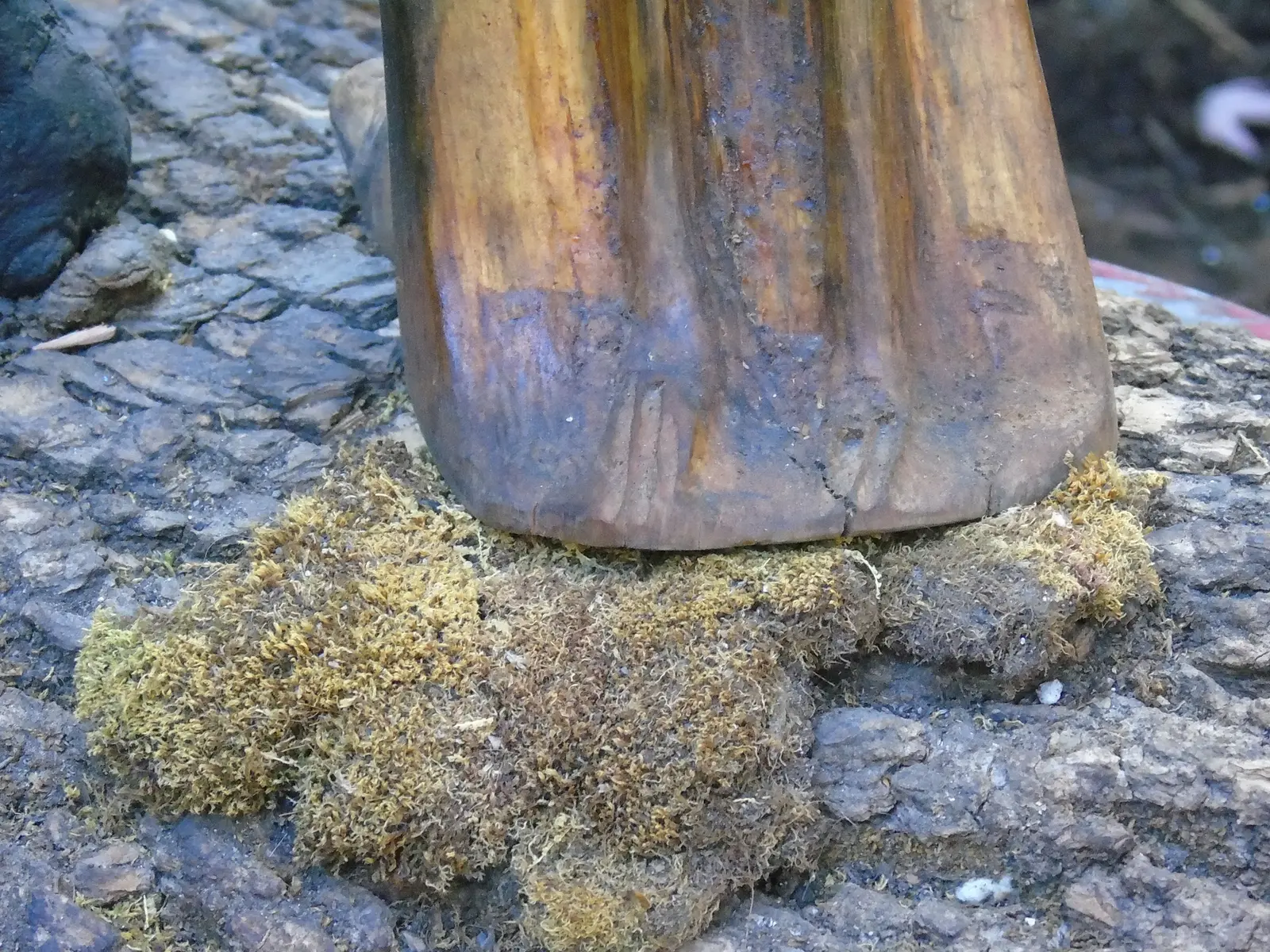
Dead But Alive 1, detail at ground level: the pale wooden base streaked with brown, fine splits at its foot, set on yellow-green moss, grey fissured bark on either side, the black foot of the branch at left
Video
Reading notes

The memento mori recalls death the better to make life felt; here it slides toward the ecological, at the scale of a forest. The moss asks its question in silence: does regrowth console, or does it merely cover over.