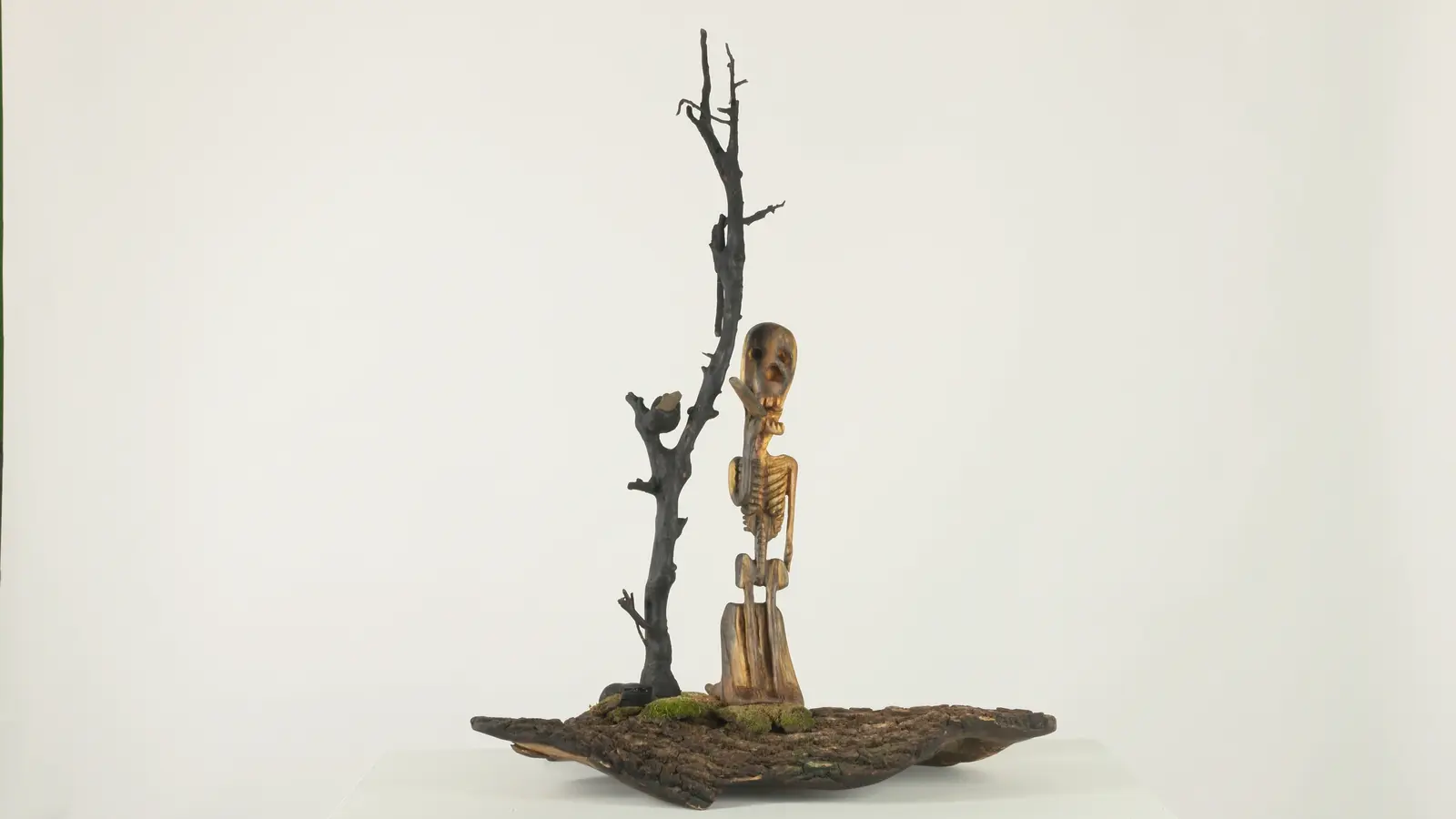
Dead But Alive
Our relationship with the environment in which we live is comparable, say, to the relationship between a container and its contents, each of which has developed independently of the other. Such a relationship may or may not imply a reciprocal correspondence. Ours is always a relationship of correspondence—which does not rule out the possibility that such a relationship (as often happens) can turn out to be substantially negative for us and our environment. And yet there is no doubt that here the container and the contents, the human condition and the human environment, are the result of one and the same dialectical process, one and the same process of mutual conditioning and formation.
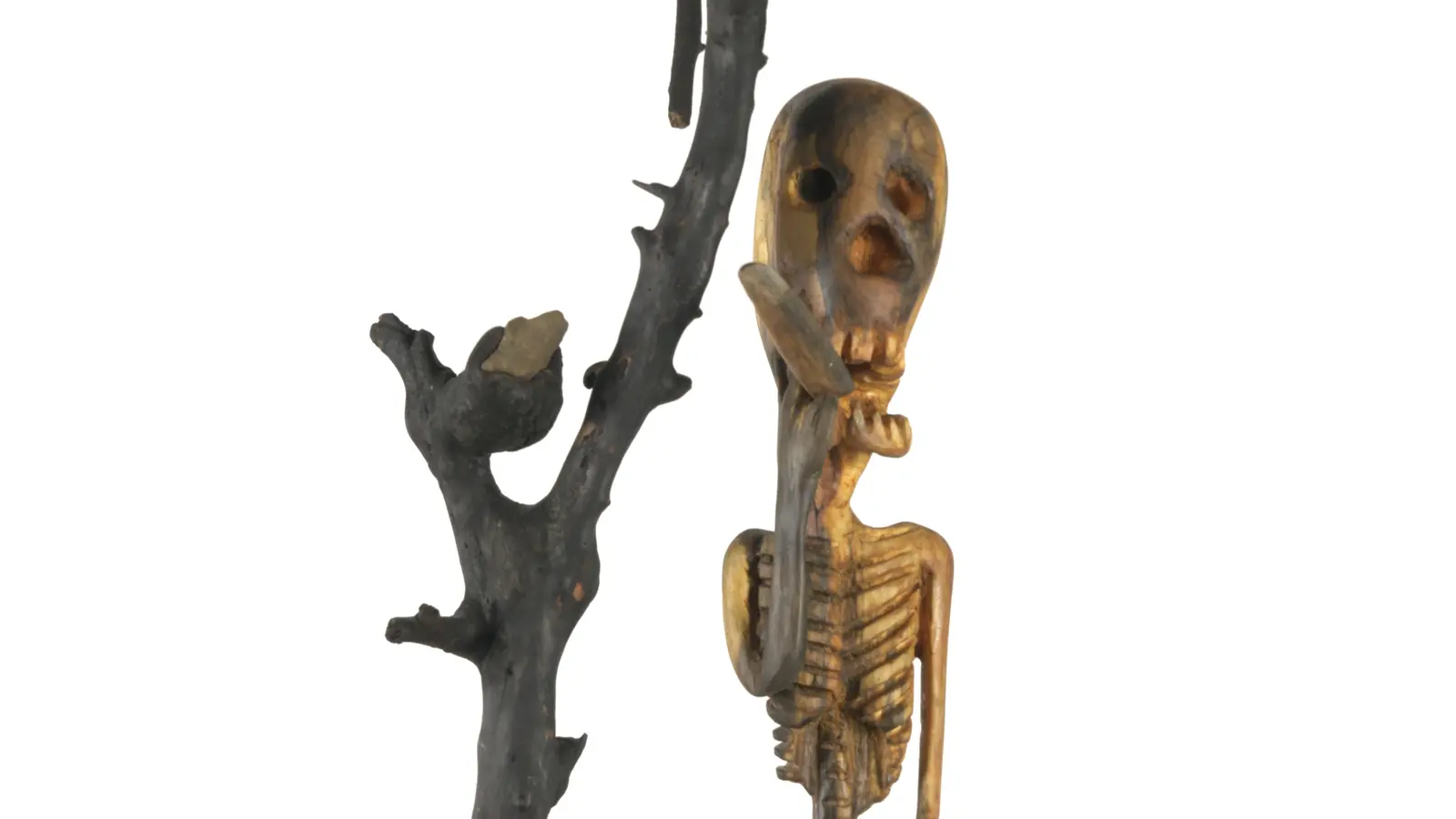
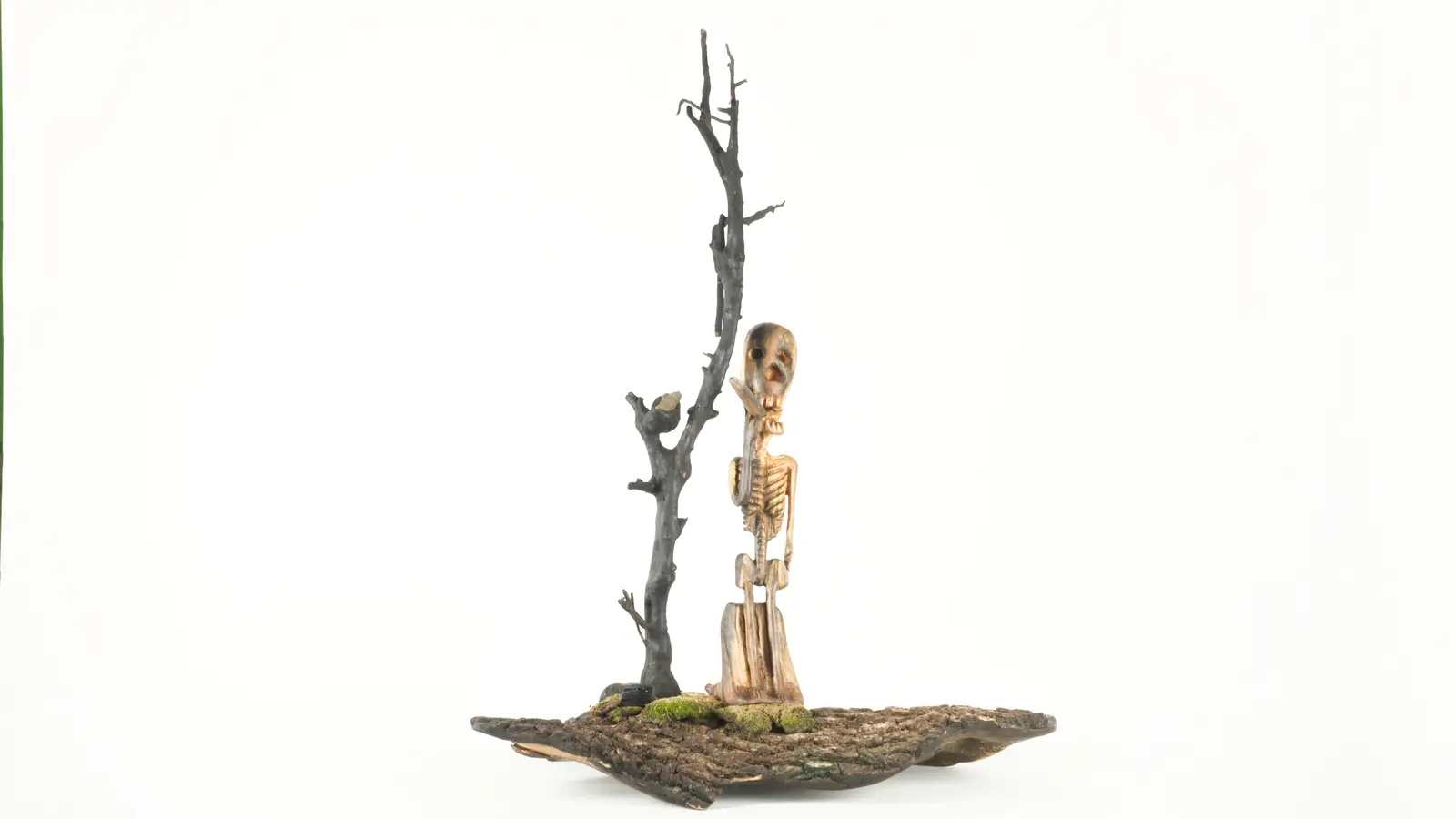
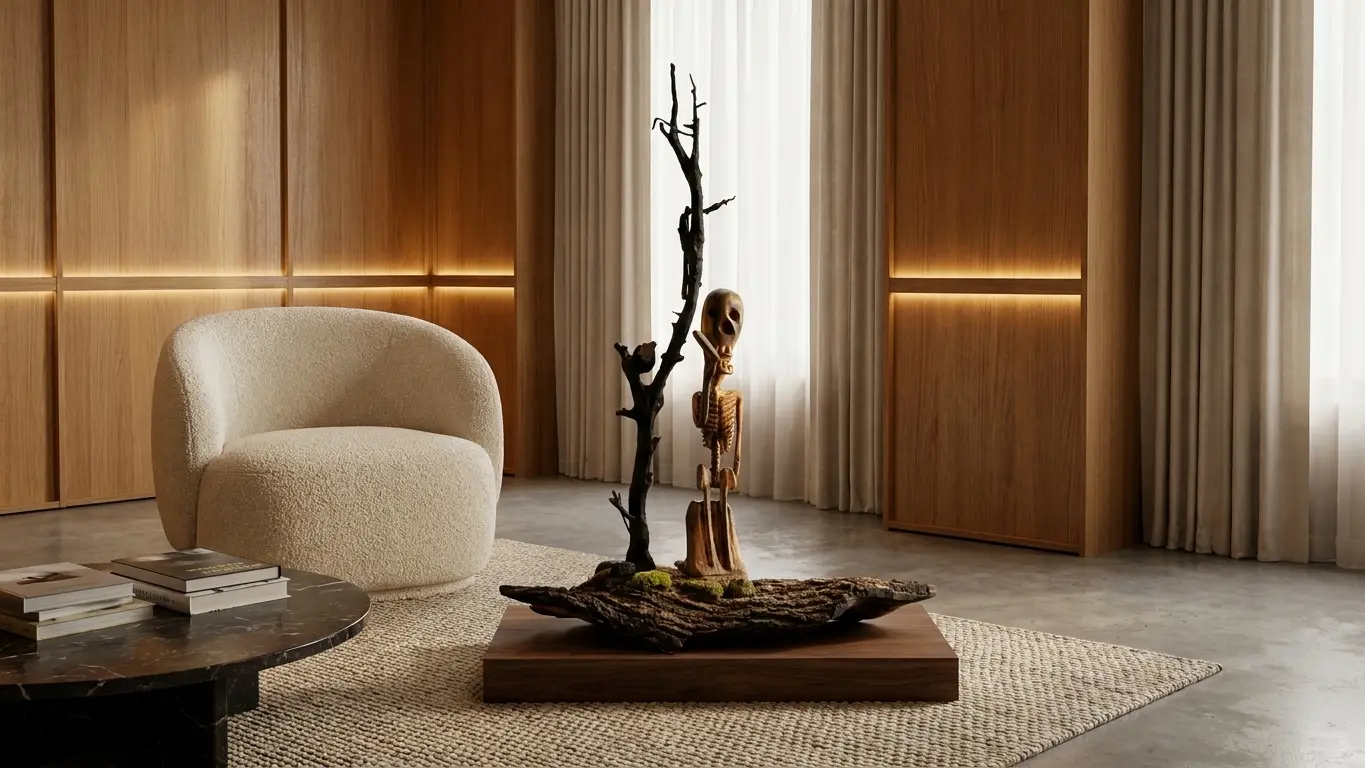
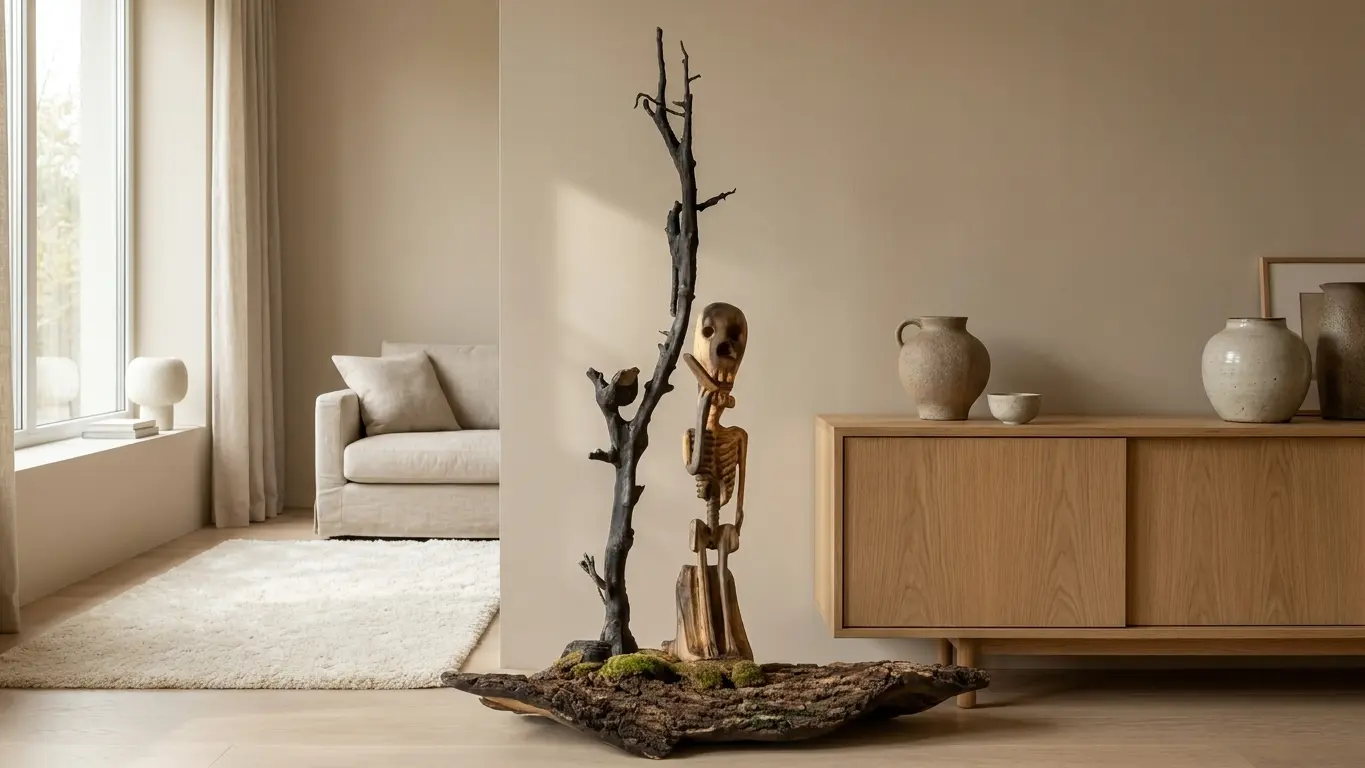
In 2023, wildfires ravaged an unprecedented stretch of Canadian territory. Dead But Alive was conceived in memory of those forests: the mourning sits in the material itself. A charred branch rises, blackened, stripped bare; beside it, a skeletal figure carved from pale wood stands upright on its pedestal. Both verticals climb from a single slab of bark, and there, on that burned ground, moss has grown back, a quiet, stubborn green at the figure's feet. The tree is dead, the body too; the moss lives.
Video
Reading notes
The memento mori recalls death the better to make life felt; here it slides toward the ecological, at the scale of a forest. The moss asks its question in silence: does regrowth console, or does it merely cover over.