Untitled
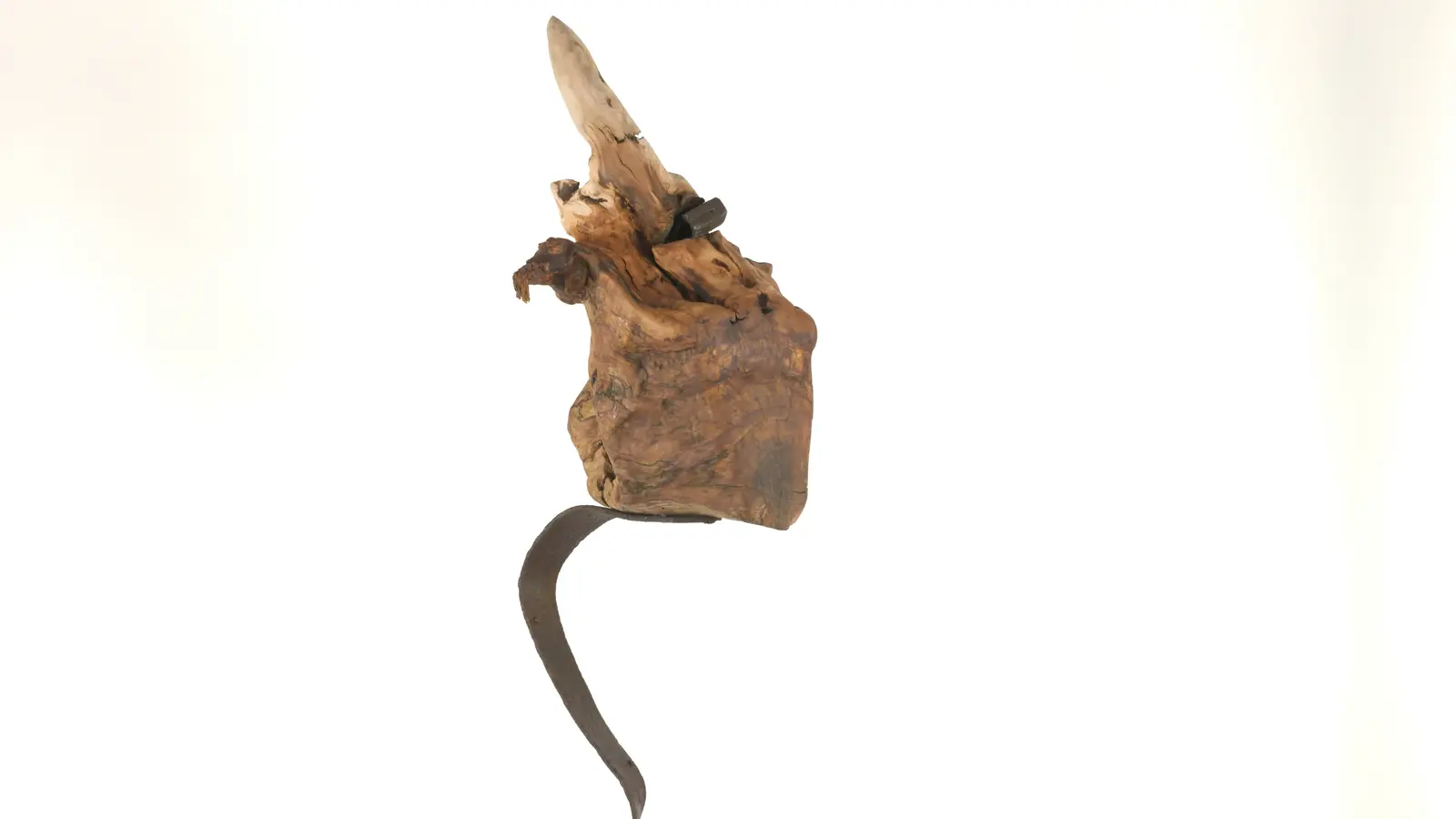
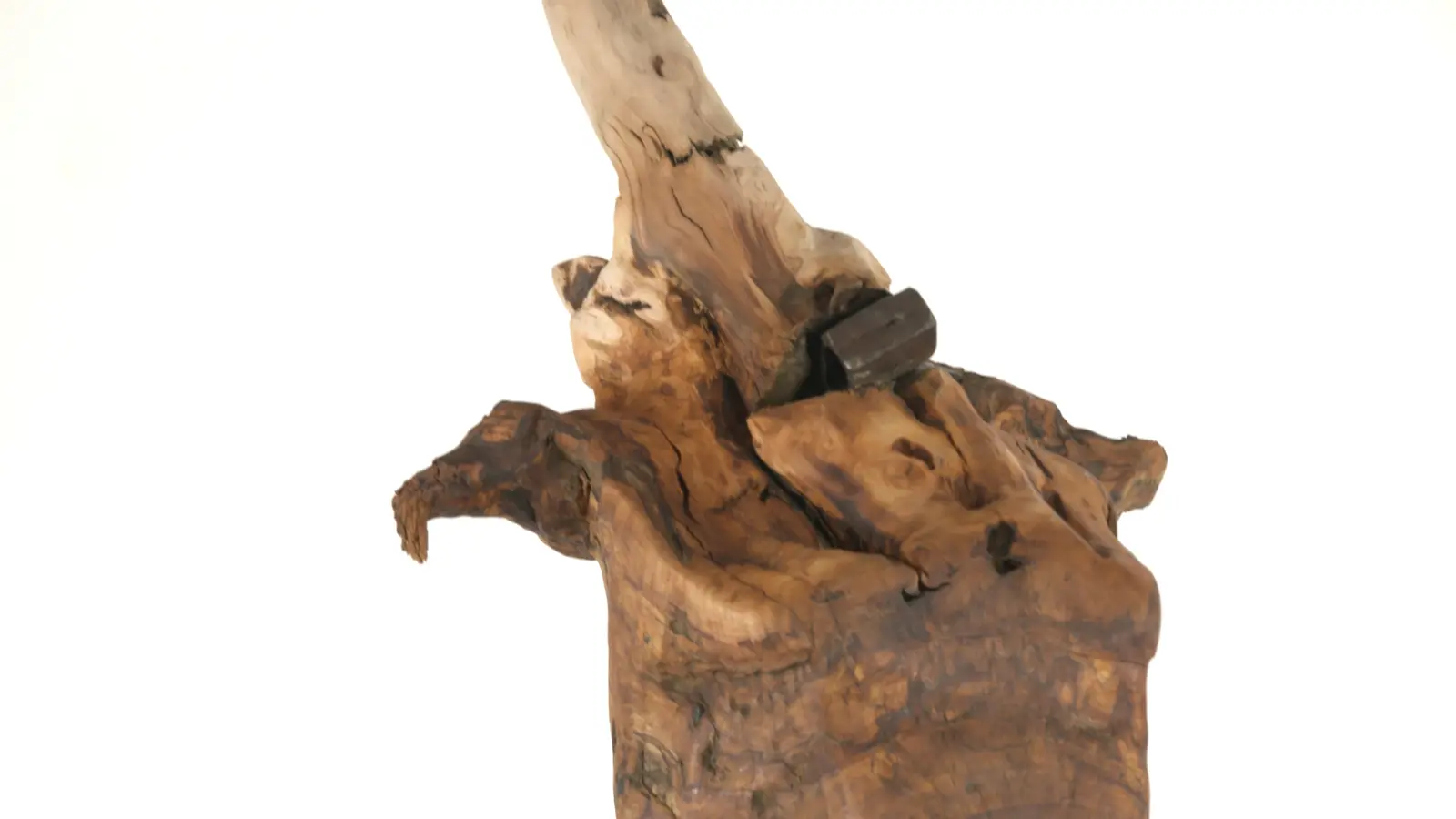
Carving a block of found wood, Robert Bibeau released an axe head that the material had slowly swallowed. The iron is oxidized and dark, set into the wood as though it had grown there. Such a thing is rare. The blade had entered the tree while it was alive, and the tree went on growing around it, closing its fibres over the metal year after year. That find decided the rest.
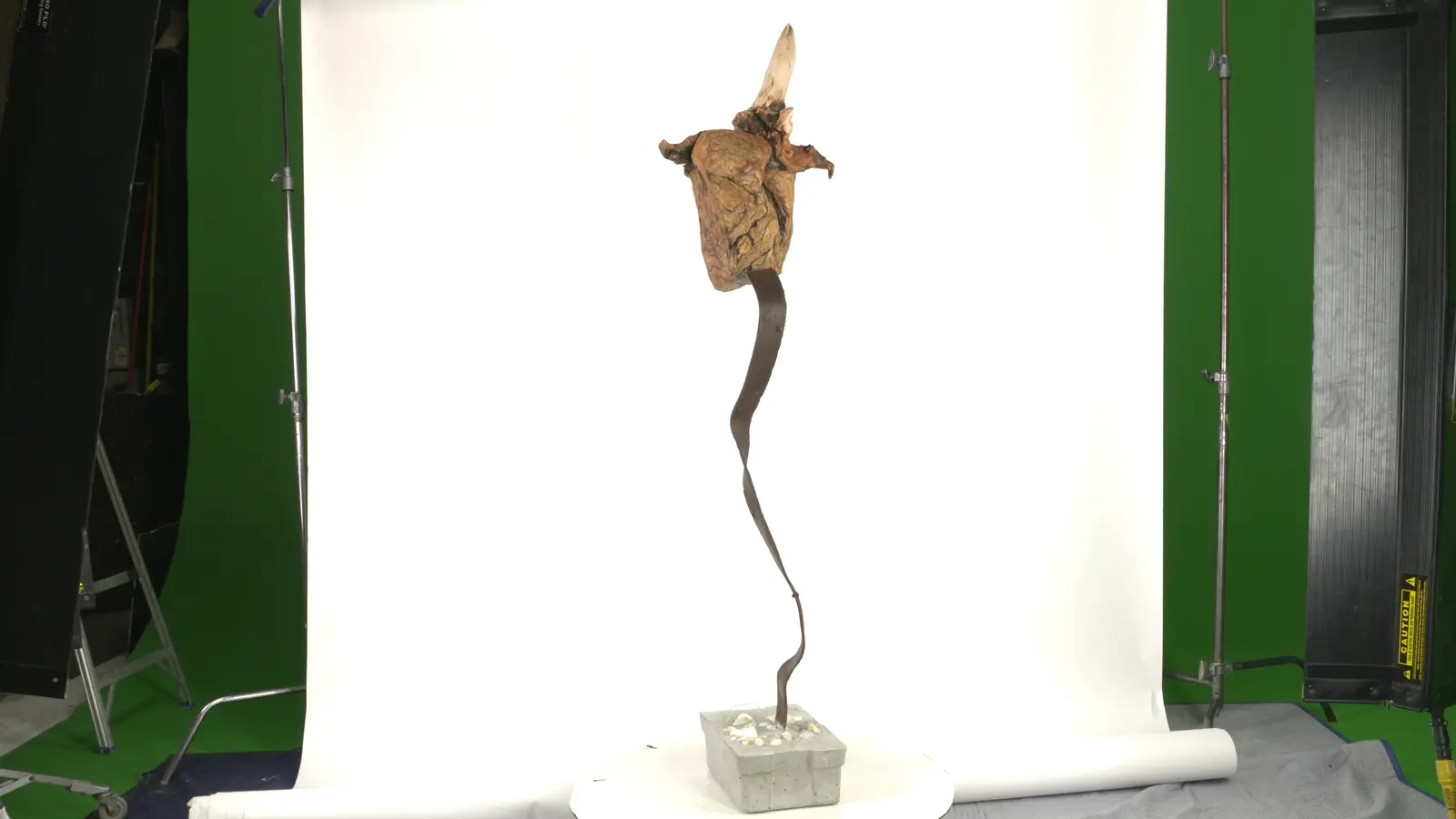
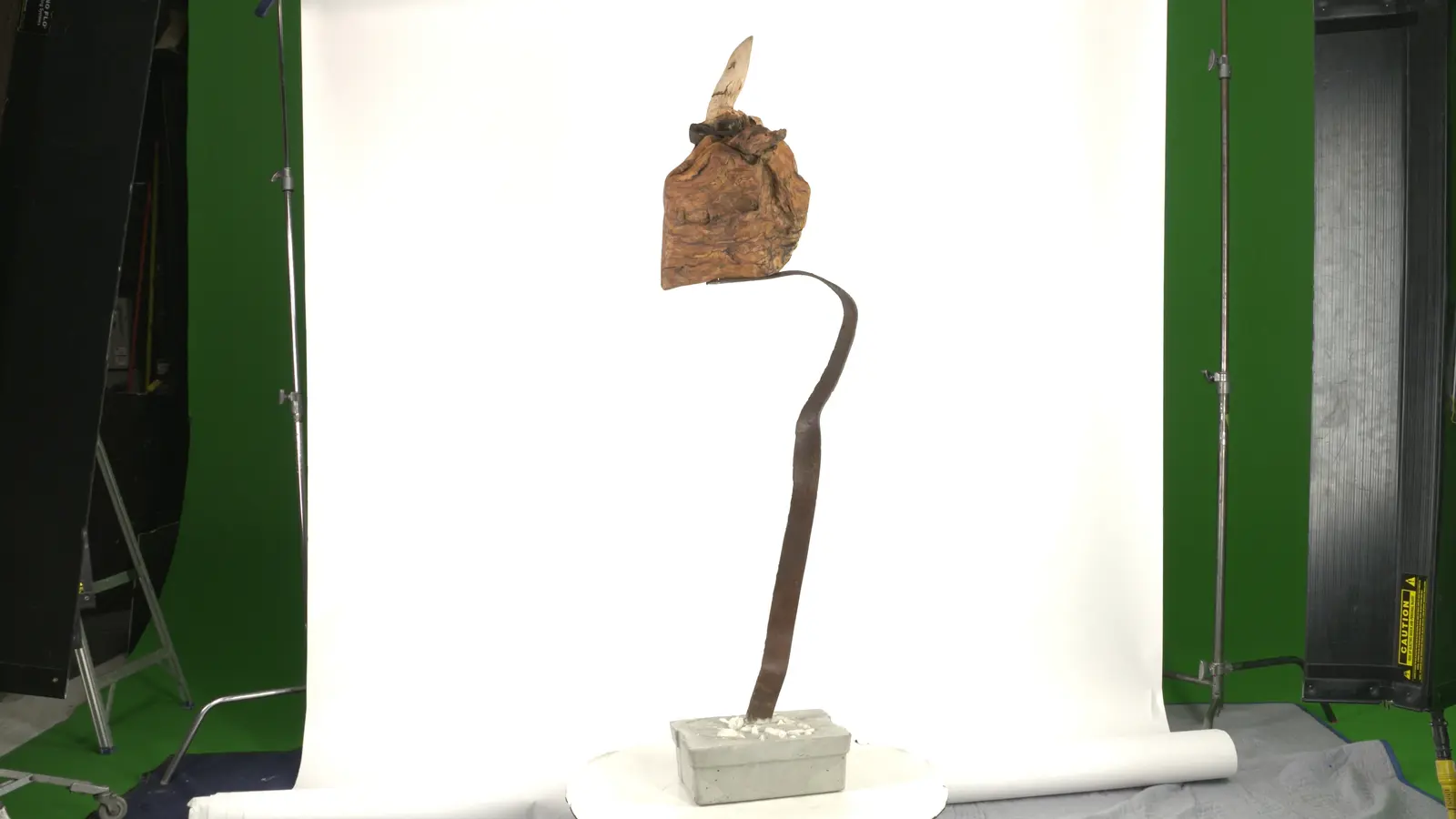
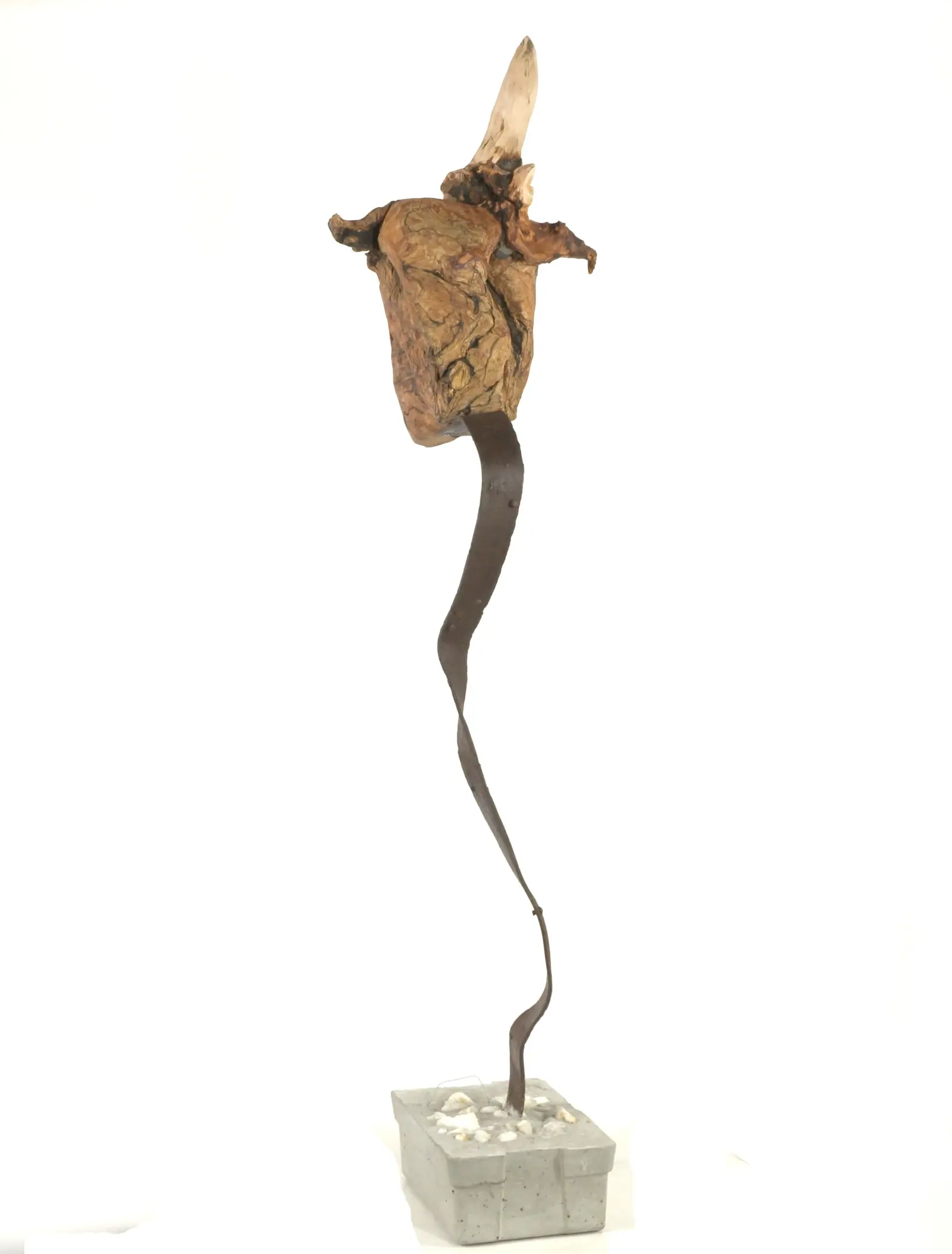
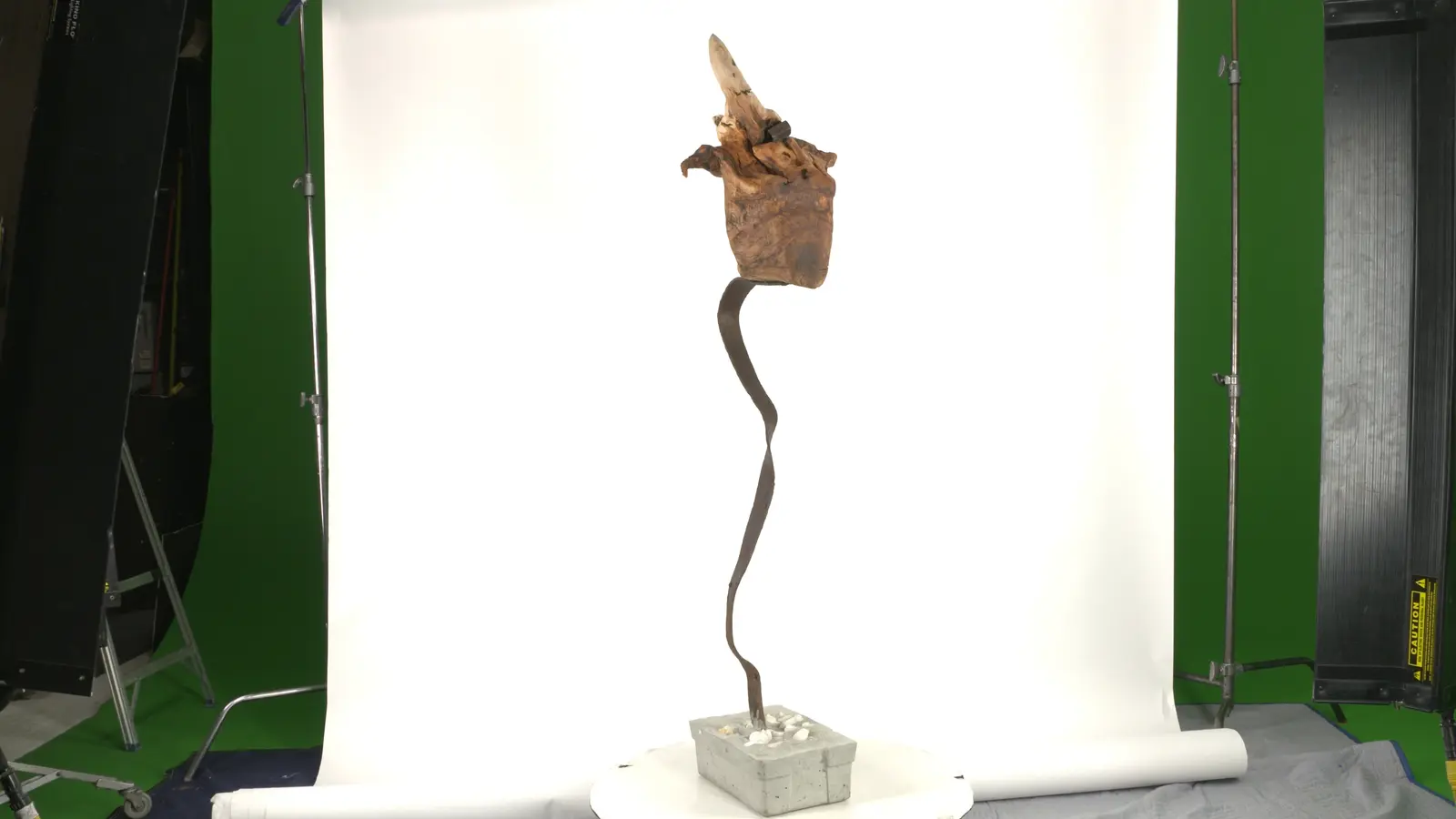
The shape rising from the wood reads as a bovine. A bull, raised at the top of a forged metal rod that snakes up from a poured concrete base. One pale projection dominates the mass, lighter and smoother than the wood around it, flanked by two uneven stubs; this is where the animal reading takes hold, in that broken crown where the eye goes looking for horns. One seems torn away, the other snapped at mid-height. The axe head, still lodged just below the projection, carries on the story of attack the material had begun. What remains is a beast that took the blow and still holds.
The piece stands above a metre and a half. Its concrete base anchors it, weighted by a few white pebbles set across the top. The flat, rusted rod joining base to wood keeps some give: a push of the hand sets the block swaying, and it tips through the air for a moment before settling back to plumb. The mass of the concrete allows that motion with no danger of a fall. Robert Bibeau named the piece The Last of His Kind. The title holds the creature between two states, the wounded animal and the one that lasts once the others are gone. The cuts stay raw, with no finish to soften them. The metal lifts the wood far above its base, toward an almost heraldic stance.


The axe was not placed by the sculptor: it was there, held captive in the wood, and the carving is what revealed it. The inversion is worth pausing on, since it shifts the question of authorship. Robert Bibeau recognizes a form the material already held, rather than imposing one. The maimed bovine joins a long line of wounded animals in art, from Picasso's bull to votive beasts, where mutilation speaks less of defeat than of endurance. An ambiguity remains, one the work does not resolve: does this last survivor stand by its own force, or only because it was set there.