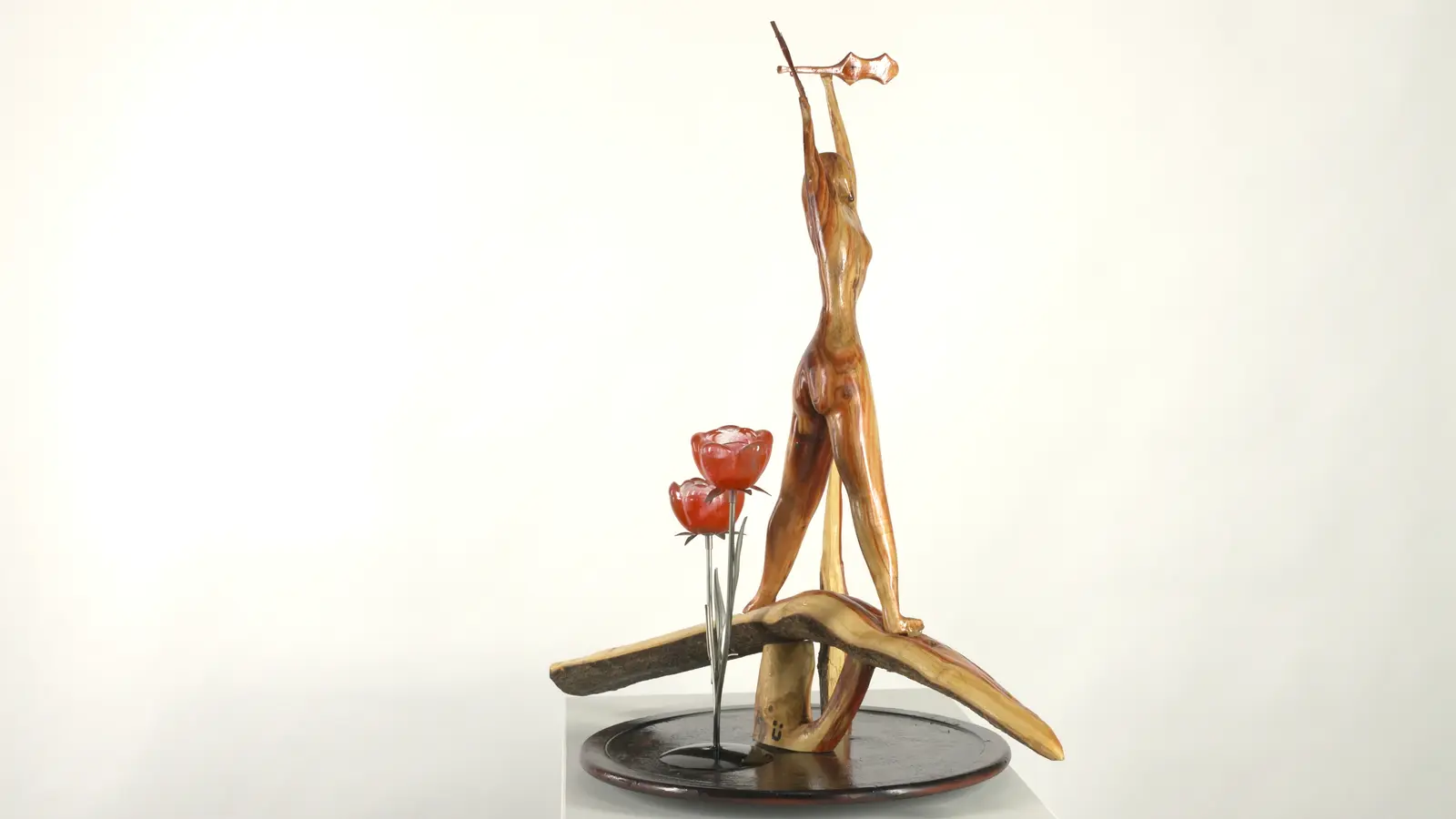
The Violinist
Music is not simply made by following one tone with another, but by a succession of tones which the ear grasps as a unit, like a melodic phrase or a melody. These units are HUMAN IMAGES for they evoke States of life. Larger forms are created involving complex melodic chains, alternation and variation of melodies, simultaneous interplay of two or more melodic lines or polyphony, formations of chords or groups of different notes that, struck simultaneously, merge to sound like a single note with an enriched “feeling tone.” Such complex forms evoke psychological States that are “human portraits.” Through such “human images” and “portraits” music can be said to embody ideas. These are not the ideas that may be found in a scientific tract but commentaries on a society showing what it means to live in it. They embrace developments in sensitivity, in the human’s awareness of his own powers, and in the situation of internal freedom, as conditions change in the external world. In this way music joins the other arts in creating social consciousness, or the individual’s awareness of the internal life he shares with society, and in revealing the internal history of society.
A musician about seventy centimetres tall, carved from a single piece of pale varnished wood, caught mid-stride, arms raised high in a V: the bow on one side, a stylised wooden violin on the other. She straddles a long branch with its bark left rough, mounted on a dark lacquered disc. At her feet, two flowers with red glass corollas form a candle holder: flower or flame, depending on whether it is lit. The pose holds the end of a performance, the bow raised in completion; the flowers shift the reading to the second after, the bouquet thrown from the hall.
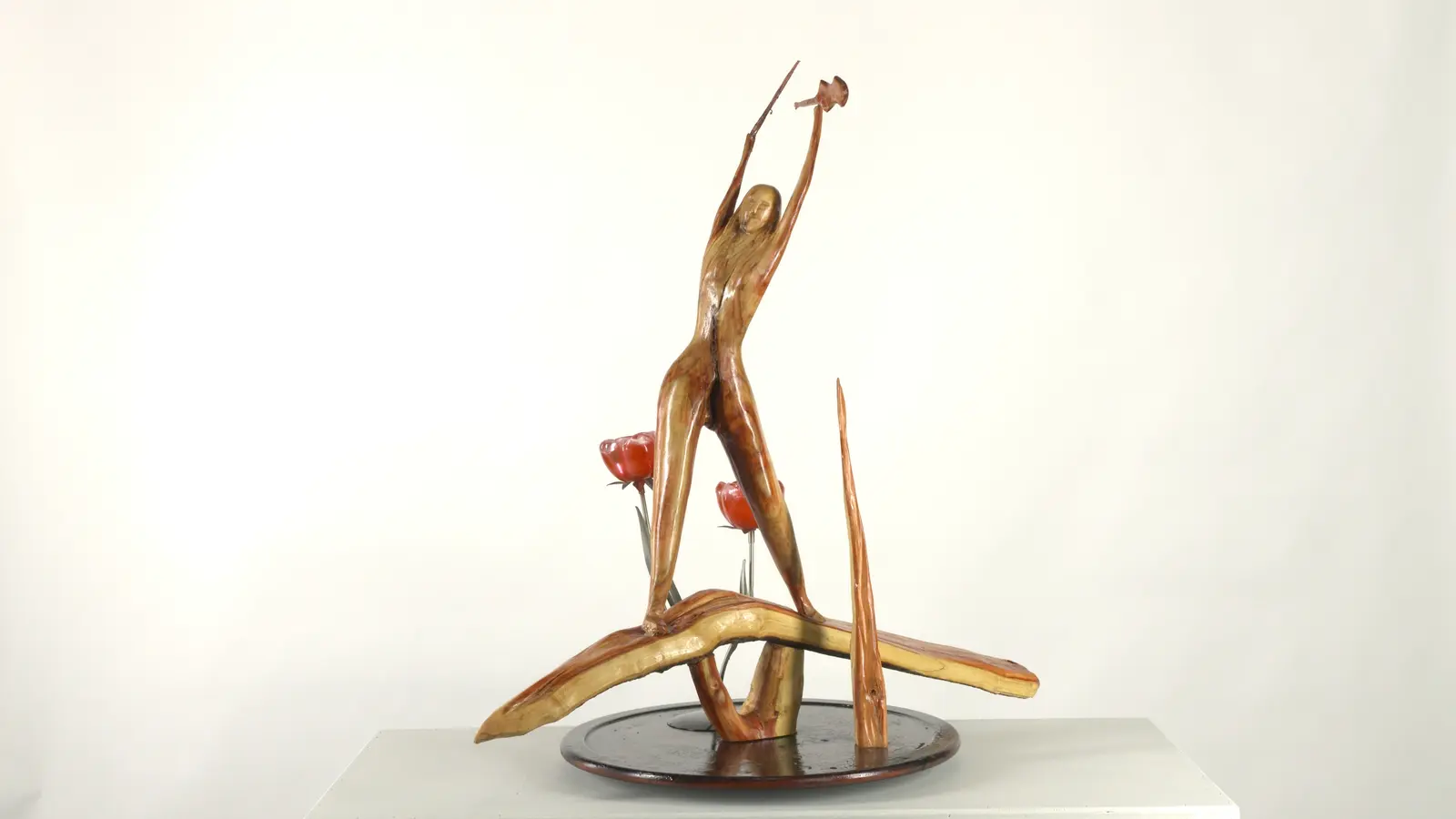
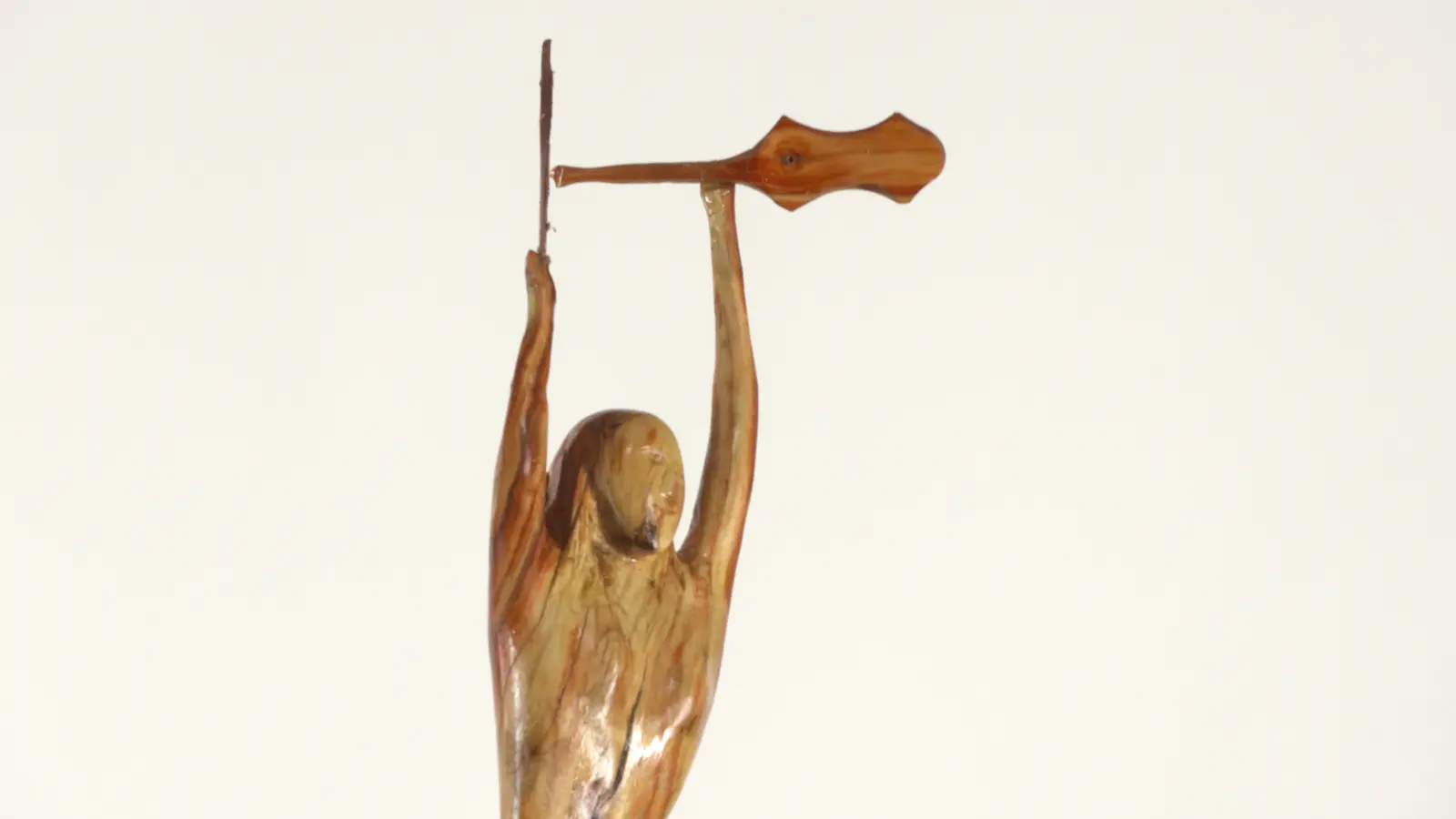
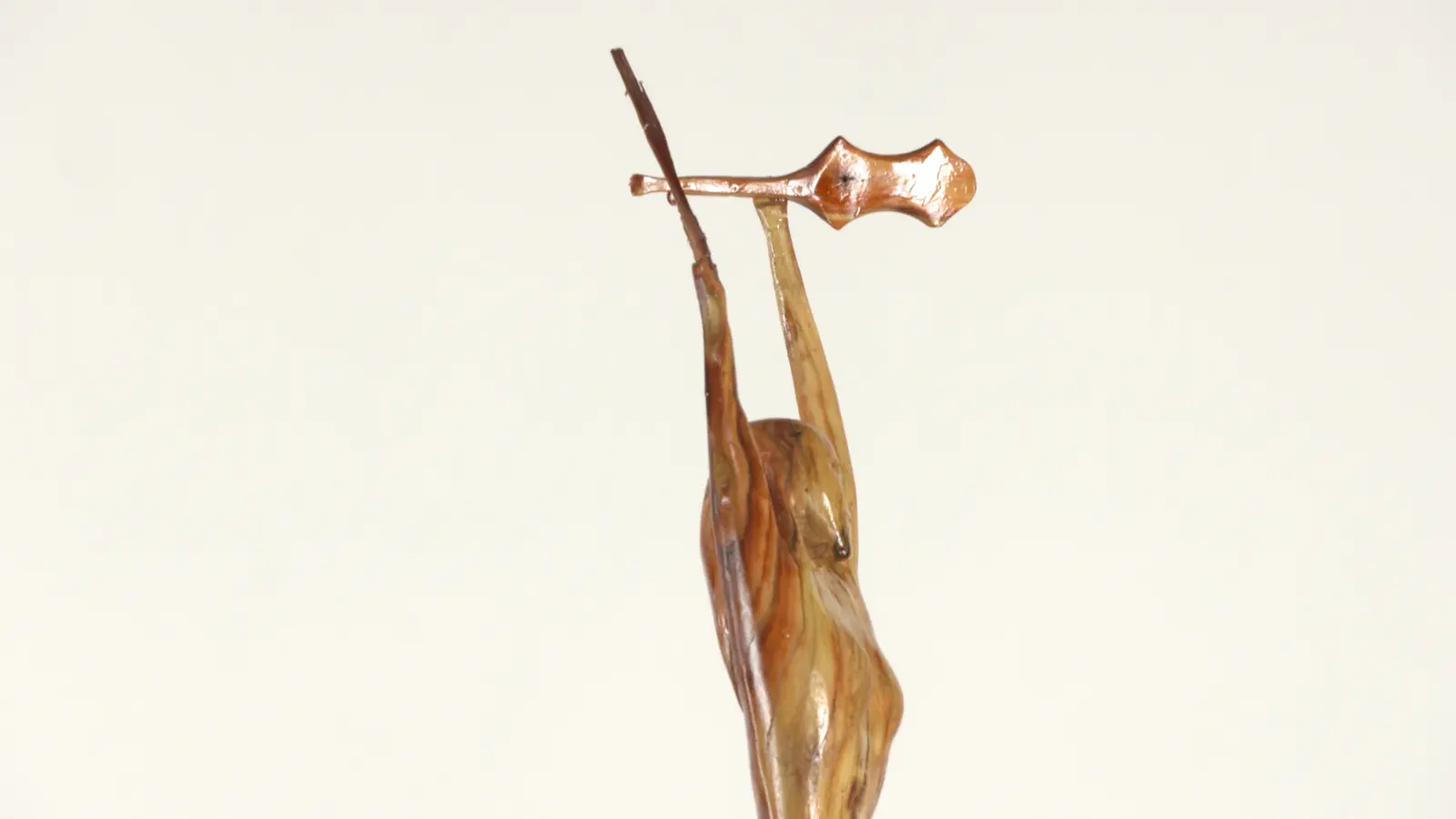
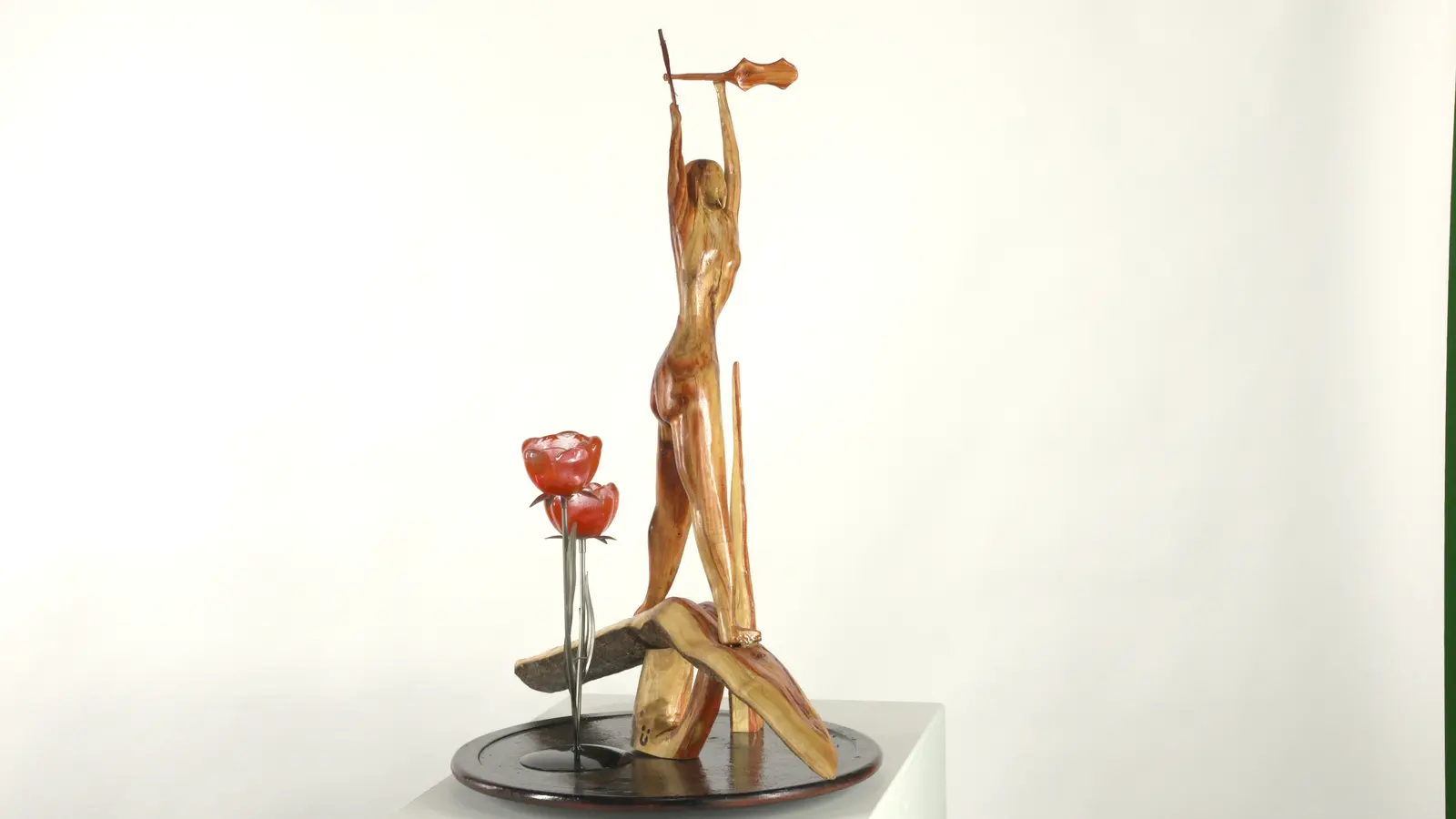
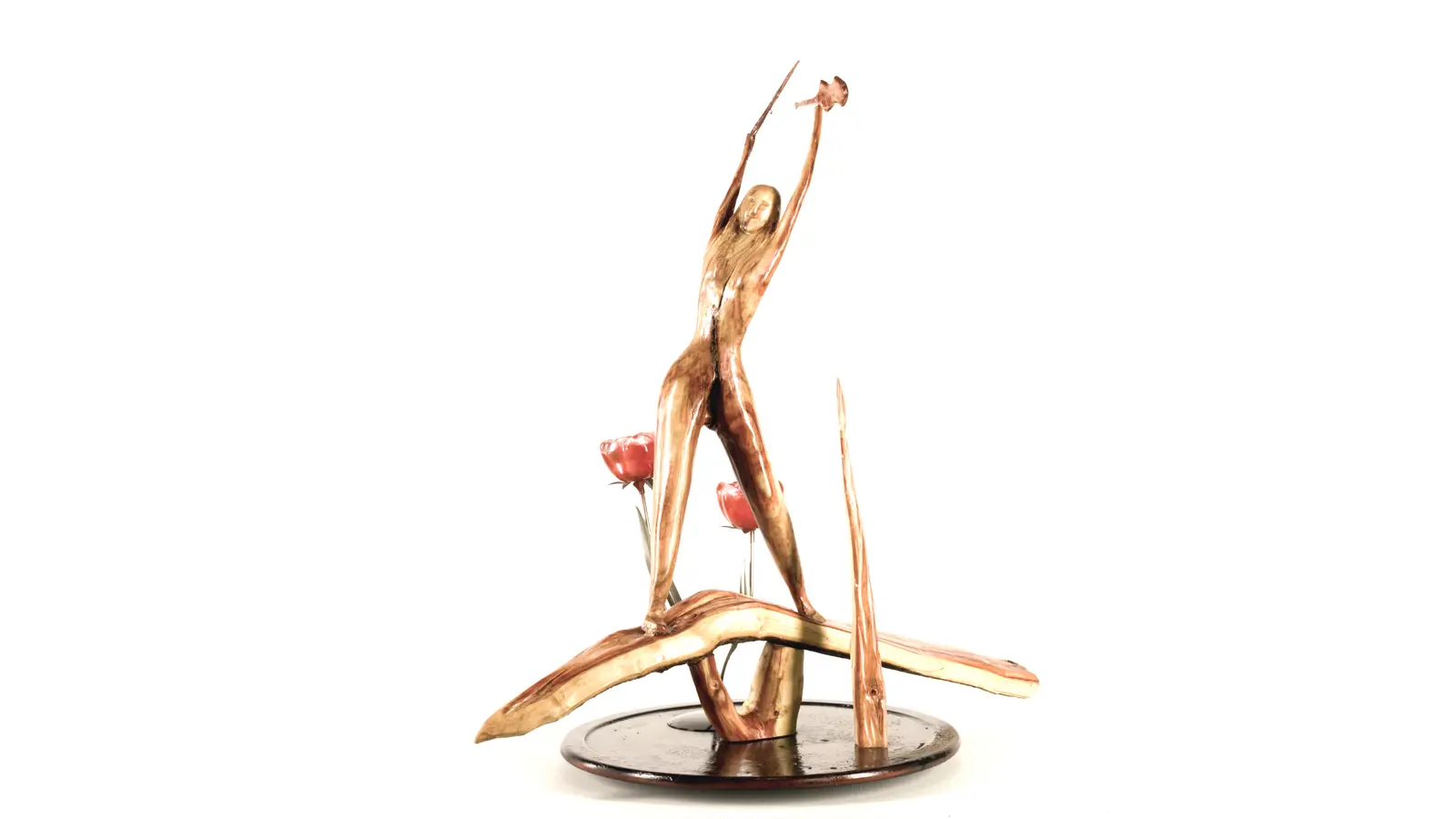
Brâncuși pared *Mademoiselle Pogany* down to a graphic signature; the violinist keeps that simplified polish and adds the precise moment: the bow raised at the end of the work performed, a performance's most difficult instant, that of leaving the note.