The Acrobat
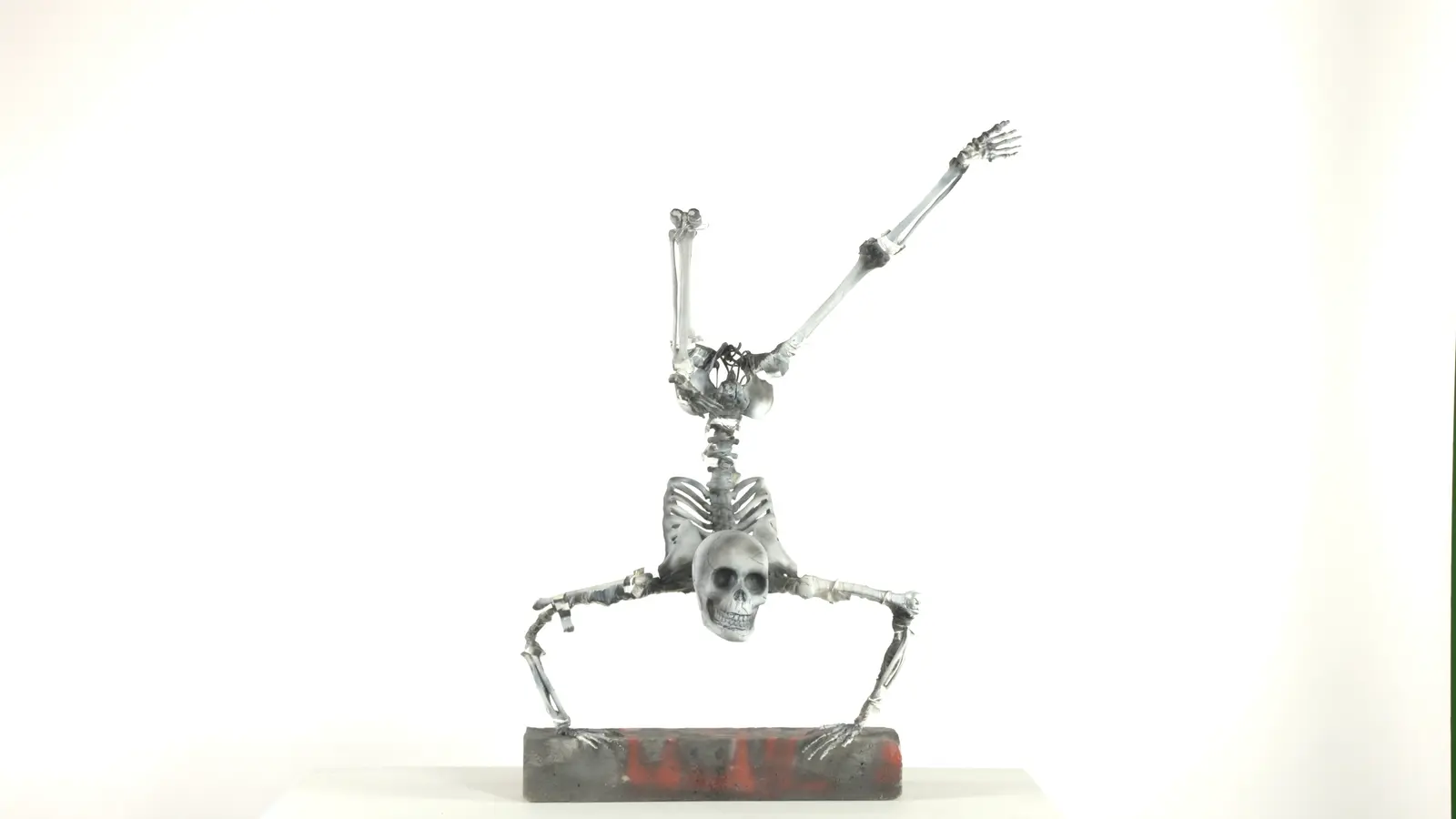
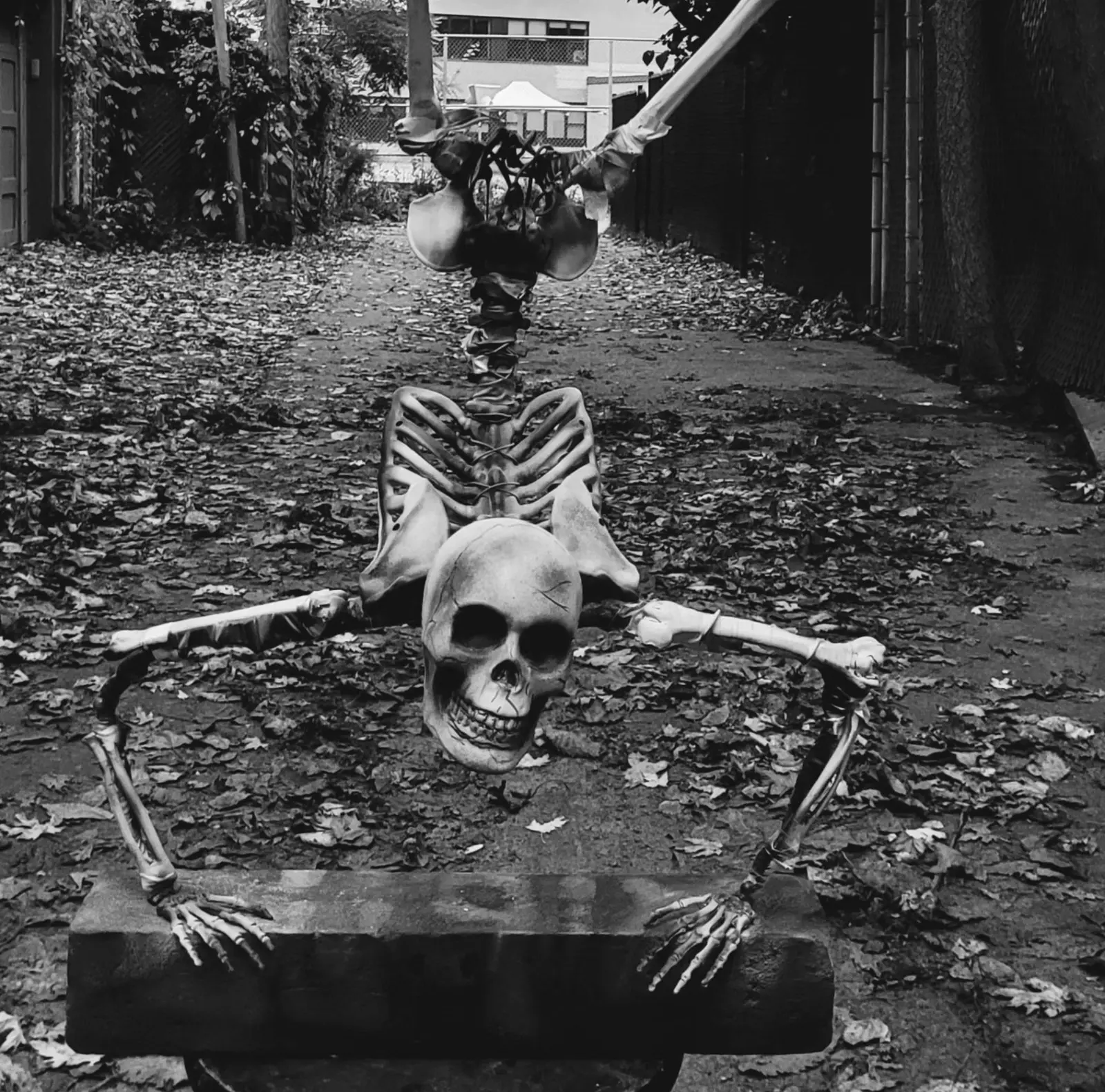
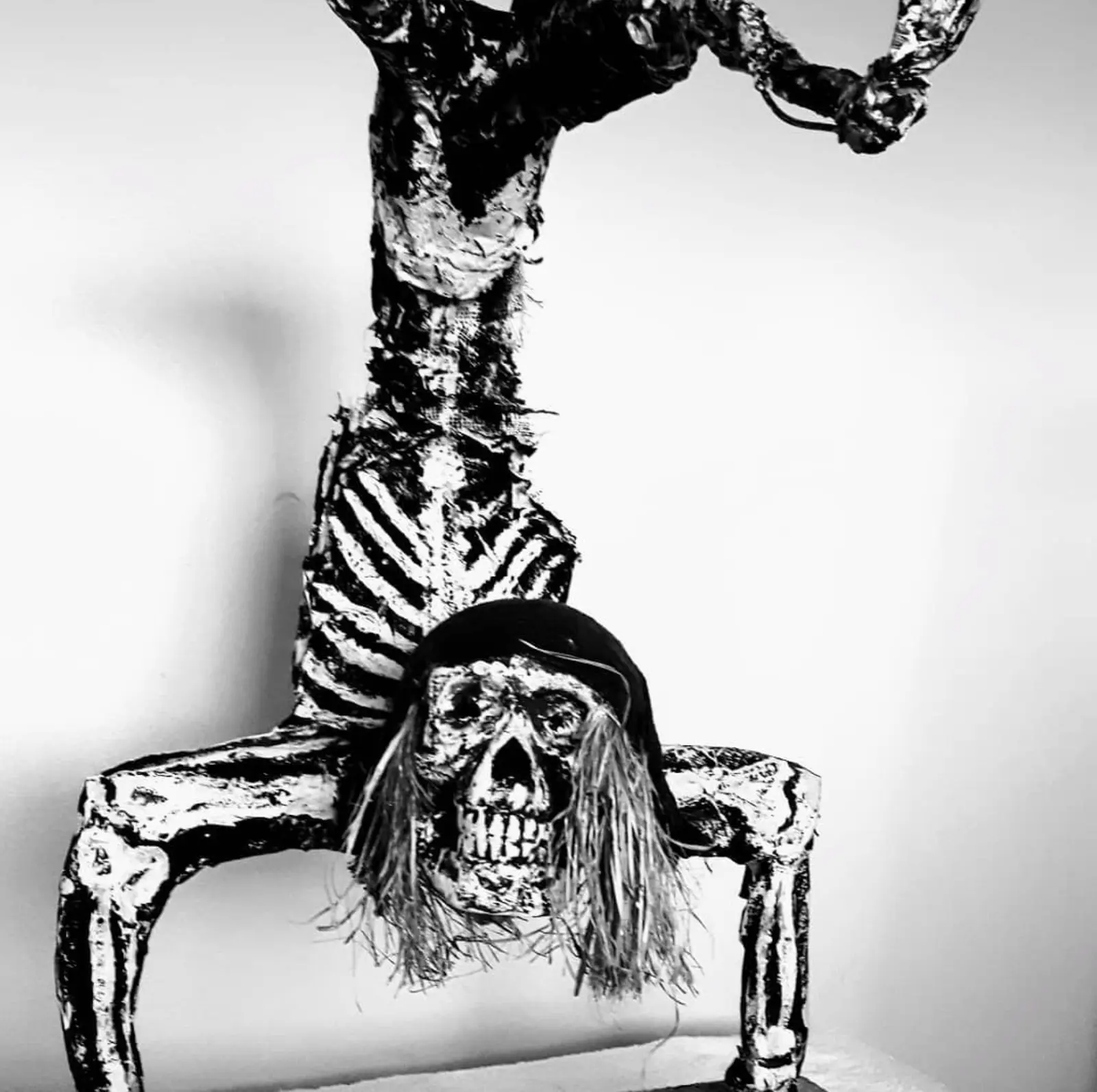
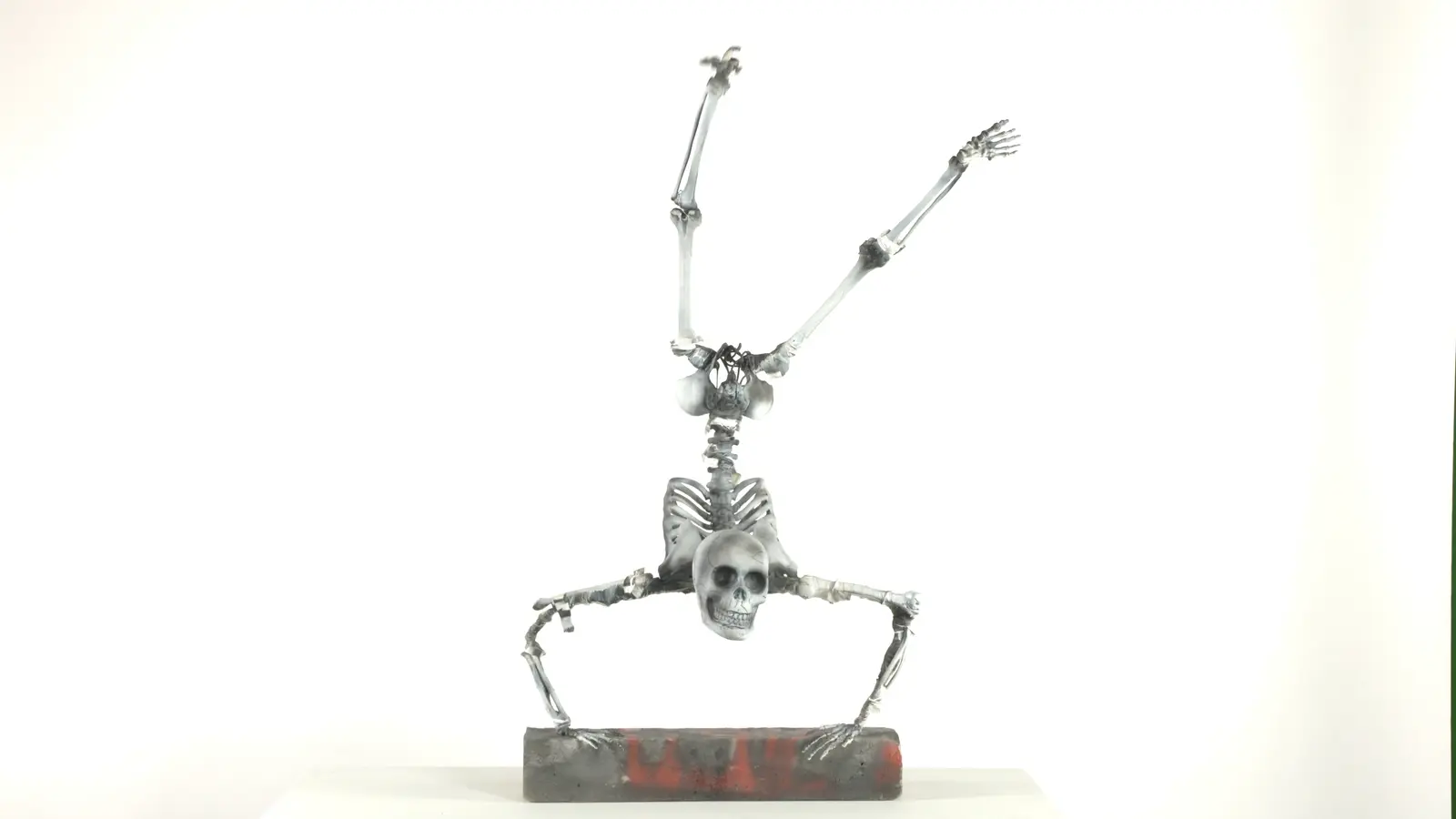
A full anatomical skeleton, assembled from molded pieces painted a matte gray-silver, rests on a long slab of poured concrete. The figure holds a contortionist's backbend: the legs brace against the base, knees bent and thighs splayed wide to either side, while the torso arches over and back and both arms reach overhead into a broad V, each ending in an articulated hand. Dark binding ties the joints at the shoulders and hips, exposing the object for what it is, an assembled puppet, a workshop mannequin set back in motion.
At the center of the composition, lodged at the level of the pelvis, framed by the open thighs and the ribcage above, a second distinct skull stares back. Its placement unsettles everything. Where the pubis should sit, a death's-head occupies the seat of sex, and the acrobat's jubilant arch tips at once into discomfort. Robert Bibeau leaves wood behind here to assemble industrial anatomical parts on a worksite base; the gesture belongs to noble bricolage, salvage and adjustment, carrying a geometric rigour uncommon elsewhere in the corpus.
The concrete bears traces of sprayed red pigment, a reminder of a stage rather than of blood. The effect is one of memento mori in motion: the skeleton dances far from the ossuary that ought to hold it, a distant echo of the medieval Danza de la Muerte scaled down to a figurine. The piece seems to invite us to watch the pose, its circus virtuosity, and to defer the question of what emptied it of flesh. The making stays uneven, closer to a recomposed found object than to carved sculpture, and that may be its candour.

The piece sits in the long tradition of the dancing skeleton, from medieval *Danses macabres* to the prints of José Guadalupe Posada, the Mexican master whose *calaveras* made the moving skeleton a universal popular figure. The contemporary kinship extends to Damien Hirst, whose assembled vanities (skulls, butterflies, animals in formaldehyde) placed memento mori at the heart of conceptual art in the 1990s-2000s. Robert Bibeau keeps from both the strength of the image and substitutes the modesty of recovered metal wire, death brought back to the workshop bench.