ÜGLY
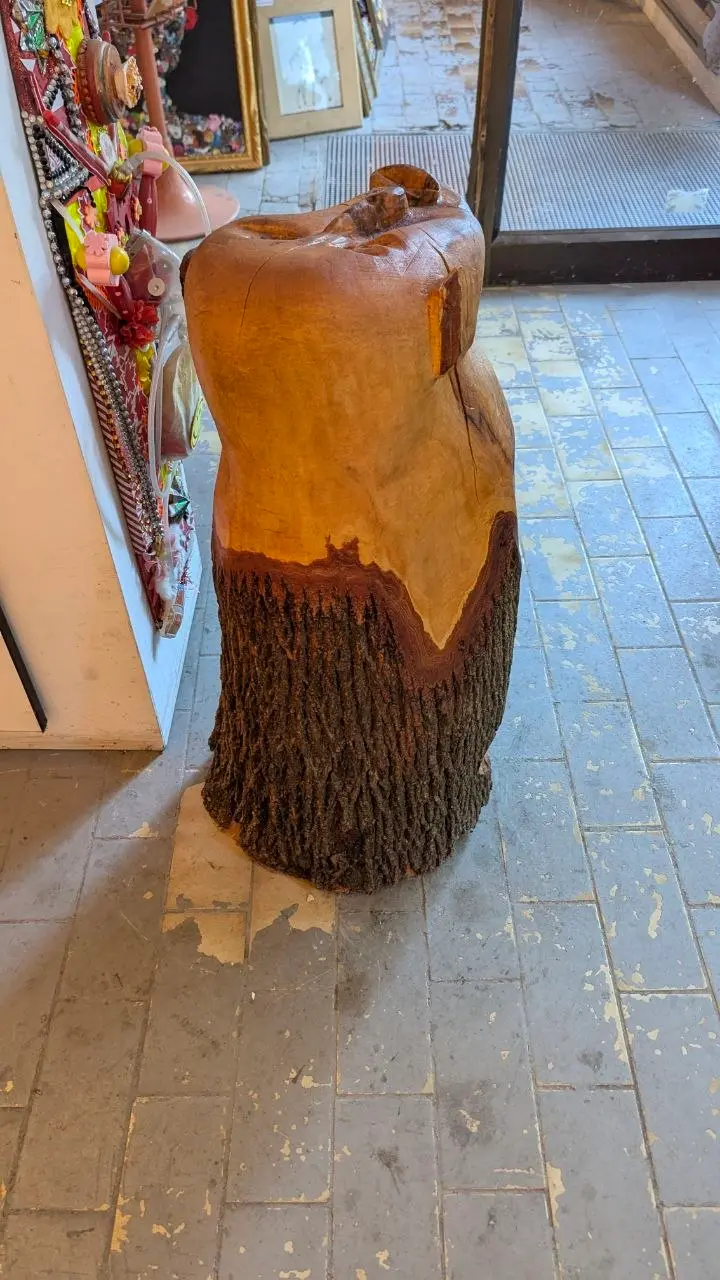
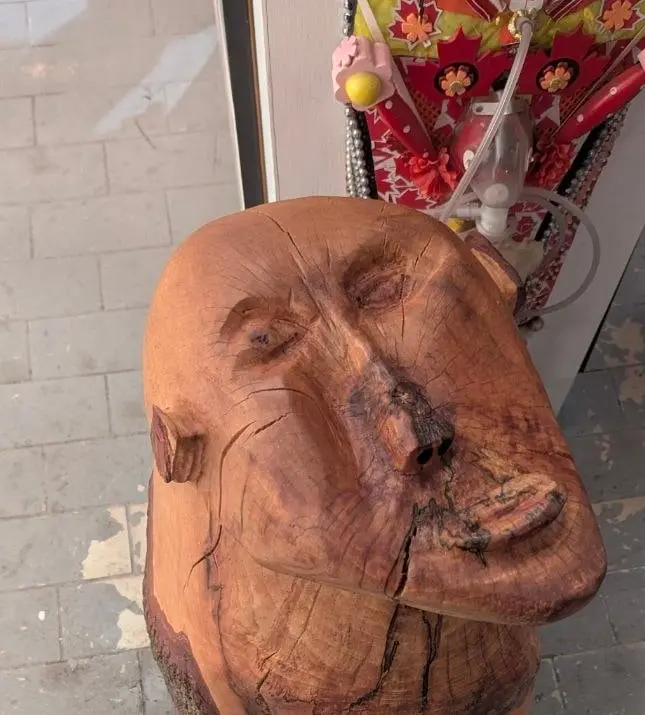
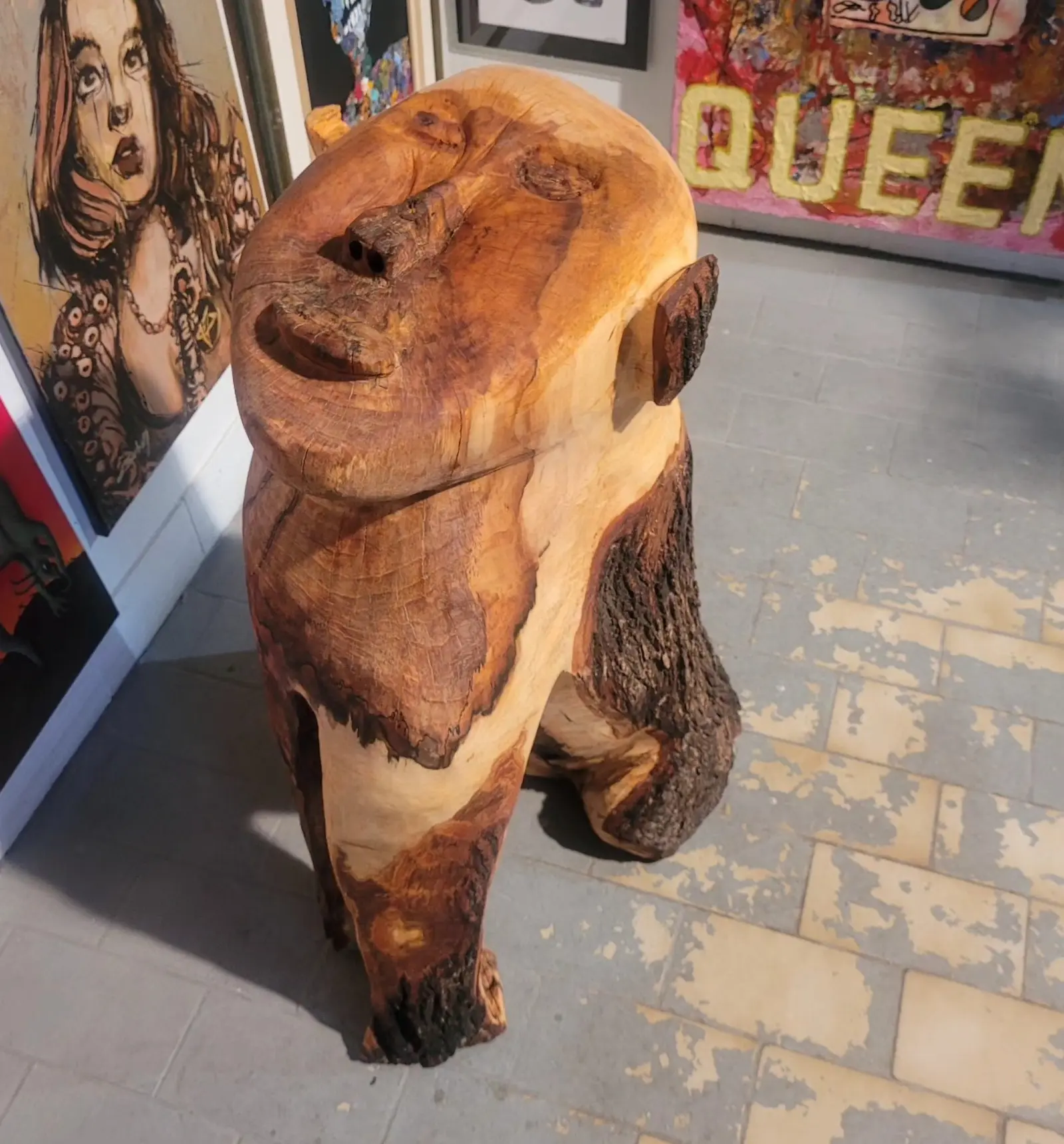
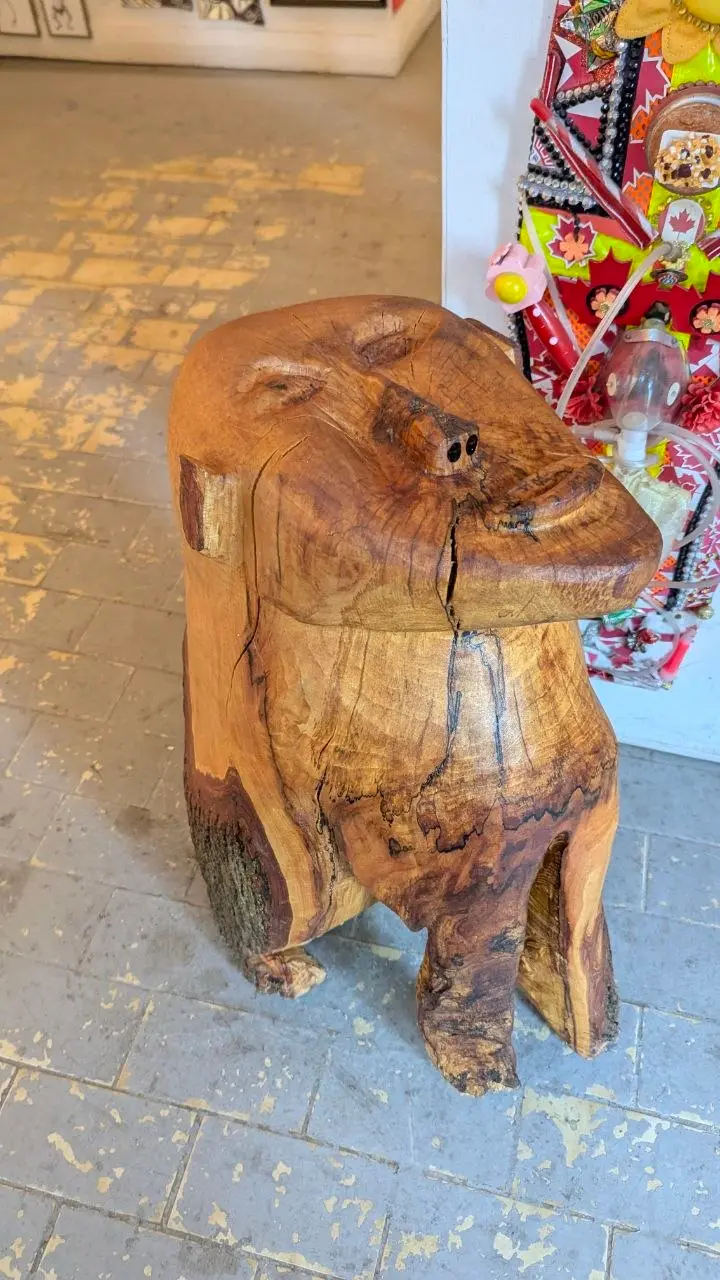
Watch-dog — three-quarter close-up front view, downward gaze, nostrils and vertical fissure crossing the anthropomorphic face

Watch-dog

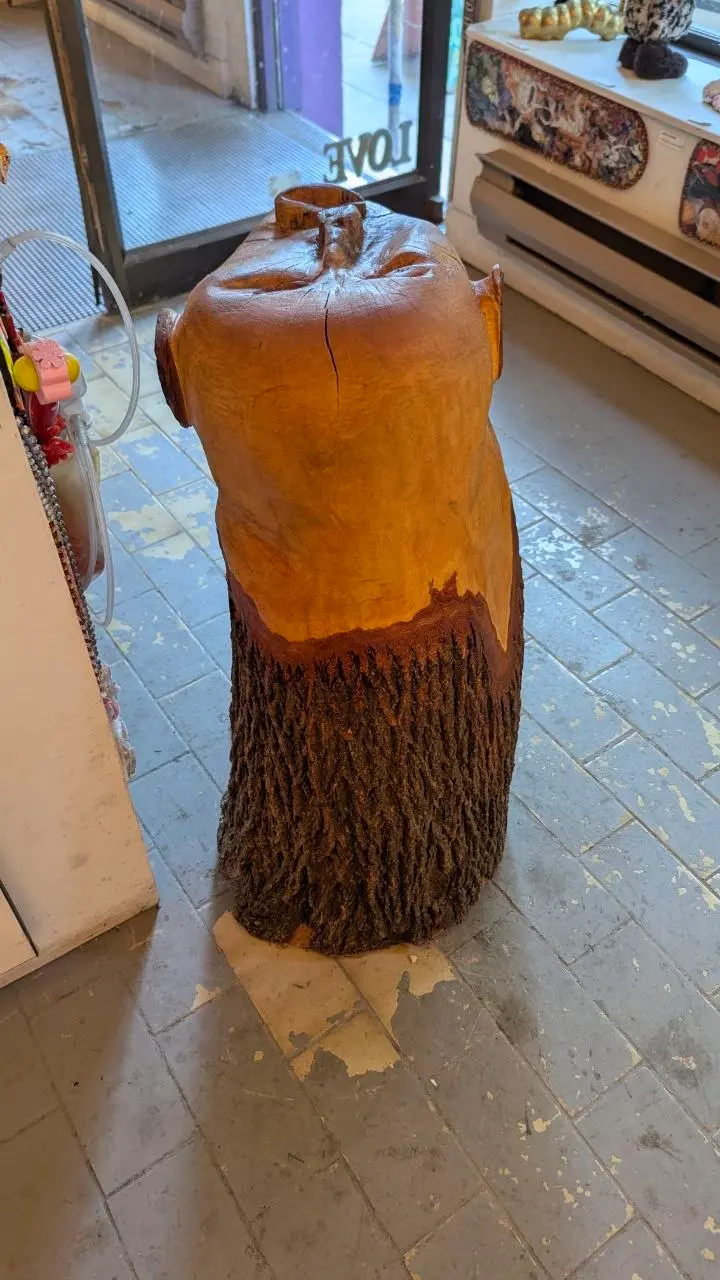
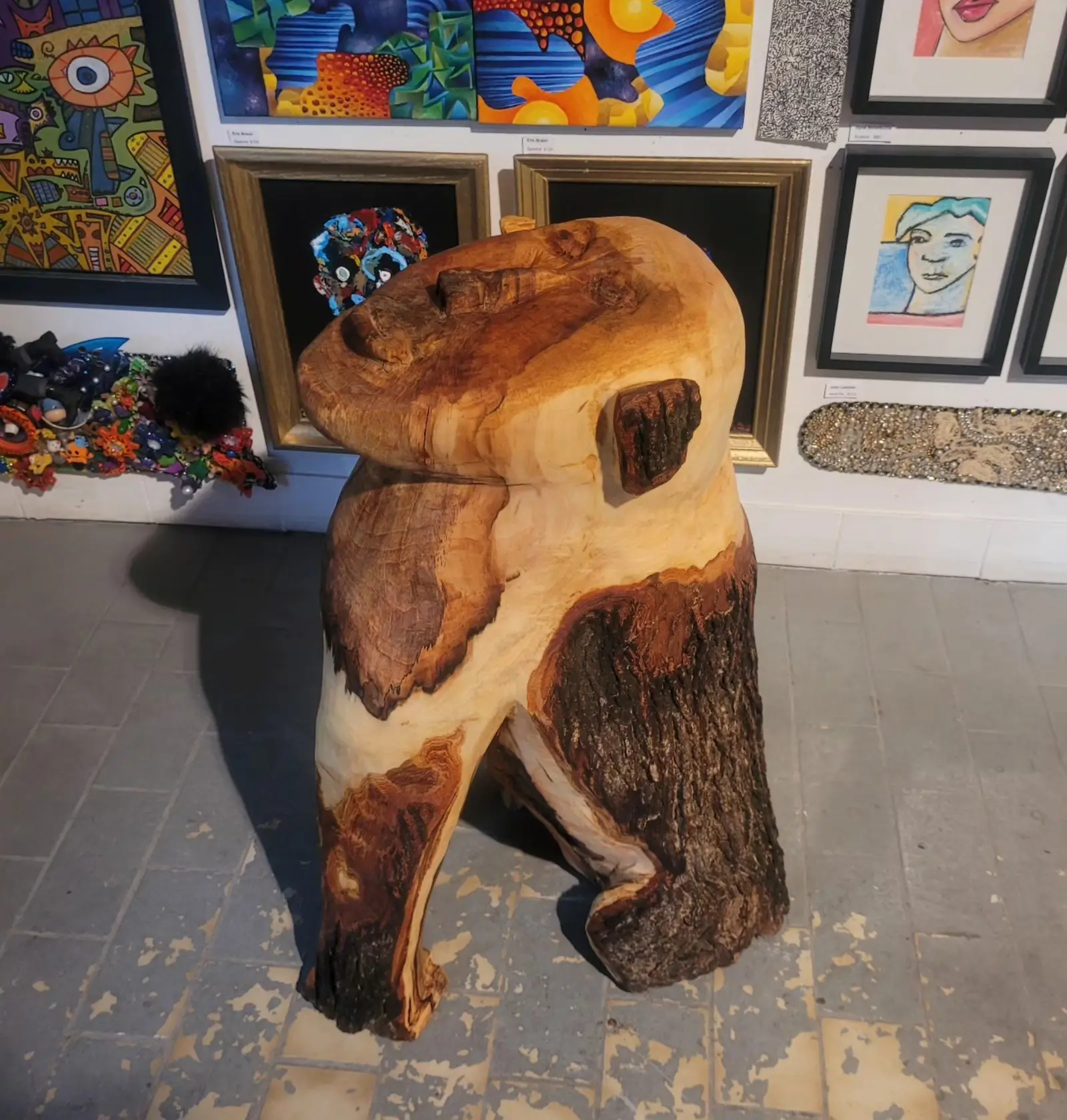
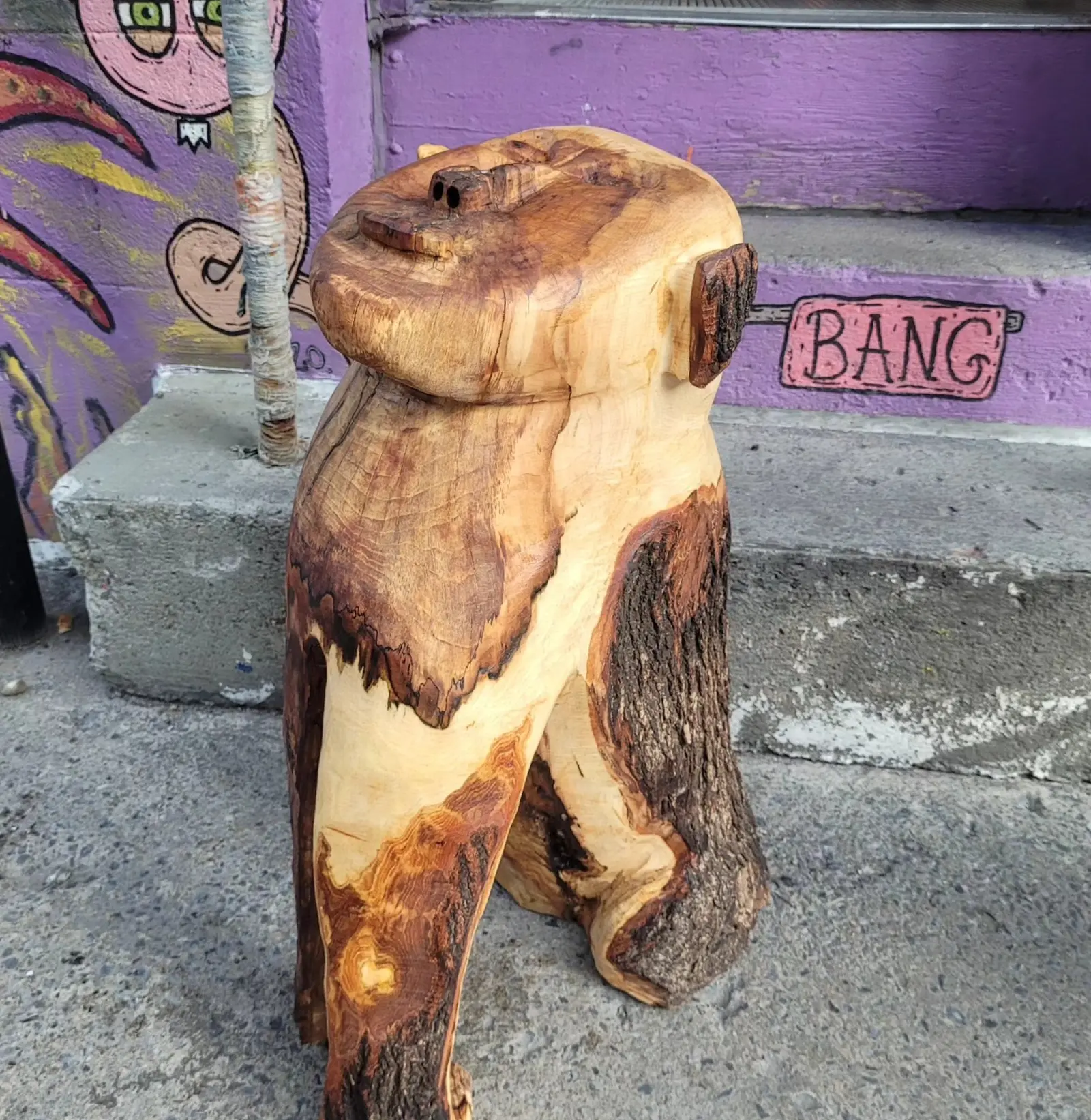
The piece is worked from an entire stump. Robert Bibeau keeps bark and root on the lower section: what carries the work stays close to its found state and serves as a natural base. The rest of the stump is cut by direct carving until a seated beast emerges, gathered on its supports, filling the full height of the block (72 cm).

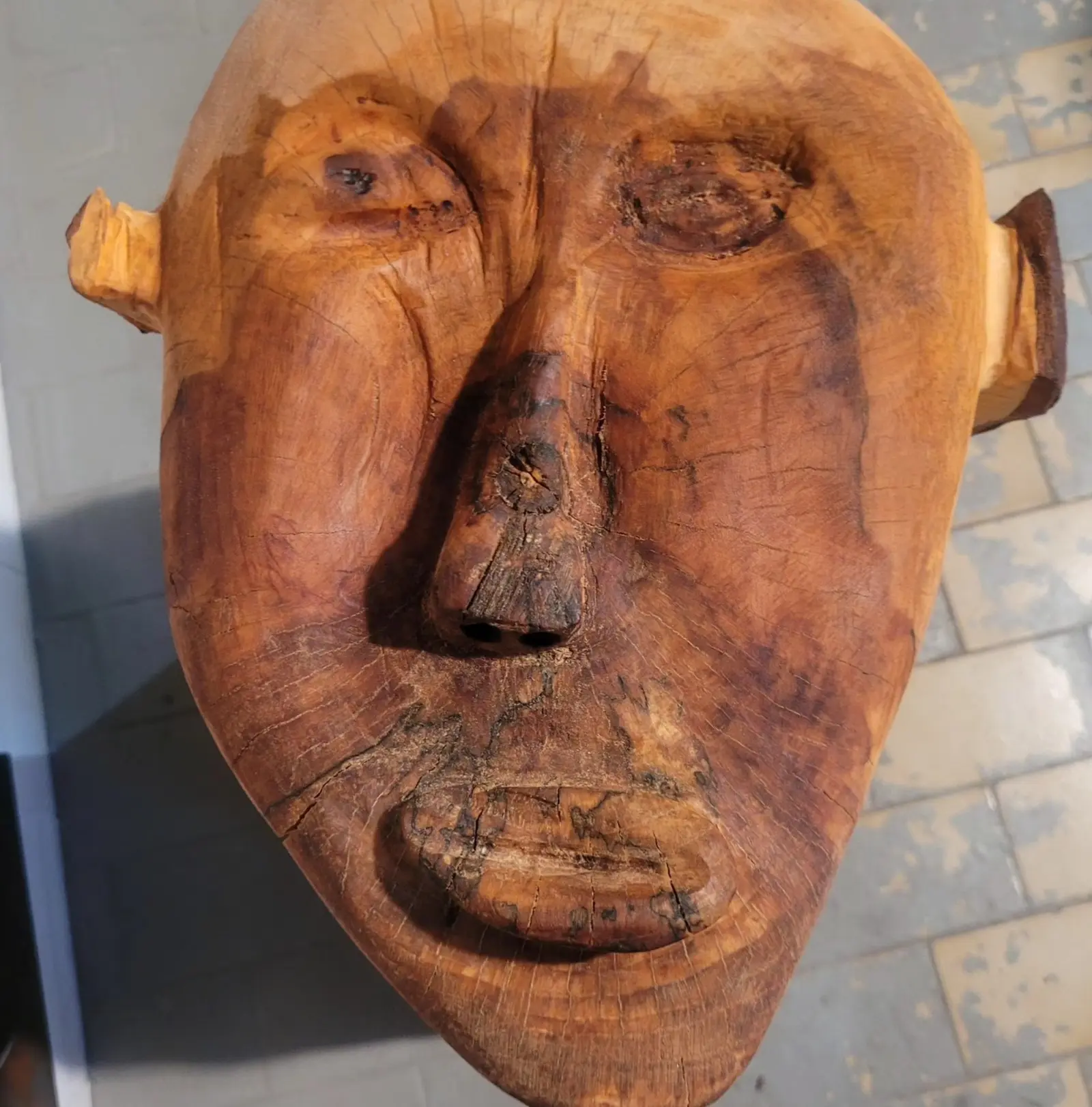
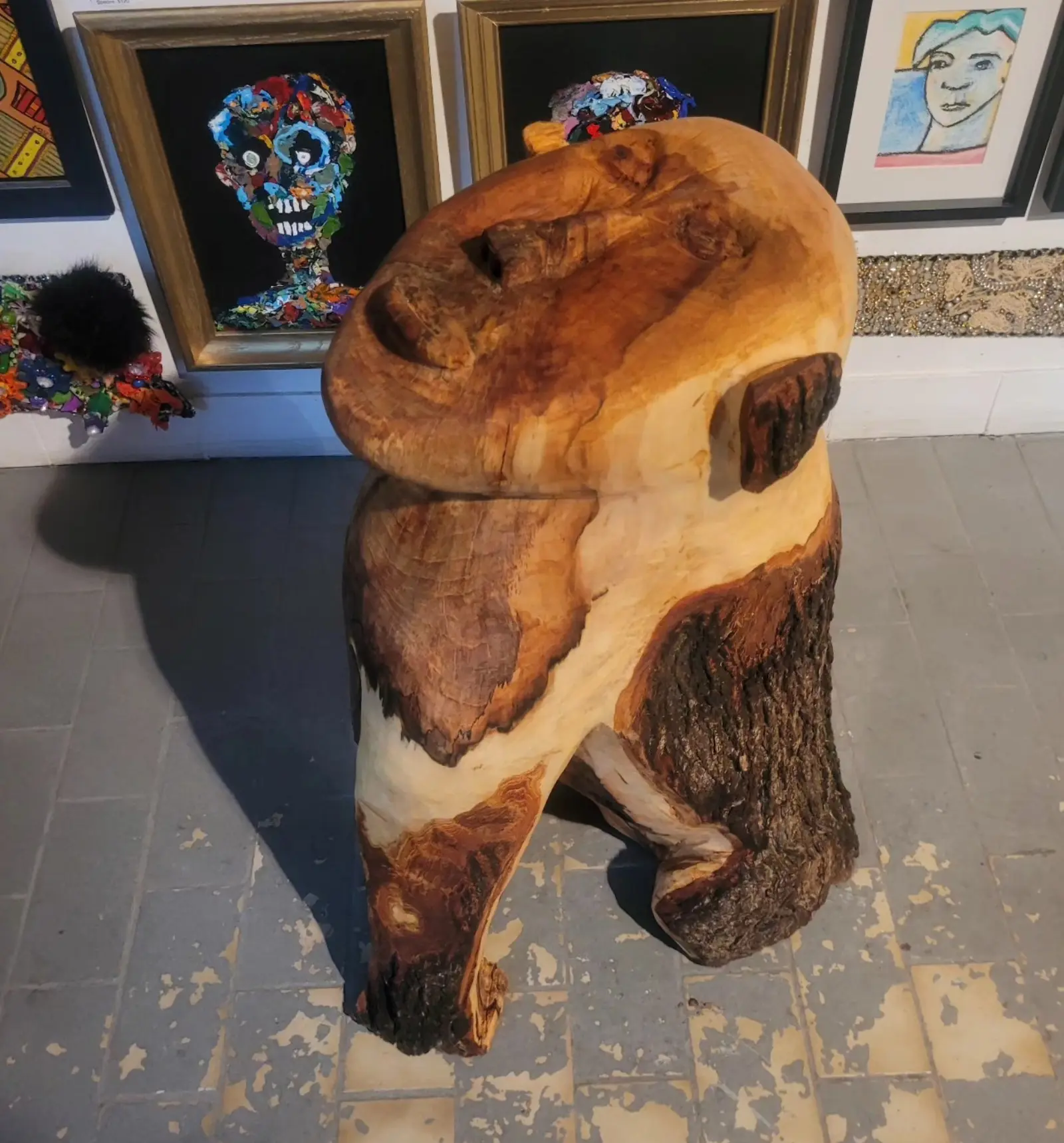
The animal reads clearly. The muzzle pushes upward, marked by two drilled holes for nostrils; the front paws sit at the base, carved straight out of the mass. The reading hovers between dog and bear, and the title settles it toward the act of guarding. Set this way, reduced to the essentials of its silhouette, the guardian holds a squat, almost heavy presence that earns the name of the piece.

A vertical fissure runs down along the muzzle and carries on into the body. It is a natural split in the wood, left intact; it structures the reading and divides the figure into two slopes. Where the gouge has passed, the wood is smoothed and waxed, a honey tone that catches the light; around it, the preserved bark keeps its dark roughness. This pairing of warm finish and raw matter places the work in a manner the artist openly accepts: the stump stays legible beneath the form given to it.
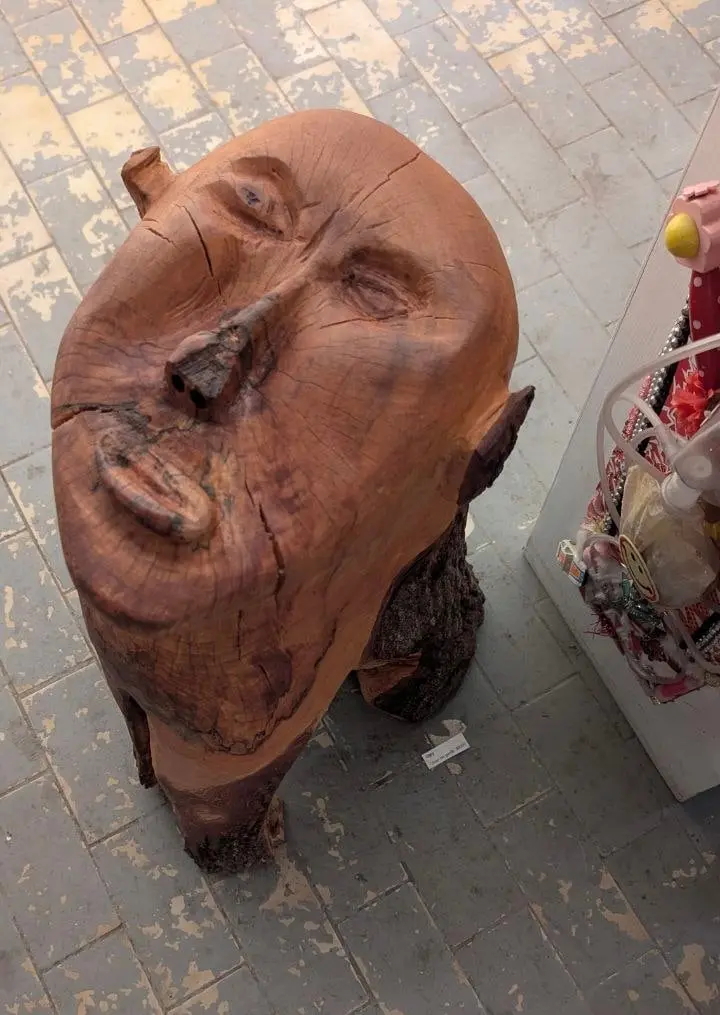
Watch-dog — sculpture by Robert Bibeau: a human face carved into a trunk, three-quarter view
Watch-dog — back view, massive body and bark preserved on the lower section, flat-cleared crown
Watch-dog — three-quarter back view, profile of the stump, transition worked wood / bark visible on the side
Watch-dog — sculpture by Robert Bibeau: a human face carved into wood, front view
Reading notes

One can read the guardian as a domestic object turned into guardian presence. Threshold figures run through the history of sculpture, from the paired Assyrian lions to the Japanese niō, down to the Celtic heads planted at village entrances. Robert Bibeau enters this lineage without quoting it. He carves a face that watches, and the stump that bears it retains something of the tree that once watched over a place.

The paradox of the title operates here. « Watch-dog » is a familiar phrase, almost trivial, where the sculpture deploys an older tutelary register. The work holds on this tension : a domestic name, a guardian presence.